
Last updated November 4, 2026
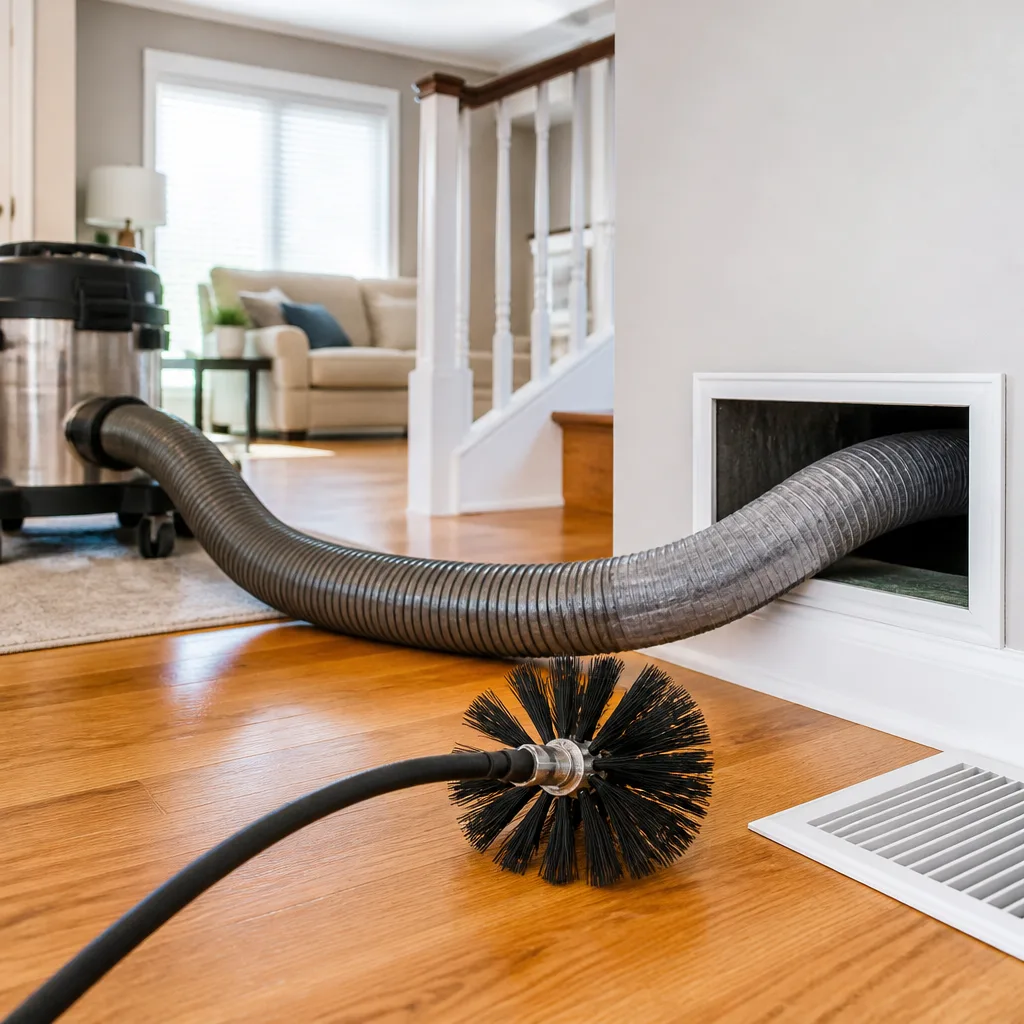 Whole-home duct cleaning
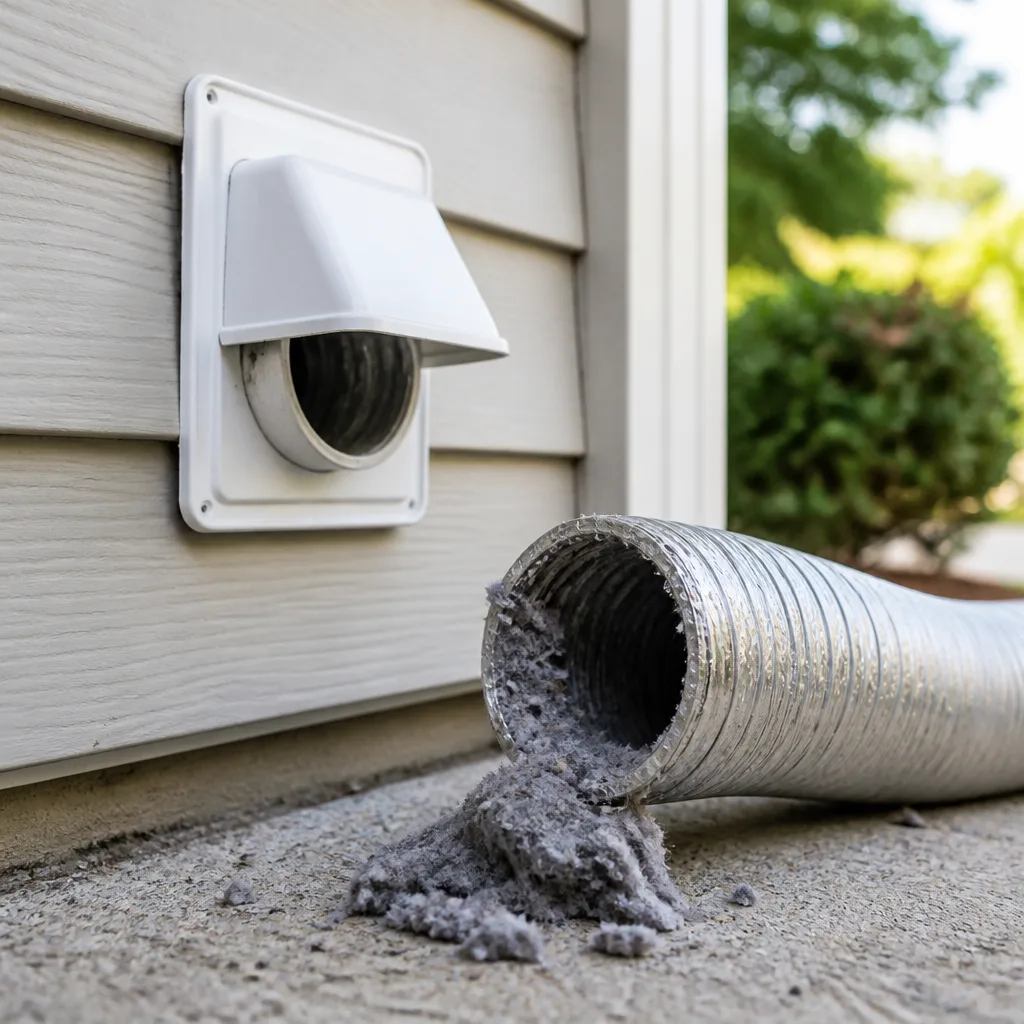 Dryer vent cleaning
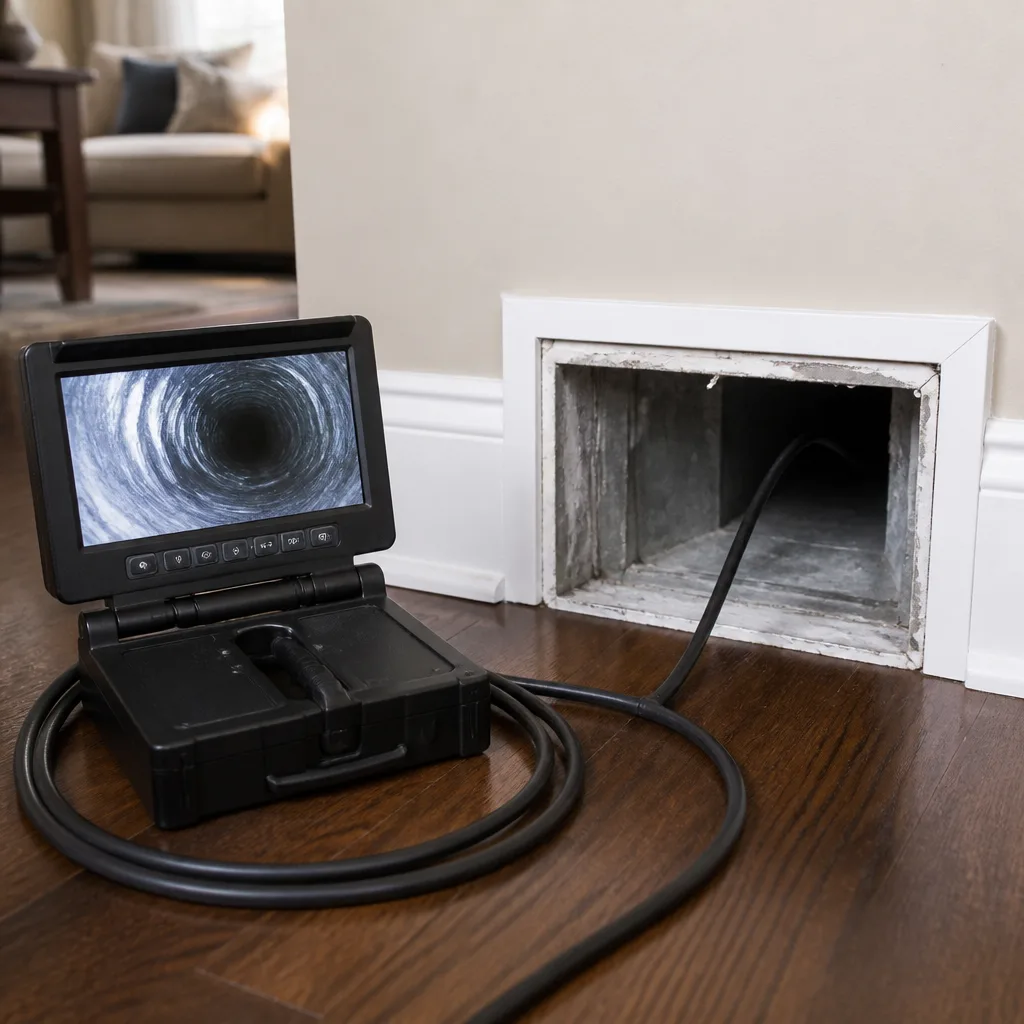 Camera inspection
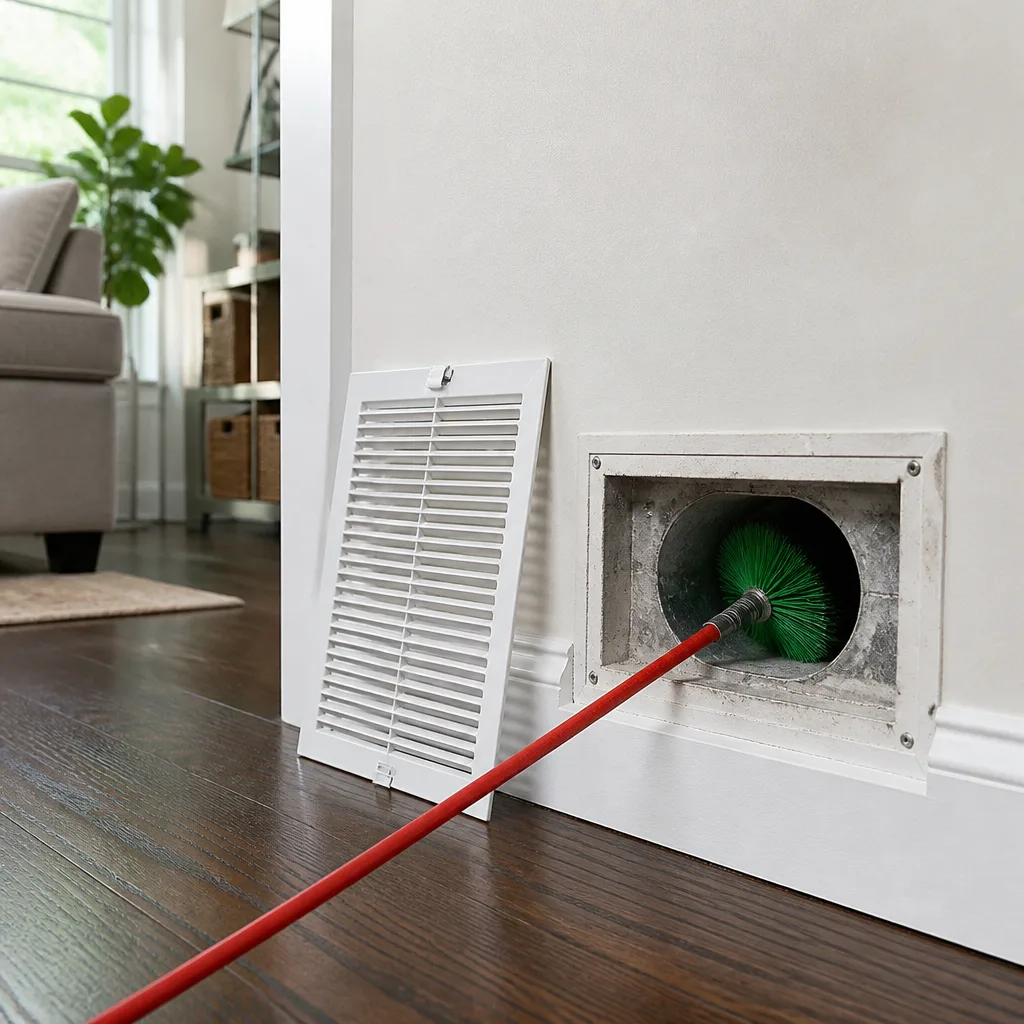 Sanitizing & deodorizing
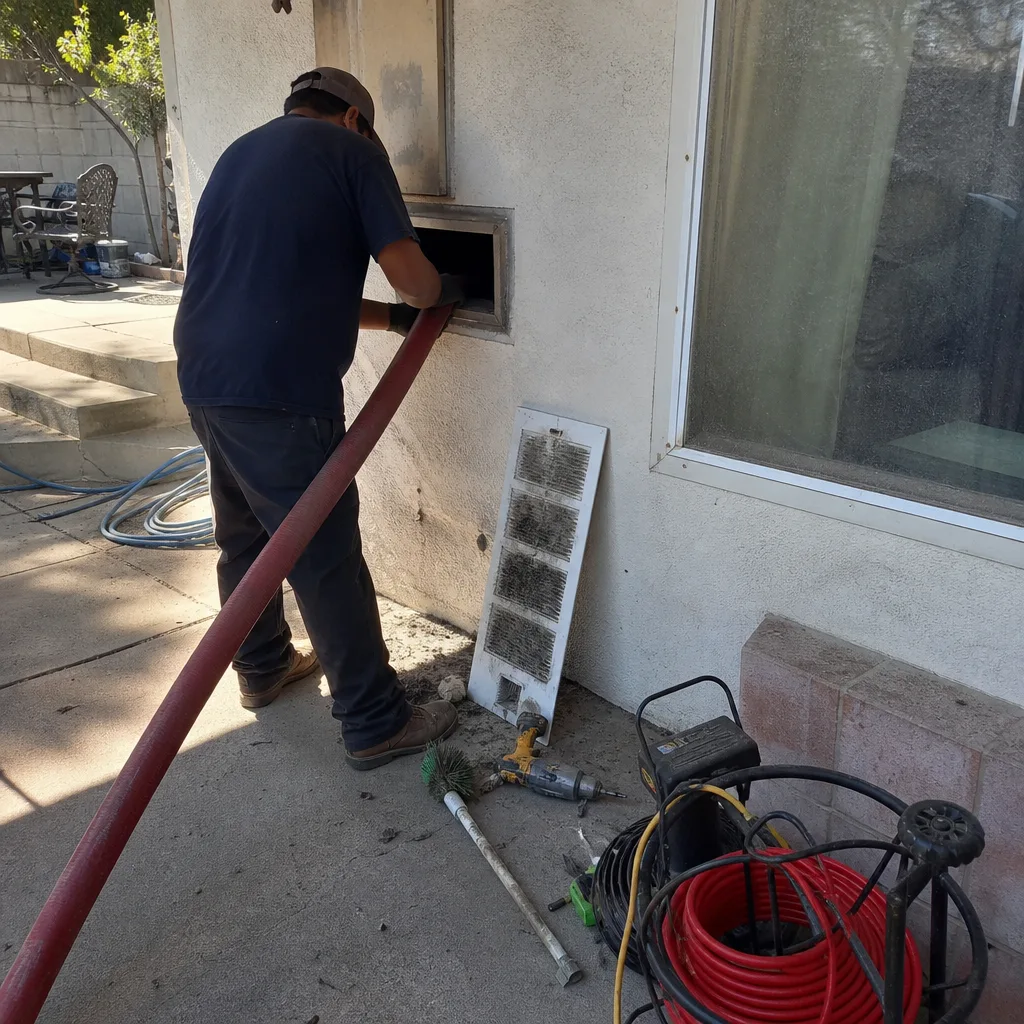
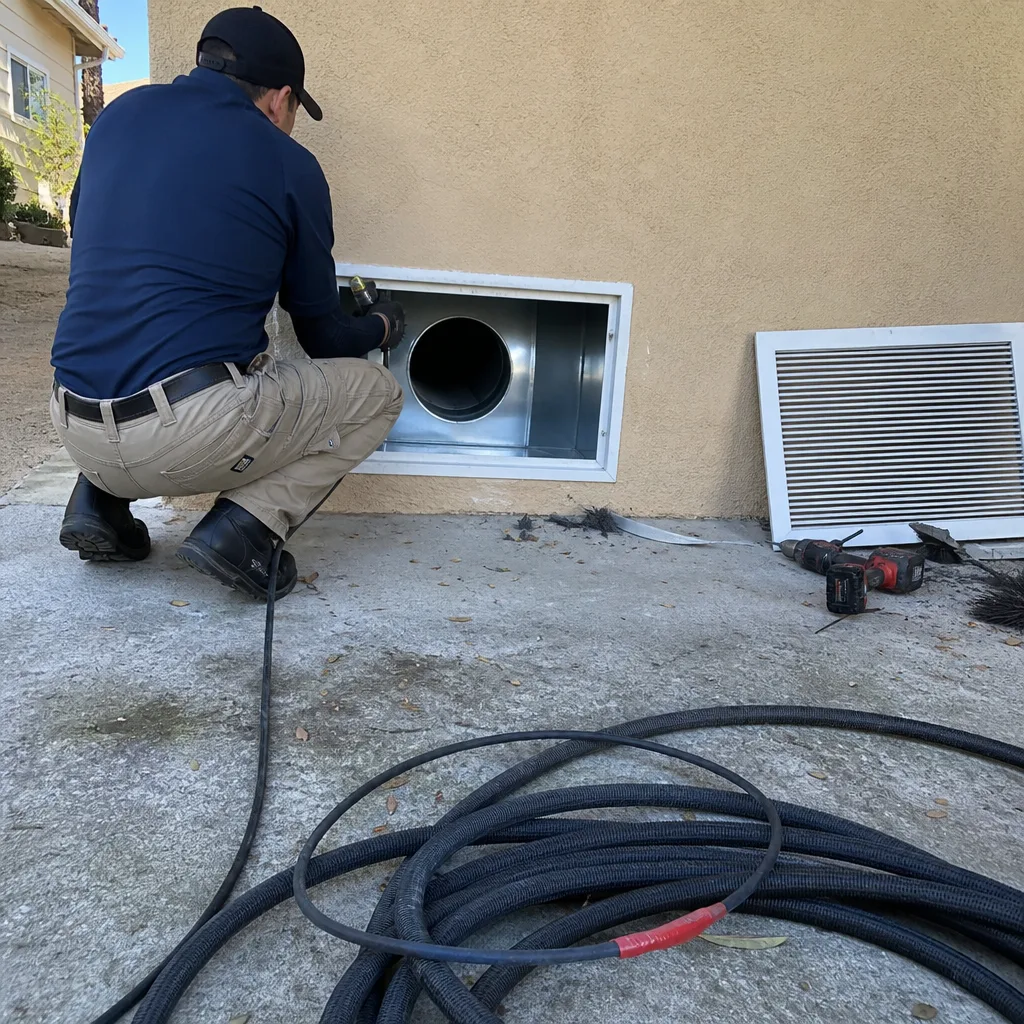
Whole-system duct and dryer vent check with before-and-after photos - you see exactly what came out of your vents
That "$99 whole-house special" is a bait ad - the real number appears once they are in your hallway, or the "clean" is a shop-vac at the register. We photograph the inside of your ducts before and after instead.
The Complete Guide to Air Duct Cleaning in Pico Rivera
Most Pico Rivera homeowners think of their ductwork as a series of separate vents scattered through the house. That’s the misconception that leads to half-finished jobs. Your duct system is one connected network, and cleaning only the registers you can see is like washing one fender of your car and calling it detailed. What’s sitting in the return plenum gets pulled straight past the blower motor and blown right back through those clean-looking supply vents. This guide explains what a complete, system-wide cleaning actually involves, why Pico Rivera’s location between the 605 and the 710 matters for your indoor air, and how to tell the difference between a real mechanical cleaning and a surface wipe-down.
Styles & brands we work with
- Whole-home duct cleaning
- Dryer vent cleaning
- Camera inspection
- Sanitizing & deodorizing
Quick Answer
Air duct cleaning in Pico Rivera typically costs between $450 and $950 for a full system cleaning of a single-family home, and the entire job takes 3 to 6 hours. A legitimate cleaning covers every component – supply ducts, return ducts, the plenum, the blower cabinet, and the boots – using negative-pressure equipment that captures debris rather than stirring it up. Call (833) 734-6877 for a free written estimate. We answer 24/7. Fast dispatch from 7am to 7pm, Sunday through Friday.
Table of Contents
- What Your Duct System Actually Looks Like
- Why Pico Rivera Ducts Get Dirtier Than You’d Expect
- What Professional-Grade Equipment Does That a Shop Vac Can’t
- What a Complete Duct Cleaning Actually Involves
- How Dirty Ducts Affect Your HVAC Efficiency
- What Air Duct Cleaning Costs in Pico Rivera
- When Cleaning Isn’t Enough: Duct Repair
- Common Mistakes to Avoid
- When to Call a Professional
- Frequently Asked Questions
- The Bottom Line
What Your Duct System Actually Looks Like
Before you can judge whether a duct cleaning was done properly, you need to know what’s inside your walls and ceilings. Most Pico Rivera homes built between the 1950s and 1990s use sheet metal ductwork with fiberglass insulation on the outside. Newer homes may use flexible insulated duct. Either way, the system has distinct components, and each one collects debris differently:
- Supply ducts – These carry conditioned air from your furnace or air handler to each room. You see their openings as the registers in your floors, walls, or ceilings. Because supply air moves fast, dust tends to stick to the interior walls, especially around register dampers.
- Return ducts – These pull room air back to the HVAC unit. You typically find these as larger grilles, often in hallways or central walls. Return ducts are where the heaviest accumulation happens, because unfiltered air from the living space gets sucked through them constantly.
- The plenum – This is the large box attached directly to your furnace or air handler. The supply plenum distributes air into individual supply ducts. The return plenum collects air before it reaches the filter. Both plenums are common hiding spots for construction debris, drywall dust, and even old toys.
- Boots – These are the shaped metal pieces that transition from round or rectangular duct to the register opening in your room. In Pico Rivera’s older housing stock, boots are often original to the home and may have minor gaps that pull in dust from wall cavities or crawl spaces.
Here’s the critical part: when you hire a company that only cleans the supply side, the return side keeps feeding debris into the blower motor. Within weeks, that debris is redistributed back through the supply ducts. A meaningful air duct cleaning addresses the entire loop, from return boot to supply register.
Why Pico Rivera Ducts Get Dirtier Than You’d Expect
Pico Rivera sits in a particular spot that most duct-cleaning guides never mention. The city is bordered by the 605 freeway to the east and the 710 to the west, with the 5 freeway not far to the north. That means fine particulate from vehicle exhaust – diesel soot, brake dust, tire wear – is constantly suspended in the outdoor air. When your HVAC system pulls in outside air through the fresh-air intake, that particulate settles into the ductwork instead of staying outside.
The local climate adds another layer. Pico Rivera has mild winters and dry summers. That’s comfortable for people, but it means residents run their air conditioners for a significant portion of the year. Longer run times mean more air passes through the ducts, and more air means more particulate deposition. Homes along the San Gabriel River corridor and near the industrial parks off Slauson Avenue tend to show faster duct accumulation than homes further up in the hills, simply because of proximity to truck routes and manufacturing activity.
We’ve also noticed something specific about Pico Rivera’s housing stock. Many homes here have HVAC systems installed in the garage or in an exterior closet. Pests can enter through small gaps around the unit, and the dry Southern California dust is fine enough to penetrate those same openings. A return duct that runs through an unconditioned garage pulls in whatever that garage contains, from laundry lint to stored paint cans off-gassing. That’s not a hypothetical concern. It’s a design reality of many local floor plans.
What Professional-Grade Equipment Does That a Shop Vac Can’t
You can find consumer duct-cleaning kits at any hardware store. They usually consist of a long brush rod and a vacuum attachment that fits onto a standard shop vac. Here’s the problem: a shop vac moves maybe 100 to 150 cubic feet per minute of air through a 2-inch hose. That’s nowhere near enough to pull debris out of a 6-inch or 8-inch duct. The brush loosens particulate, but the vacuum can’t carry it away. You end up with loosened dust that simply resettles further down the duct.
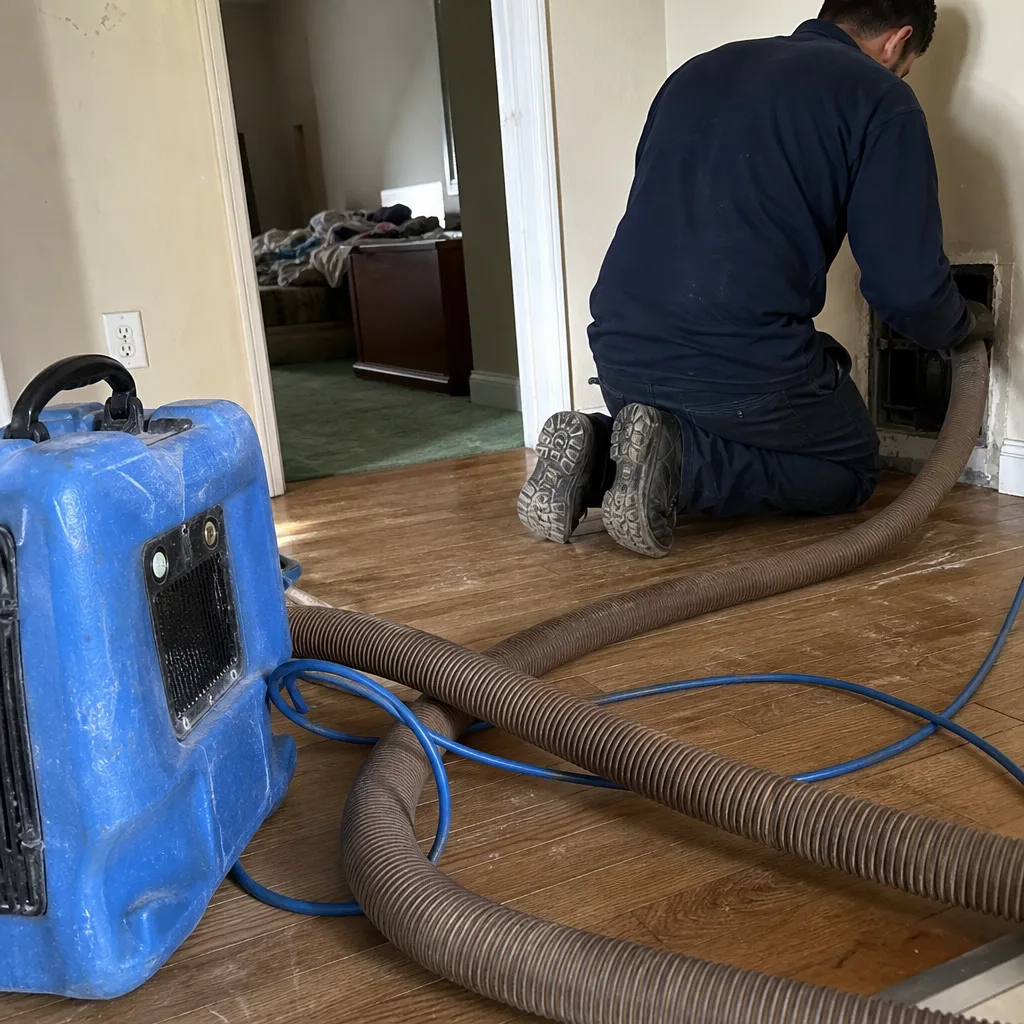
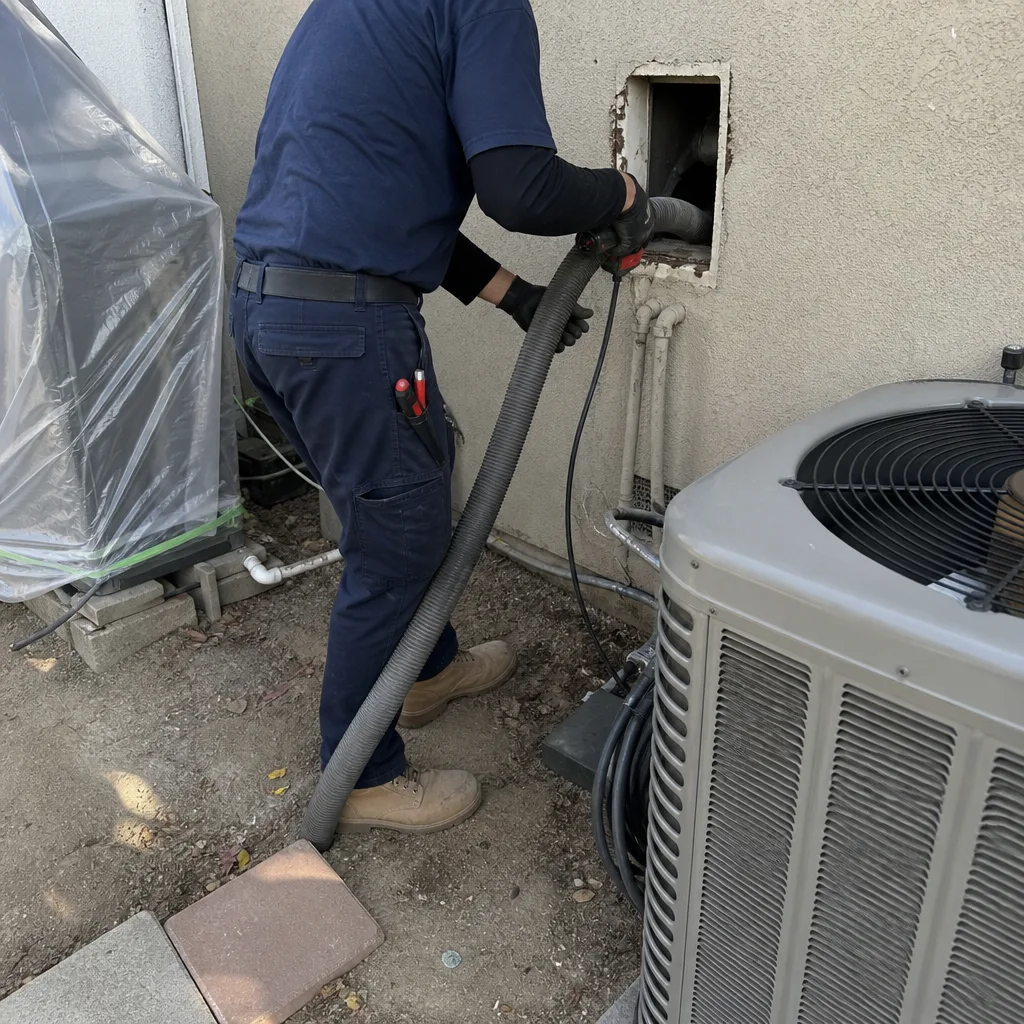
Professional systems work differently. The Rotobrush and Nikro units we operate are negative-pressure systems, which means they create a continuous suction environment inside the duct itself. Think of it like a vacuum chamber rather than a vacuum nozzle. The system connects to the duct network and pulls air through the entire loop while powered agitation tools knock debris loose. The loosened material is captured at the collection unit, not recirculated into your home.
The distinction matters because of what duct debris actually is. You’re not dealing with loose dust. You’re dealing with compacted layers of lint, pet dander, skin cells, insect casings, and fine particulate that has become embedded in the duct walls. A consumer brush kit scratches the surface. A negative-pressure system with proper agitation dislodges and removes it.
We also use inspection equipment that the discount crews don’t. Before-and-after photos of your actual ducts, including the plenum and boots, let you verify that the work was done. If a company won’t show you the inside of your ducts after cleaning, the cleaning probably didn’t happen.
What a Complete Duct Cleaning Actually Involves
A proper duct cleaning in Pico Rivera is a physical, mechanical process. It’s not a spray, not a fog, not a wipe-down. Here’s the sequence we follow, which aligns with what responsible HVAC contractors expect:
- System inspection – We inspect the furnace cabinet, blower fan, evaporator coil, and accessible duct runs. We look for damage, disconnections, and unusual accumulation patterns. If we find a compromised duct, we flag it for repair, not just cleaning.
- Equipment setup – We connect the negative-pressure collection unit to the duct system, typically at the furnace or air handler. All registers are sealed except the section being cleaned.
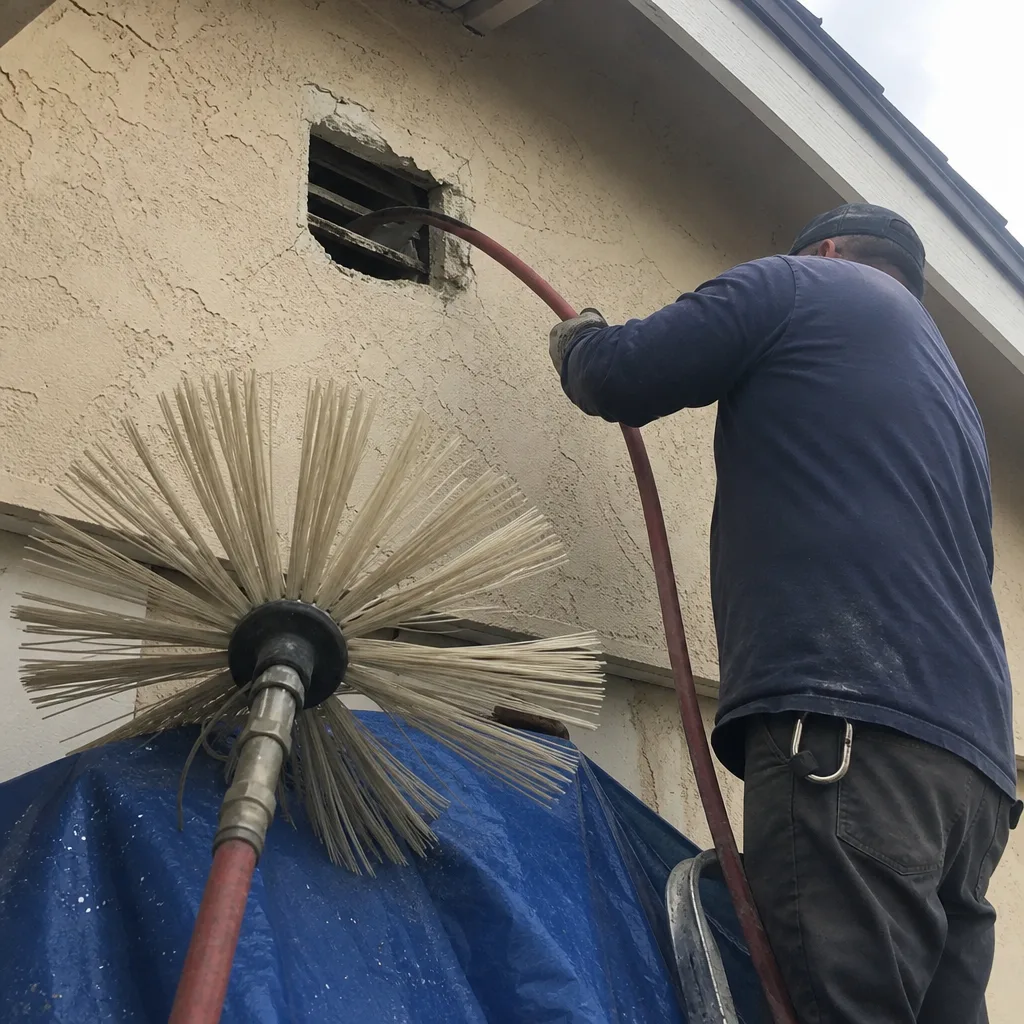
- Agitation – We run powered agitation tools – rotating brushes and air whips – through each duct run, from the plenum to the furthest supply boot. This mechanically dislodges material that has adhered to the duct walls.
- Return-side cleaning – The return ducts are cleaned with the same process, but with extra attention to the return plenum and the blower cabinet. This is the source side, and skipping it renders the supply-side cleaning pointless.
- Component cleaning – The blower fan and evaporator coil need to be cleaned. A dirty blower fan is out of balance and works harder. A dirty evaporator coil restricts airflow and reduces cooling capacity.
- Final inspection – We run the inspection camera through representative sections and show you before-and-after visuals. You confirm the interior surfaces are clean, not just the registers.
The entire process typically takes 3 to 6 hours for a single-family home, depending on the size of the system and how many returns the home has. A house with two return drops takes longer than one with a single central return. Homes with crawl-space ductwork take longer than homes with attic ductwork because access is more labor-intensive.
How Dirty Ducts Affect Your HVAC Efficiency
Your HVAC system is designed to operate within a specific static pressure range. Static pressure is the resistance the blower motor has to push against to move air through the ducts. When ducts are heavily coated with debris, the effective diameter of the duct shrinks. That increases static pressure. The blower motor responds by working harder, drawing more amperage, and running hotter. Over time, this shortens the life of the motor.
There’s a straightforward relationship between duct cleanliness and system performance. A clean system with a clean filter operates at the pressure the manufacturer intended. A loaded system forces the blower to work outside its designed envelope. You may not hear the difference, but your utility bills reflect it, and the strain shows up in premature component failure.
This is also why filter choice matters. In Pico Rivera, where fine particulate is elevated, we often recommend high-MERV filters from brands like Honeywell or Aprilaire. But a restrictive filter in a dirty duct system makes the static pressure problem worse. Clean the ducts first, then upgrade the filter. Doing it in the reverse order just stresses the blower motor.
What Air Duct Cleaning Costs in Pico Rivera
The honest answer is that pricing varies based on system size, the number of returns, and the level of accumulation. A single-story 1,200-square-foot home with one return will cost less than a two-story 2,400-square-foot home with three returns. Here are the typical ranges we see in the Pico Rivera market:
| Home Size | Typical Range | What’s Included |
|---|---|---|
| Small home (up to 1,200 sq ft, 1 return) | $450 – $650 | Full system cleaning, supply and return, blower and coil |
| Medium home (1,200 – 2,200 sq ft, 2 returns) | $550 – $800 | Full system cleaning, supply and return, blower and coil |
| Large home (2,200+ sq ft, 3+ returns) | $700 – $950+ | Full system cleaning, supply and return, blower and coil, additional runs |
These are estimates, not quotes. The final price is set by the written estimate after we inspect your system. What you should not accept is a per-vent price. Per-vent pricing is how bait-and-switch operators operate. They quote a low per-vent number, then count far more vents than expected, and you end up paying $1,200 for a job that should have cost $700. Ask for one flat price per system, agreed before work starts.
Also note that Duct Cleaning Pico Rivera handles repair work during the same visit if we find compromised ductwork. That’s different from a cleaning-only company that admits there’s a problem but tells you to call someone else. It changes the economics of the visit.
When Cleaning Isn’t Enough: Duct Repair
Cleaning removes contamination. It does not fix structural problems. If a duct has separated at a joint, if a boot has pulled away from the subfloor, if a flexible duct has collapsed, cleaning that section is wasted effort. The gap keeps pulling unfiltered air in from the wall cavity or crawl space, and the cleaned duct gets dirty again within months.
During a standard cleaning, we look for exactly these conditions. Separated joints are common in older Pico Rivera homes, particularly where ductwork runs through an attic or crawl space. The sheet metal expands and contracts with temperature changes, and over decades, mechanical fasteners loosen. Flexible duct can be crushed by homeowners storing boxes in the attic, or chewed through by rodents.
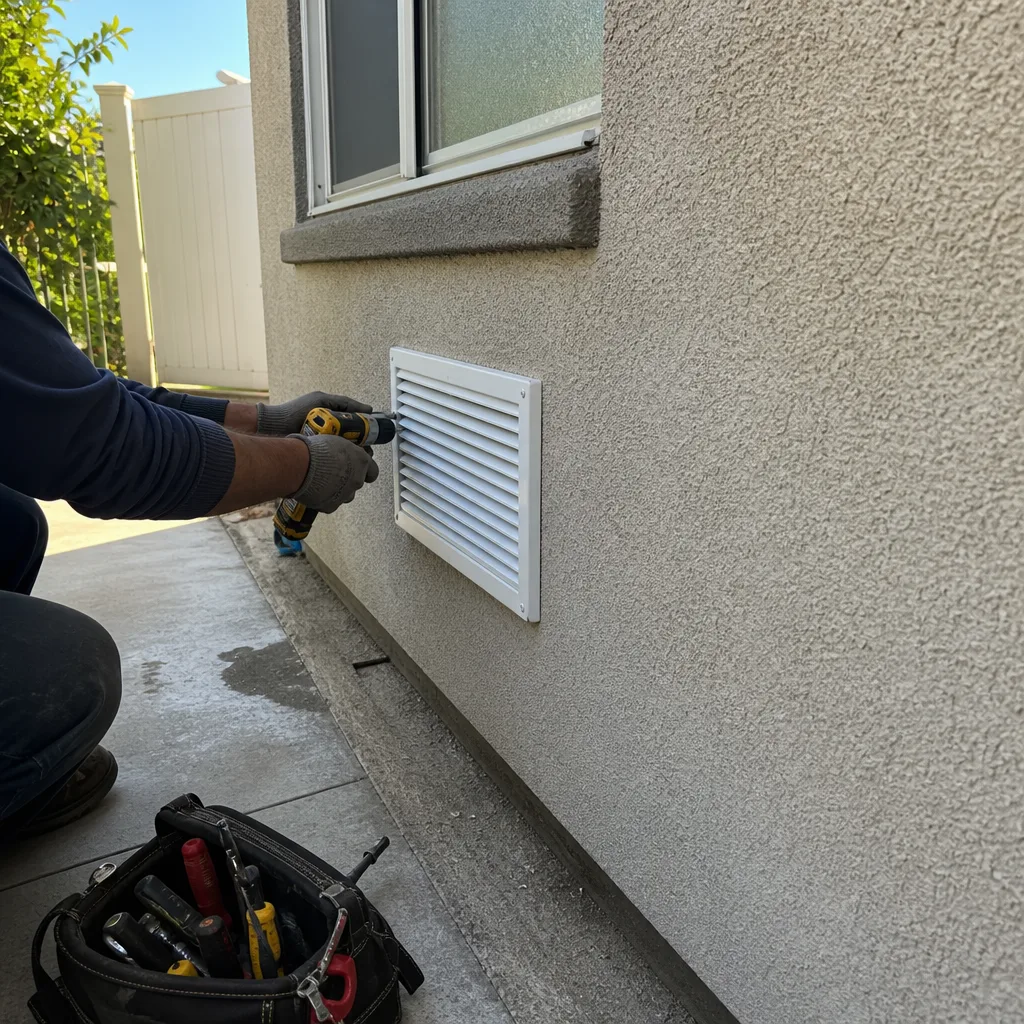
When we find damage, we can usually repair it on the same visit. Reconnecting a separated boot, sealing a leaky joint with mastic, replacing a collapsed section of flex duct – these are straightforward fixes that restore the system’s integrity. Clean ducts are the goal, but clean ducts that stay clean is the real objective. That only happens when the duct system is structurally sound.
We also work with filtration products from Aprilaire and Abatement Technologies, brands that focus on allergen reduction and high-efficiency particulate capture. For a Pico Rivera home near the freeway corridors, a better filter on a properly sealed duct system makes a measurable difference in indoor particulate levels.
Common Mistakes to Avoid
- Choosing the cheapest quote without asking what it includes. A $199 whole-house cleaning is physically impossible to do properly with professional equipment. The labor and equipment costs cannot support that price. What you get is a register wipe-down and a few minutes at the furnace.
- Accepting a cleaning that skips the return side. If the crew doesn’t access the return plenum and return ducts, they’re cleaning half the system. Debris from the return side gets redistributed through the supply side within weeks.
- Paying per vent. Per-vent pricing is designed to confuse. You cannot verify the vent count before the job, and the final invoice rarely matches the phone quote. Insist on one flat price for the complete system.
- Assuming a dirty filter means dirty ducts. A clogged filter is a maintenance item. Dirty ducts are a system condition. They’re related but distinct. Change the filter regularly, but if the ducts themselves are loaded, a new filter won’t fix it.
- Letting the cleaning company skip the blower and coil. The blower fan and evaporator coil are part of the air pathway. If they’re dirty, clean ducts still blow dirty air. A complete cleaning includes these components.
- Not getting before-and-after photos. You wouldn’t accept a mechanic’s word that your brakes were replaced without seeing the old parts. Duct cleaning is the same. Ask for visual proof of the interior duct surfaces before and after.
- Ignoring the dryer vent. Your dryer vent is a separate system from your HVAC ducts, but it carries the same concern: lint accumulation. A clogged dryer vent is a fire hazard. If you’re having your air ducts cleaned, have the dryer vent cleaning done in the same visit. It’s a related air-pathway issue, and handling both at once saves you a separate appointment.
When to Call a Professional
You should have your ducts evaluated if you’re seeing consistent dust accumulation on surfaces within days of cleaning, if your allergies worsen when the system runs, if you’ve recently completed remodeling work that produced drywall dust, or if you’ve never had the ducts cleaned in a home that’s more than 10 years old. Pet owners with multiple animals should expect faster accumulation. Homes near Pico Rivera’s industrial and freeway corridors should be inspected more frequently than homes further from those particulate sources. If you’re unsure whether your ducts need cleaning, Pico Rivera homeowners can call Duct Cleaning Pico Rivera at (833) 734-6877 for a free assessment. We answer 24/7. Fast dispatch from 7am to 7pm, Sunday through Friday. Estimates are free, and there’s no obligation.
Frequently Asked Questions
Air duct cleaning in Pico Rivera typically costs between $450 and $950 for a complete system cleaning of a single-family home. The exact price depends on home size, the number of return ducts, and the level of debris accumulation. We quote one flat price per system after inspection, never a per-vent price. Call (833) 734-6877 for a free written estimate.
You should receive before-and-after photos of the interior of your ducts, including the plenum and boots. A professional company will run an inspection camera through representative sections and show you the results in real time. If a company refuses to show you the inside of your ducts after cleaning, that’s a red flag.
Cheaper quotes usually mean a less thorough job. Some companies use consumer-level equipment that cannot create the negative pressure needed to remove embedded debris. Others quote a low price that covers only the supply ducts, leaving the return side untouched. Still others use per-vent pricing that starts low and inflates rapidly. A legitimate professional cleaning costs more because the equipment, time, and labor are real.
Most Pico Rivera homes benefit from a professional duct cleaning every 3 to 5 years. Homes near the 605 and 710 corridors, homes with multiple pets, and homes with residents who have respiratory conditions may need cleaning more frequently, in the 2 to 3 year range. The best way to know is to have the system inspected.
Yes. Duct cleaning removes the accumulated particulate that gets recirculated through your living space every time the HVAC system runs. If you’re dealing with pet dander, dust mite debris, or fine soot from freeway traffic, cleaning the ducts reduces the volume of those particles being blown into your rooms. It’s not a cure for allergies, but it reduces the airborne load.
Yes. We handle air duct cleaning, duct repair, and dryer vent cleaning as connected services. If we find a separated duct joint or a collapsed flex run during cleaning, we can usually fix it on the same visit. And because your dryer vent is part of your home’s air pathway, we recommend having it cleaned when we’re already on site. Call (833) 734-6877 for a free estimate on any of these services.
The Bottom Line
A duct system is a loop. If you only clean part of it, you haven’t solved the problem. The right approach in Pico Rivera means cleaning the supply side, the return side, the plenum, the blower, and the coil as one connected system, using professional negative-pressure equipment rather than consumer tools. It means checking for structural issues and fixing them rather than cleaning around them. And it means verifying the work with before-and-after visuals. Duct Cleaning Pico Rivera has been doing exactly this since 2011, with one flat price per system agreed before work starts. Call (833) 734-6877 for your free estimate. We answer 24/7. Fast dispatch from 7am to 7pm, Sunday through Friday.
Written by the team at Duct Cleaning Pico Rivera, serving Pico Rivera since 2011.
See the difference
 Before
 After
 Before
 After
 Before
 After