
Last updated November 4, 2026
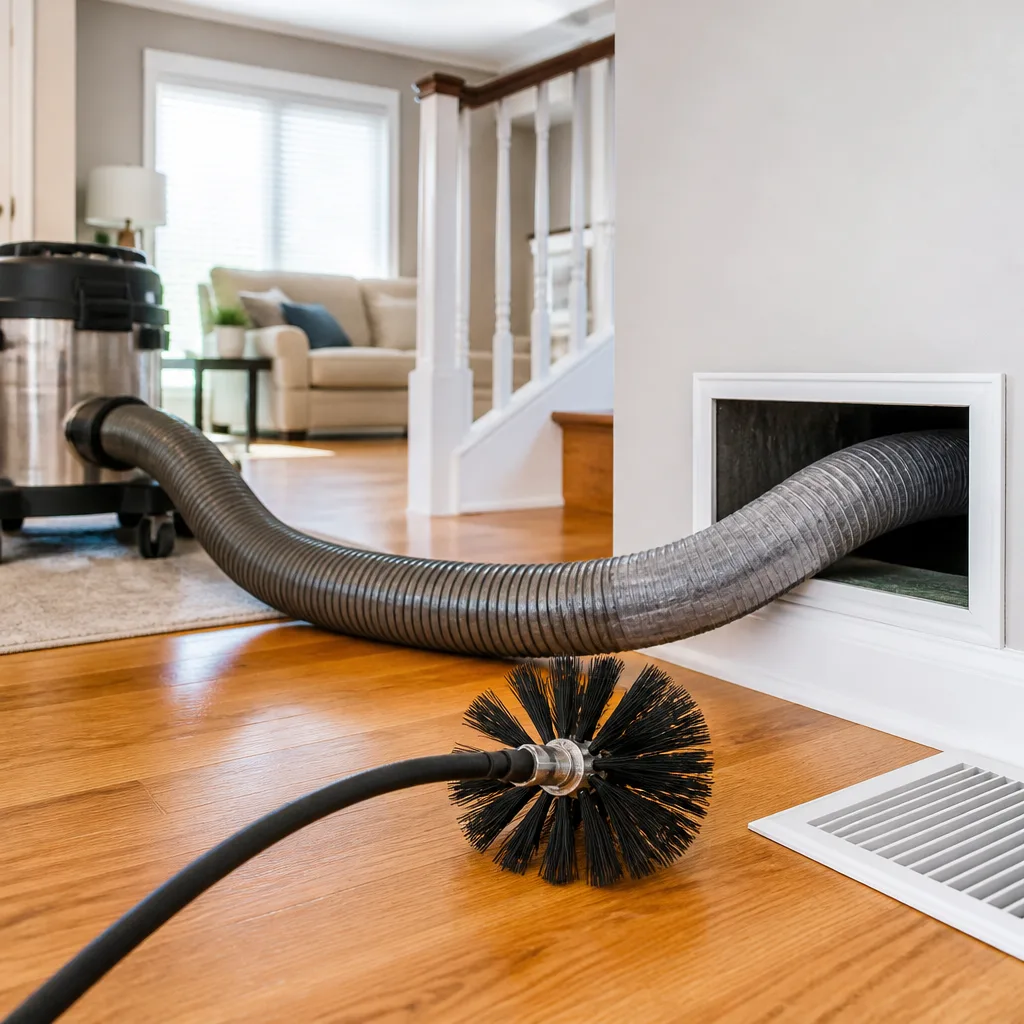 Whole-home duct cleaning
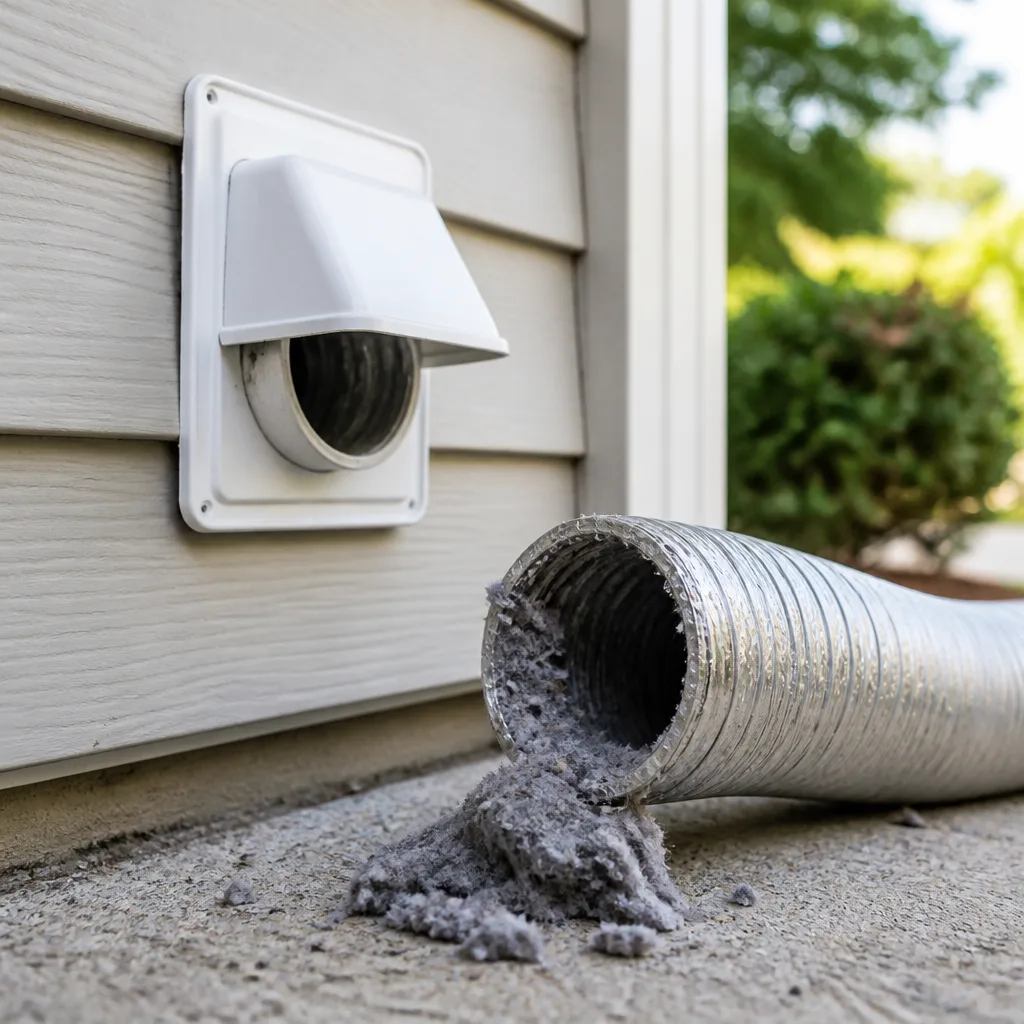 Dryer vent cleaning
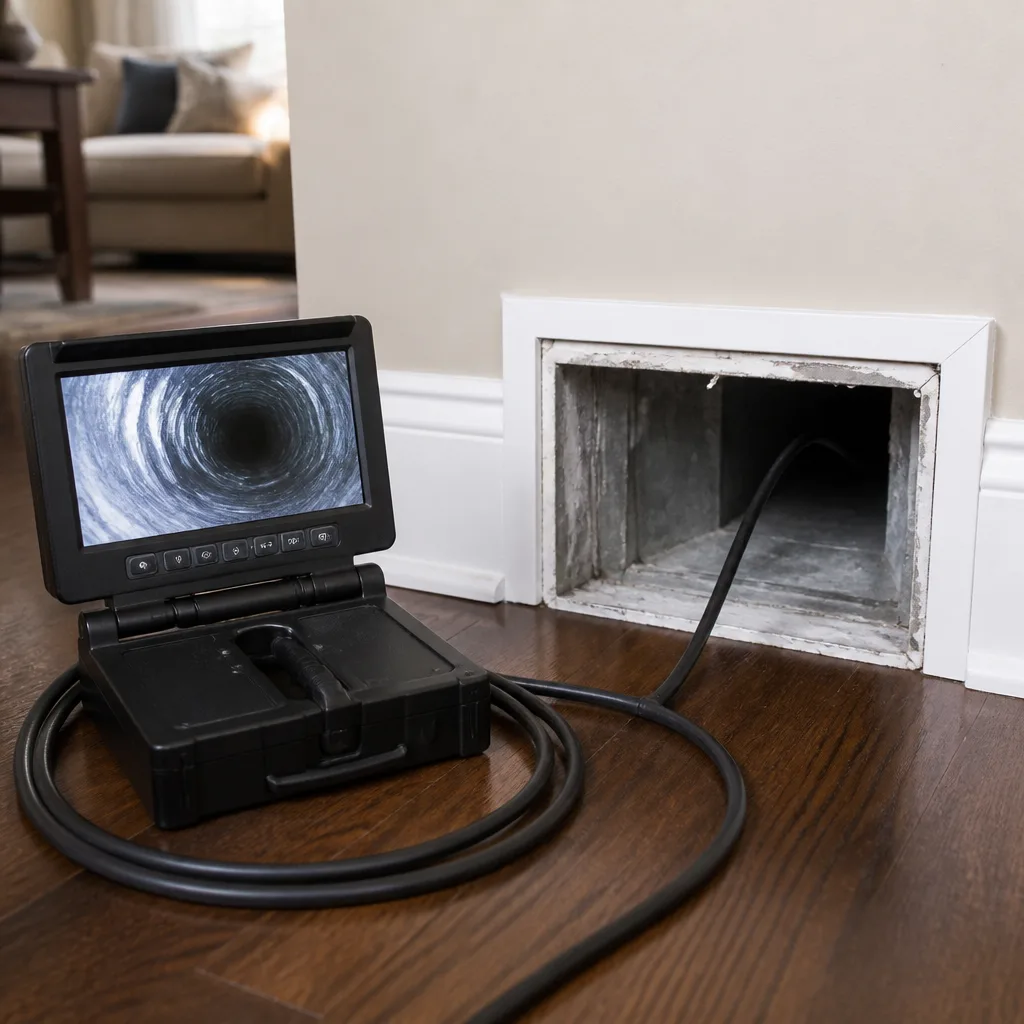 Camera inspection
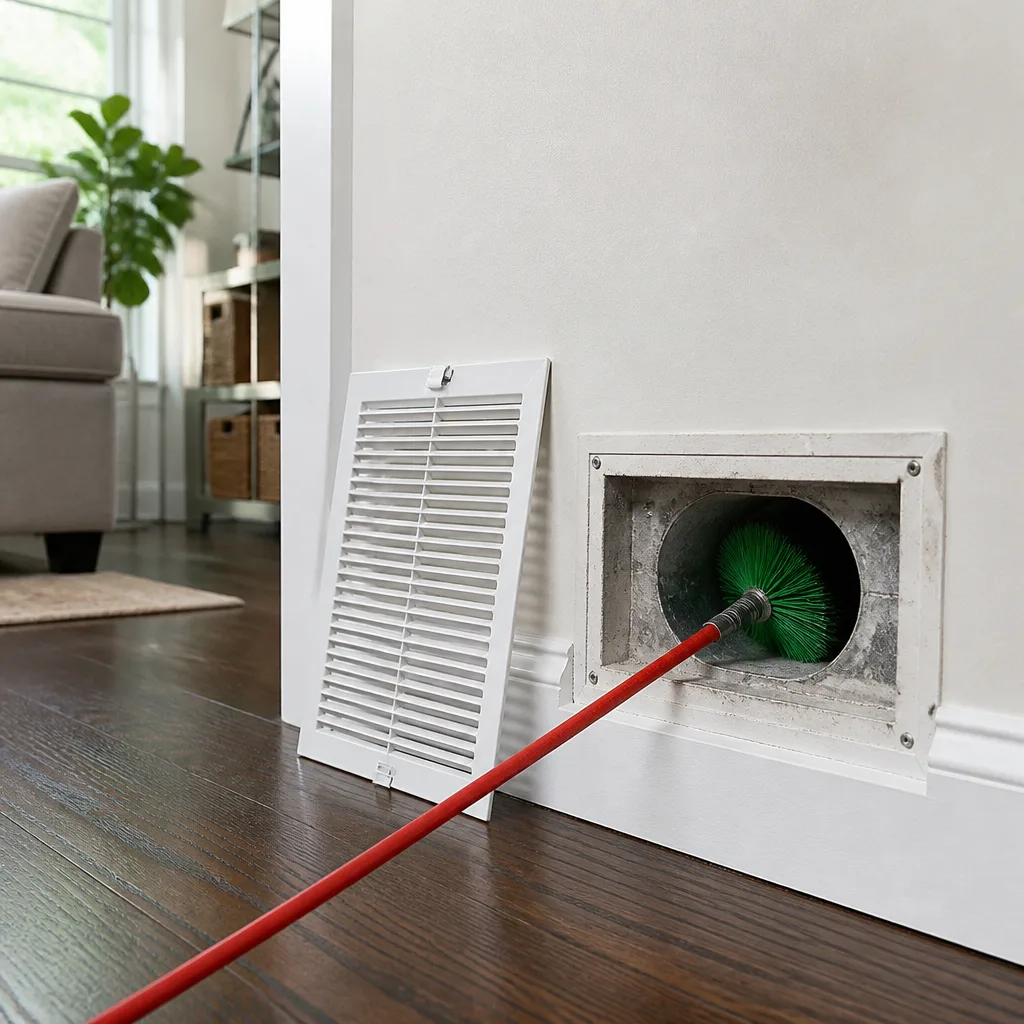 Sanitizing & deodorizing
Whole-system duct and dryer vent check with before-and-after photos - you see exactly what came out of your vents
That "$99 whole-house special" is a bait ad - the real number appears once they are in your hallway, or the "clean" is a shop-vac at the register. We photograph the inside of your ducts before and after instead.
DIY vs Professional Air Duct Cleaning: The Pico Rivera Homeowner’s Decision Guide
A $60 dryer vent brush kit and 45 minutes is a legitimate DIY win that reduces real fire risk. A $30 duct brush kit attached to a household vacuum pushed into a supply duct is not cleaning, it’s redistributing particulate into your living space. This guide walks through where the DIY line actually sits for Pico Rivera homeowners, what consumer equipment can and cannot physically do, and when the right move is to bring in negative-pressure extraction rather than stirring up what’s already settled in your ductwork.
Quick Answer
DIY air duct cleaning in Pico Rivera makes sense for surface-level tasks: wiping down registers, changing filters, and brushing out your dryer vent. Full ductwork cleaning requires commercial-grade negative-pressure equipment with HEPA filtration that creates suction strong enough to pull debris toward a collection point, something a household vacuum cannot do. If your goal is removing years of accumulated dust, pet dander, and construction debris from the entire duct system, professional cleaning is the only method that actually captures what it dislodges.
Styles & brands we work with
- Whole-home duct cleaning
- Dryer vent cleaning
- Camera inspection
- Sanitizing & deodorizing
Table of Contents
- What DIY Duct Cleaning Can Actually Do
- The Physics Problem: Why Your Vacuum Fails
- What Professionals Use That Consumers Can’t Buy
- The Dryer Vent Exception: A Real DIY Win
- The Flex Duct Risk in Pico Rivera Homes
- Robot Duct Cleaners: What They Can and Can’t Do
- When DIY Makes Sense in Pico Rivera
- Common Mistakes to Avoid
What DIY Duct Cleaning Can Actually Do
Before dismissing every DIY approach, let’s be precise about what’s genuinely effective. There are tasks a Pico Rivera homeowner can do this weekend that produce real results without touching the interior of the ductwork.
- Register and grille wipe-downs. Remove each supply register and return grille, wash them with warm soapy water, dry thoroughly, and vacuum the opening you can reach. This removes visible dust buildup at the entry and exit points of your system.
- Filter replacement. Checking your filter monthly and replacing it every 60 to 90 days is the single highest-impact maintenance task. A clean filter protects the blower motor and reduces the dust load entering the system. In Pico Rivera’s dry climate, filters often load faster during Santa Ana wind events when fine dust penetrates homes.
- Visual inspection. Use a flashlight and your phone camera to look inside accessible duct openings. You’re looking for visible debris accumulation, signs of rodent activity, disconnected sections, or crushed flex duct. What you see informs whether a professional cleaning or air duct cleaning with repair capability is warranted.
- Dryer vent brushing. More on this below, but a dedicated dryer vent brush kit used from the exterior vent opening can remove lint that poses a real fire risk.
None of these tasks require entering the ductwork itself. That’s where the physics changes.
The Physics Problem: Why Your Vacuum Fails
The core misunderstanding in the DIY duct cleaning debate isn’t about effort or skill. It’s about pressure dynamics, and most homeowners never hear this explained.
A household vacuum operates on positive pressure. It pulls air into a hose, captures some particulate in a bag or canister, and exhausts the remaining air back into the room. When you push a brush attached to that vacuum into a supply duct, you’re agitating settled dust, pollen, and dander, but you’re not containing it. The vacuum’s airflow, which moves through a narrow hose at high velocity but low volume, doesn’t create the pressure differential needed to pull debris from the far reaches of the duct system toward your intake point.
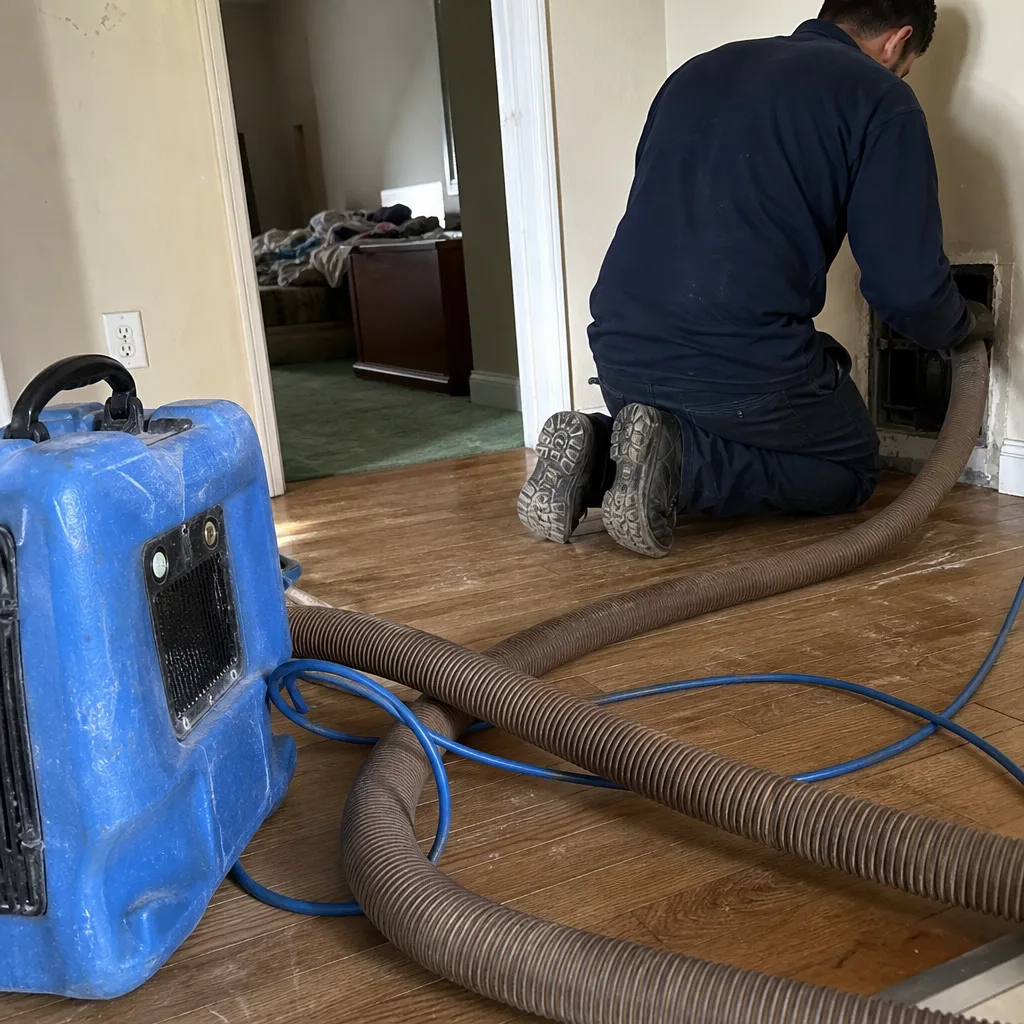
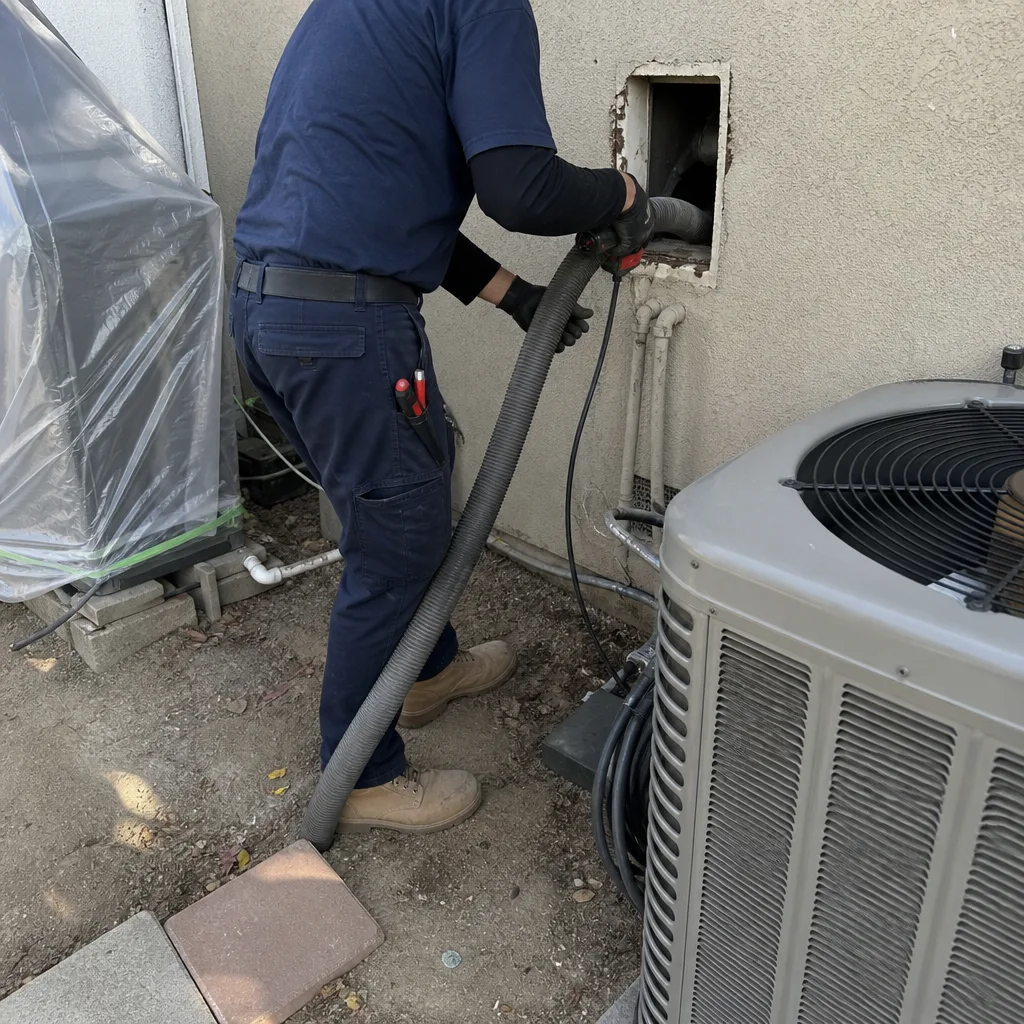
Professional duct cleaning works on negative pressure. A commercial system connects a powerful vacuum unit to the ductwork, creating suction that draws air from the entire system toward the collection point. Think of it as the difference between using a drinking straw to clear a pool versus opening a drain. The professional system creates air movement throughout the full duct run, not just the few feet you can reach with a brush.
What actually happens when a homeowner agitates dust in a duct without proper capture is predictable: the dislodged particulate goes somewhere. Some is pulled into the vacuum. The rest becomes airborne in the duct and redistributes through the home when the HVAC system cycles on. You’ve now taken settled, contained dust and turned it into respirable particles moving through your living space. That’s the opposite of cleaning.
What Professionals Use That Consumers Can’t Buy
Some of what separates professional equipment from consumer gear is about brand names. More of it is about fundamental design differences.
Commercial-grade duct cleaning systems used in Pico Rivera homes include Rotobrush and Nikro units, the same equipment categories HVAC contractors use on commercial jobs. These systems combine agitation tools with powerful negative-pressure collection. The agitation loosens debris adhered to duct walls, while the vacuum unit simultaneously captures it before it can enter the living space. HEPA filtration on the exhaust side means what’s extracted stays extracted.
We work with Rotobrush and Nikro systems because they’re contractor-grade tools, not consumer adaptations. A homeowner cannot rent or buy this equipment at any price point that makes sense for a single use. The systems cost thousands of dollars, require training to operate without damaging ductwork, and include filtration that household vacuums simply don’t have.
Beyond cleaning equipment, professional air-quality work often involves products from manufacturers like Honeywell, Aprilaire, and Abatement Technologies. These are brands associated with allergen control and hospital-grade filtration, not the aftermarket filters sold at big-box stores. When we assess air quality in a Pico Rivera home, we’re looking at the entire airflow pathway, not just what’s visible at the register.
The Dryer Vent Exception: A Real DIY Win
Here’s where the DIY case gets genuinely strong. Dryer vent cleaning is a task where consumer equipment can work, because the access point is short and straight enough that a brush kit genuinely reaches the problem area.
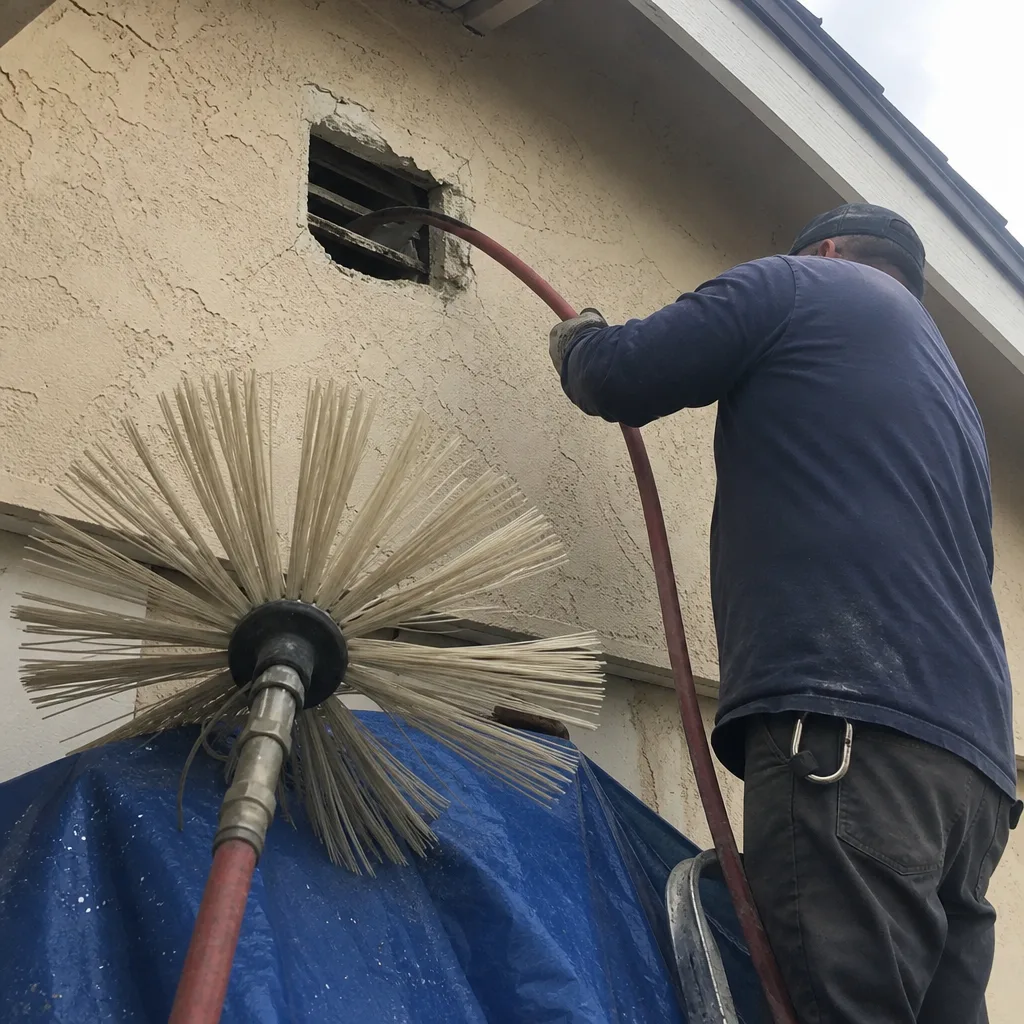
A dryer vent brush kit costs about $60. It includes flexible rods you connect and rotate through the vent from the exterior termination point. Lint, which is highly flammable and accumulates as a dense mat, breaks free with brushing and can be pulled out manually or with a shop vacuum at the opening. This isn’t positive-pressure redistribution, it’s mechanical removal of material you can see and reach.
The reason this works where duct cleaning doesn’t is geometry. A dryer vent runs 10 to 25 feet in a relatively straight line from the dryer to the exterior wall. A supply duct system branches, drops, and turns through an entire home. The brush reaches what matters in a dryer vent. It doesn’t in a duct system.
That said, even dryer vent DIY has limits. If the vent runs through an attic or interior wall with multiple turns, or if the termination point is on a roof rather than an exterior wall, the brush may not navigate the path. Pico Rivera homes built in the 1950s and 1960s often have short, straight dryer vents that exit through exterior walls, which makes them ideal DIY candidates. Newer homes with laundry rooms in the center of the floor plan may route vents through the attic, where a professional with a rotary brush and inspection camera is the safer choice.
The Flex Duct Risk in Pico Rivera Homes
Flex duct is the standard in most Pico Rivera residential construction. It’s inexpensive, easy to route through attics and crawl spaces, and perfectly functional when installed correctly. It’s also fragile in ways that matter specifically to DIY attempts.
The inner liner of flex duct is a thin plastic sleeve surrounded by insulation and an outer vapor barrier. That inner liner is easy to puncture with a stiff brush or the edge of a vacuum attachment. Once punctured, the duct leaks conditioned air into unconditioned space. In Pico Rivera summers, when attic temperatures regularly exceed 120 degrees, a punctured duct is pulling that hot air into the system and pushing conditioned air into the attic.
Worse, a punctured or collapsed section of flex duct creates a sag point where condensation can accumulate. That moisture, combined with dust that’s already present, creates conditions for biological growth inside the duct. A DIY cleaning attempt that seemed harmless has now introduced a problem that requires Duct Cleaning Pico Rivera to diagnose and repair.
Professional technicians are trained to work around flex duct without damaging it. The agitation tools used with Rotobrush and Nikro systems are designed to loosen debris without tearing liners. And when we encounter flex duct that’s already compromised, crushed, or disconnected, we can repair it on the same visit rather than cleaning around a defect.
Robot Duct Cleaners: What They Can and Can’t Do
The “duct cleaning robot” trend is worth addressing directly, because the marketing promises are compelling and the physics don’t support them.
A duct cleaning robot is a small motorized device with a camera and a brush that crawls through accessible duct sections. They can be purchased online for a few hundred dollars. What a robot does well is inspection. The camera gives you a real-time view of what’s inside your ducts, which is genuinely useful for identifying debris, damage, or disconnection.
What a robot cannot do is clean. The brush agitates what it touches, but there’s no extraction system attached. Dislodged particulate simply resettles in the duct or gets blown into the home when the HVAC cycles. A robot with a small onboard vacuum has the same problem as a shop-vac setup: the collection capacity is tiny, the filtration is minimal, and the negative pressure it generates doesn’t move air through the full duct run.
Think of a robot as a diagnostic tool, not a cleaning tool. It can show you that your ducts need attention. It cannot provide the extraction force that actually removes what it’s showing you.
When DIY Makes Sense in Pico Rivera
The honest answer is that DIY makes sense for specific, bounded tasks and not for full-system cleaning. Here’s how to think about it.
- DIY is right for: Register wipe-downs, filter changes, visual inspections, and straight-run dryer vent brushing. These tasks are low-risk, require no specialized equipment, and produce genuine results you can verify with your own eyes.
- DIY is wrong for: Anything that involves entering the ductwork itself, brushing interior duct surfaces, or attempting to remove debris you can’t reach from an opening. Without negative-pressure extraction, you’re moving contaminant around rather than removing it.
- Professional cleaning is right for: Systems that haven’t been cleaned in five or more years, homes where residents have respiratory sensitivities or allergies, post-construction or post-remodel dust, visible debris at registers, or ductwork that’s showing signs of damage. If you live near Pico Rivera neighborhoods with mature landscaping, seasonal pollen and fine dust from the San Gabriel River area settle in duct systems and recirculate through the home.
The climate factor matters here. Pico Rivera’s dry, warm climate means windows stay closed and HVAC systems run for much of the year. That concentrates the home’s airborne particulate load in the ductwork rather than diluting it with fresh air exchange. A dusty duct system in this climate isn’t just an aesthetic issue, it’s a continuous indoor air quality problem.
Common Mistakes to Avoid
- Using a leaf blower in a duct opening. This seems aggressive enough to work, but it’s pure positive pressure with no capture. You’re pressurizing the system and forcing dust through every leak point and register into the home. This is worse than doing nothing.
- Buying a $30 brush kit and expecting professional results. The brush reaches what you can physically access, which is typically the first few feet of duct. The remaining 90% of the system is untouched, and what you dislodged near the opening is now airborne.
- Neglecting the return side. Homeowners often focus on supply registers where dust is visible. The return side pulls air from the living space into the system and often carries more accumulated debris, especially in Pico Rivera homes where return grilles sit low on walls and collect household dust.
- Ignoring flex duct damage from previous DIY attempts or age. Crushed, sagged, or disconnected flex duct doesn’t just leak air, it creates moisture and contamination points. If you see damaged flex duct during a visual inspection, cleaning alone won’t solve the problem.
- Assuming a clean filter means clean ducts. The filter protects the equipment, not the ductwork. Particulate that passes through the filter or enters through leaks and gaps still coats the duct interior over time.
- Using chemical “duct fresheners” or foggers. Masking odors with chemicals doesn’t remove the source. Some products leave residue inside ducts that attracts additional dust. Real cleaning removes what’s causing the odor.
- Delaying dryer vent cleaning while doing everything else. Lint accumulation is the leading cause of dryer fires, and it’s the one task on this list with genuine life-safety stakes. Brush that vent every year regardless of what else you do.
See the difference
 Before
 After
 Before
 After
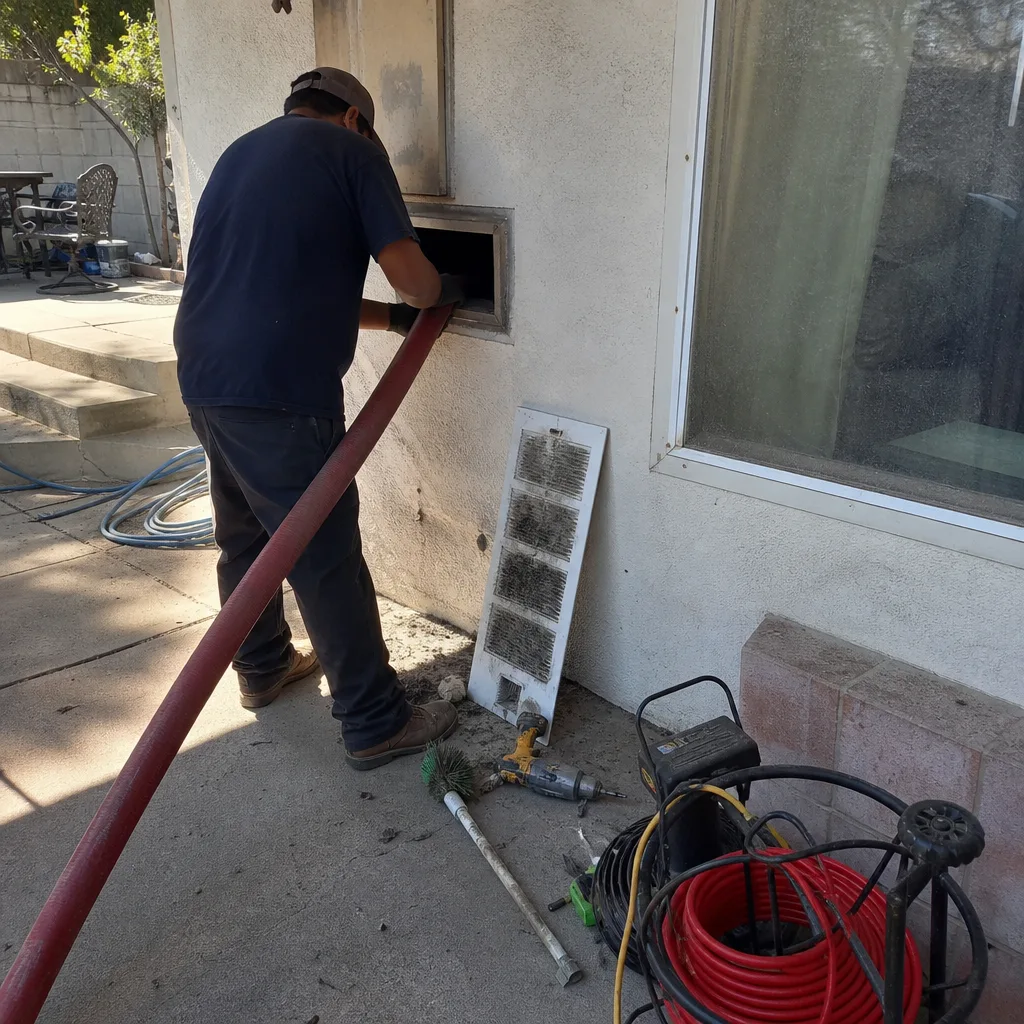 Before
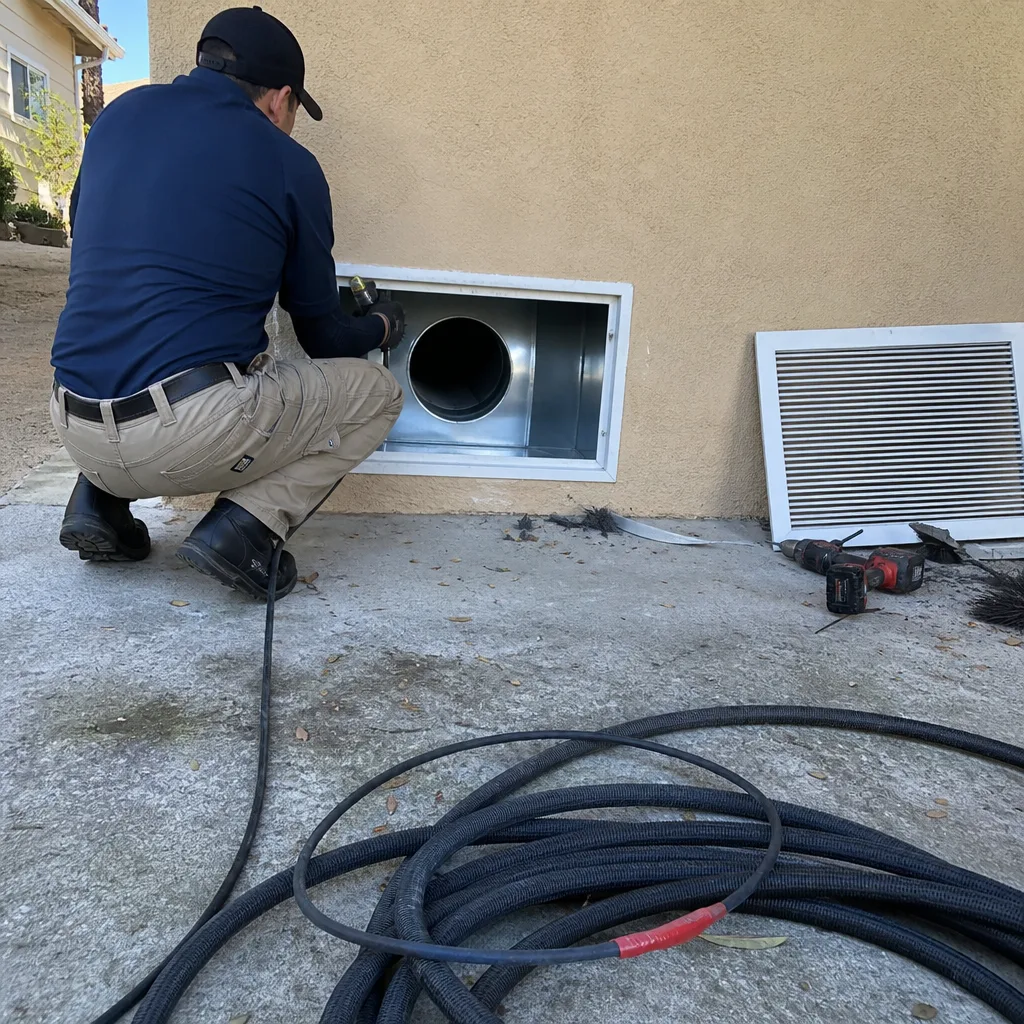 After
When to Call a Professional
Call a professional when you see visible dust accumulation at multiple registers after cleaning the registers themselves. Call when a home renovation has deposited drywall dust or sawdust through the return side of the system. Call when household members with asthma or allergies report symptoms that worsen when the HVAC runs. Call when your visual inspection shows flex duct that’s crushed, disconnected, or showing signs of moisture damage. Call when the system hasn’t been cleaned in five or more years and you can’t verify what’s inside.
Duct Cleaning Pico Rivera offers free estimates in Pico Rivera. Call (833) 734-6877. We answer 24/7. Fast dispatch from 7am to 7pm, Sunday through Friday.
Frequently Asked Questions
How much does professional air duct cleaning cost in Pico Rivera?
Professional air duct cleaning in Pico Rivera typically runs between $350 and $700 for a standard single-family home, depending on the number of systems, the size of the ductwork, and whether repairs are needed. The written estimate sets the final price, not a per-vent rate. Call (833) 734-6877 for a free estimate on your specific home.
Can I clean my air ducts myself with a vacuum?
No. A household vacuum creates positive pressure at the end of a narrow hose, which agitates dust without capturing it. Professional systems create negative pressure that pulls debris from the full duct run toward a filtered collection point. What you dislodge with a shop-vac setup typically ends up recirculated through the home.
How often does air duct cleaning actually need to be done?
Every 3 to 5 years for most Pico Rivera homes, more often if you have pets that shed heavily, recent construction dust, or household members with respiratory conditions. The 3-to-5-year range assumes regular filter changes and no major dust-generating events in between.
Is dryer vent cleaning different from duct cleaning?
Yes. Dryer vent cleaning is a focused task on a short, straight run that carries hot, lint-laden air from the dryer to the exterior. Duct cleaning addresses the entire HVAC distribution system. They require different equipment and have different safety stakes, since lint accumulation is a fire hazard.
Do those robot duct cleaners really work?
They work for inspection. The camera shows you what’s inside your ducts, which has real diagnostic value. They do not work for cleaning, because there’s no extraction system attached. Dislodged debris resettles or recirculates. Use a robot to see the problem, then call a professional to remove it.
Why are some duct cleaning quotes so much cheaper?
Cheaper quotes typically mean smaller equipment with less extraction power, often a portable unit with minimal filtration. They may also price per vent, which creates an incentive to rush through the job. Professional systems like Rotobrush and Nikro cost more to operate and require more training, and they remove more material per visit. One flat price per system, agreed before work starts, is how you avoid the bait-and-switch.
What’s the difference between duct cleaning and duct repair?
Cleaning removes debris from the duct interior. Repair addresses damage: crushed flex duct, disconnected sections, gaps at connections, and leaks. If your ducts are damaged, cleaning alone leaves the airflow problem in place. We perform air duct repair as a core service, not an add-on, so a single visit can address both issues.
The Bottom Line
The DIY versus professional air duct cleaning decision comes down to physics, not effort. You can genuinely improve your home’s air quality this weekend by wiping registers, changing filters, and brushing out your dryer vent. What you cannot do is clean the interior of a duct system with consumer equipment, because positive-pressure agitation without extraction redistributes contamination instead of removing it. Professional negative-pressure systems with HEPA filtration, operated by technicians who understand flex duct fragility and can repair damage they encounter, are the only method that actually captures what it dislodges. For Pico Rivera homeowners, the right sequence is DIY the surface tasks, inspect what you can see, and call (833) 734-6877 when the ductwork itself needs attention. We answer 24/7. Fast dispatch from 7am to 7pm, Sunday through Friday.
Written by the team at Duct Cleaning Pico Rivera, serving Pico Rivera since 2011.