
Last updated November 4, 2026
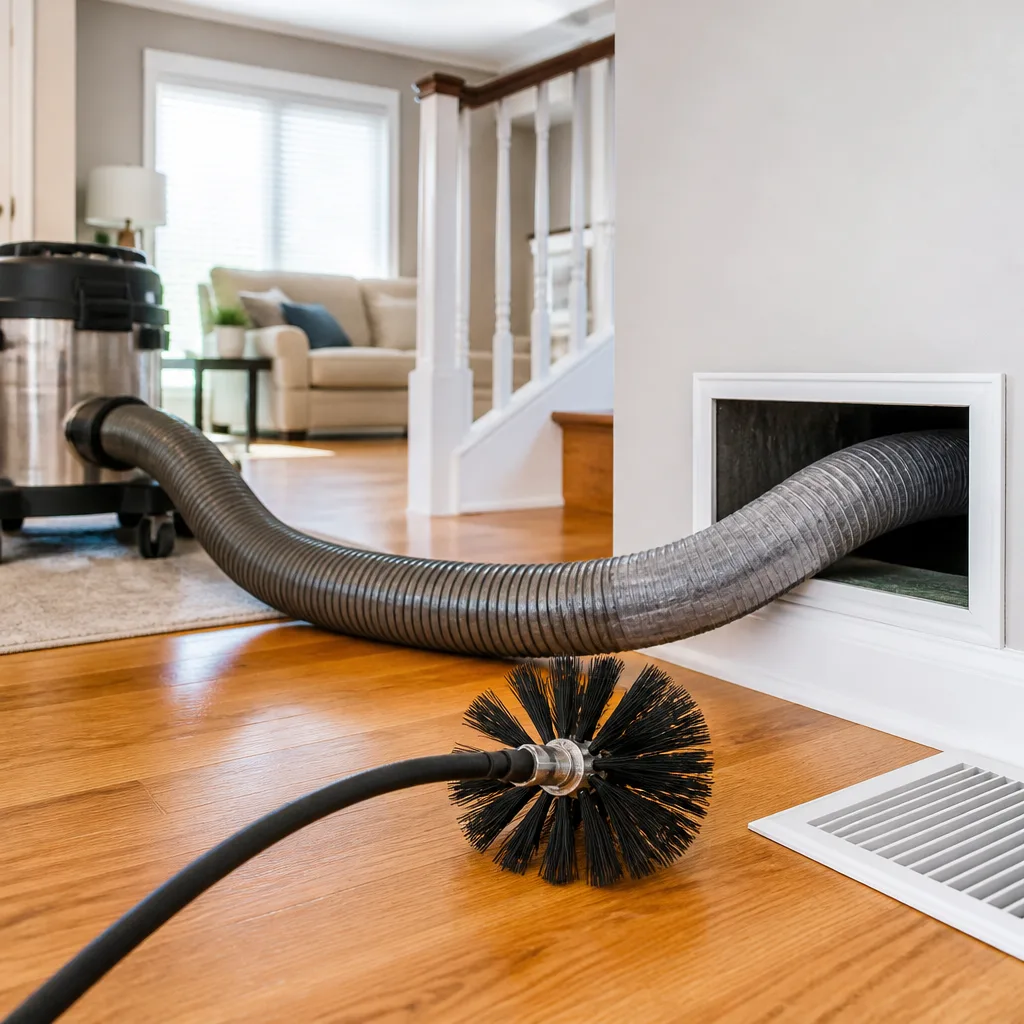 Whole-home duct cleaning
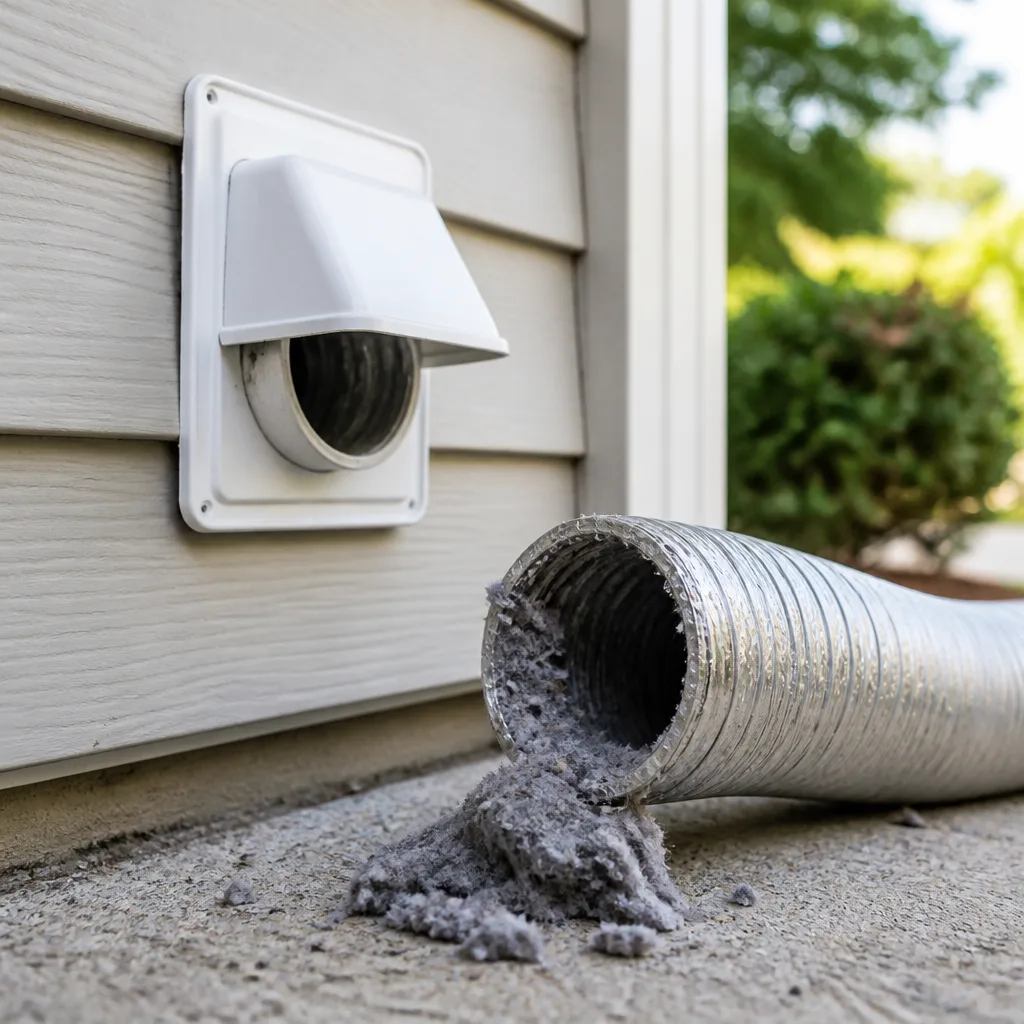 Dryer vent cleaning
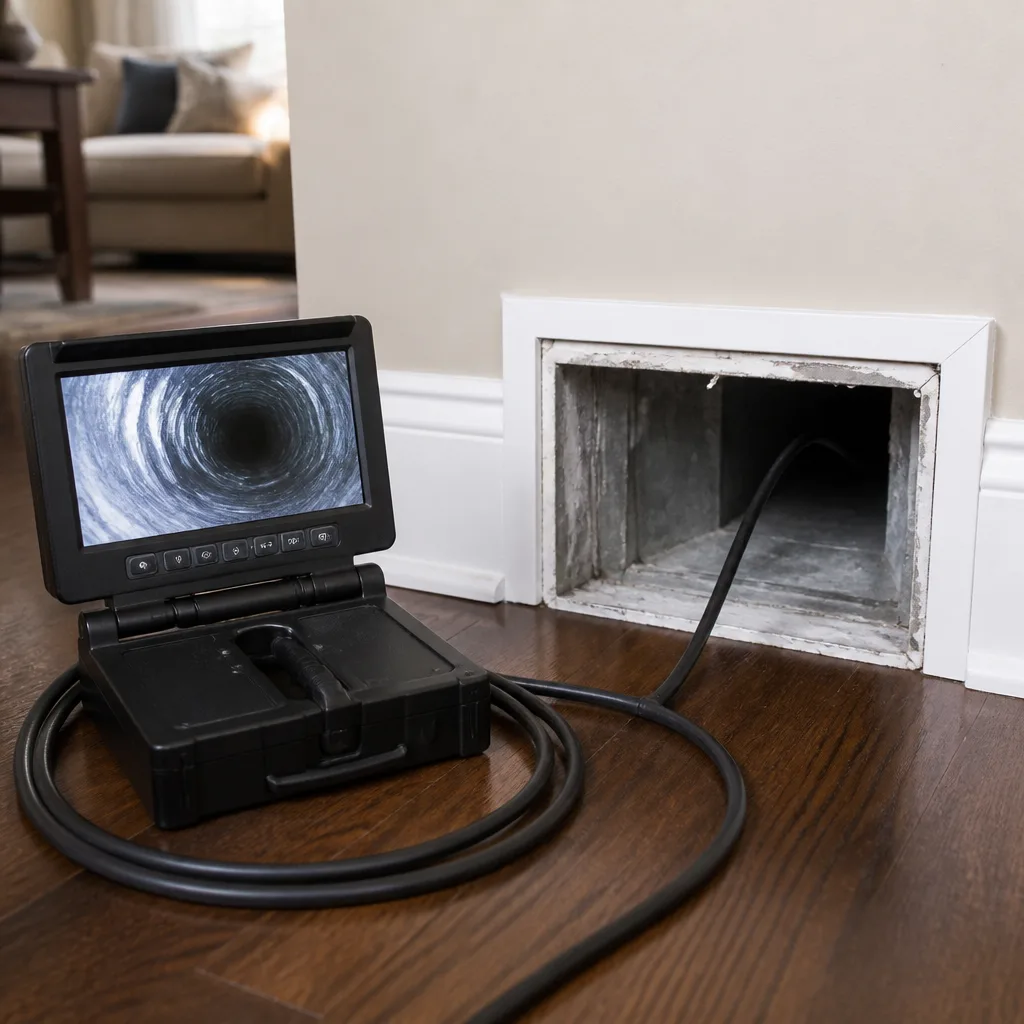 Camera inspection
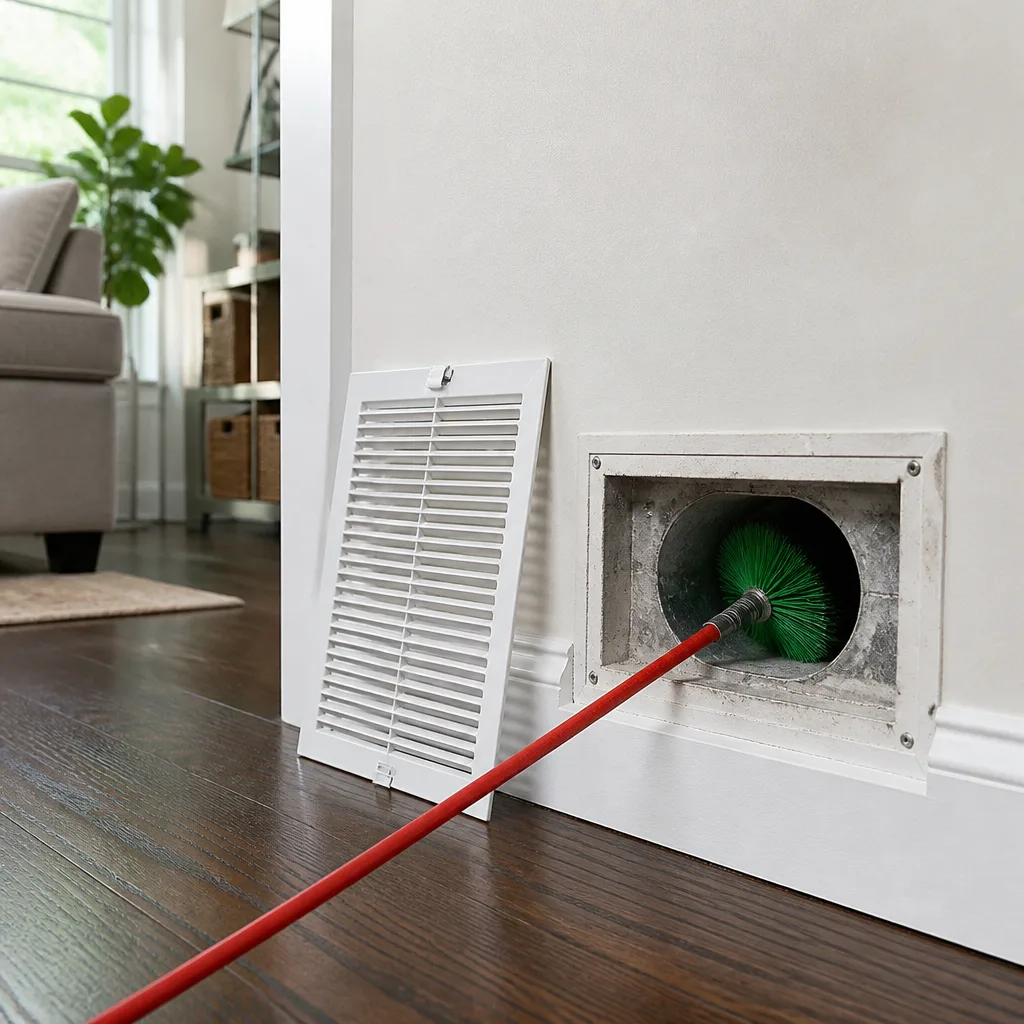 Sanitizing & deodorizing
Whole-system duct and dryer vent check with before-and-after photos - you see exactly what came out of your vents
That "$99 whole-house special" is a bait ad - the real number appears once they are in your hallway, or the "clean" is a shop-vac at the register. We photograph the inside of your ducts before and after instead.
Air Duct Cleaning Maintenance Checklist for Pico Rivera Homeowners
If you changed your air filter last month but haven’t looked at your return air grilles in two years, you’ve been filtering air through a contaminated delivery system. It’s the equivalent of running clean water through a dirty pipe. Most Pico Rivera homeowners assume the filter is the whole story; it’s not. A filter is a single point of intervention in a much longer system of ductwork, coils, vents, and returns that all accumulate dust, pet dander, and cooking residue at different rates. This checklist organizes the entire air pathway into tasks you can do yourself and tasks that genuinely require professional equipment, so you can finally understand what “maintenance” actually means past replacing a $12 filter.
Quick Answer
Air duct maintenance in Pico Rivera is a routine that combines monthly homeowner tasks (filter replacement, register inspection, return grille wipe-downs) with professional cleaning every three to five years, depending on household size, pets, and respiratory sensitivities. A complete maintenance cycle covers six zones: filters, supply registers, return air pathways, the air handler, the dryer vent, and the ductwork itself. Skipping any zone means contaminant buildup continues upstream and re-enters your breathing air regardless of what you just cleaned downstream.
Styles & brands we work with
- Whole-home duct cleaning
- Dryer vent cleaning
- Camera inspection
- Sanitizing & deodorizing
Table of Contents
- Homeowner Tasks: What You Can Do Every Month
- Professional Tasks: What Requires Real Equipment
- Frequency Guide by Household Type
- What Older Pico Rivera Homes Need You to Check
- The Dryer Vent: The Item Most Homeowners Skip
- Post-Cleaning Verification: What to Confirm Before You Sign Off
- Common Mistakes to Avoid
- When to Call a Professional
Homeowner Tasks: What You Can Do Every Month
Some duct-maintenance work is genuinely yours to handle. You do not need a contractor to swap a filter or inspect a register. What you do need is a repeating schedule, because these small tasks compound. A filter that runs two months past its lifespan stops trapping particles and begins loading the coil with dust, which then spreads through every vent in the house.
The tasks below assume a standard forced-air HVAC system, which is the most common configuration in Pico Rivera homes. Here’s what falls to you:
- Replace the HVAC filter. If you have a one-inch disposable filter, plan on every thirty days during high-use months. This is not a marketing line; Pico Rivera’s inland summer heat pushes air conditioners hard, which means more air volume moving through the filter. A four-inch media filter can go sixty to ninety days. Write the install date on the filter frame with a permanent marker so you stop guessing.
- Wipe visible supply registers. Remove each register cover, wipe the visible inside lip of the boot with a damp microfiber rag, and vacuum around the opening. You are not cleaning the duct; you are preventing the visible portion from becoming a dust reservoir that re-contaminates the room every time the blower kicks on.
- Vacuum return air grilles. The return side pulls air from your living areas toward the air handler. A clogged return grille restricts airflow and forces the system to work harder, which costs real money on a Pico Rivera summer electric bill.
- Check the condensate drain line. A slow-draining line leads to water pooling around the air handler. In Pico Rivera’s dry climate, that water evaporates, leaving mineral scale and eventually a biofilm. If your HVAC closet smells musty, the drain line is likely the source.
- Inspect registers for visible mold, moisture staining, or pest activity. You are not expected to remediate anything. You are checking for red flags that tell you when to make a call.
The point of the homeowner list is not deep cleaning. It is controlling the accessible surfaces. Anything beyond the reach of your hand requires a professional with negative-pressure equipment and the training to know where the actual contamination lives.
Professional Tasks: What Requires Real Equipment
There’s a reason professional air duct cleaning uses industrial equipment rather than consumer vacuums. The entire duct system is under negative pressure during a proper cleaning. A powerful vacuum is connected to the supply or return side, pulling air backward through the system at a CFM rate that dislodges and captures debris rather than simply stirring it up and pushing it out into your rooms. Consumer shop vacs cannot generate that airflow. They also cannot reach the full length of a duct run, which in many Pico Rivera single-story homes can stretch thirty to forty feet from the air handler to the farthest bedroom.
Professional-only tasks include:
- Negative-pressure cleaning of the entire supply and return ductwork. This is the core of the service. Tools such as Rotobrush and Nikro systems use agitated brushing combined with high-CFM extraction, the same class of equipment used by commercial HVAC contractors. The goal is not just to knock debris loose; it’s to capture it at the source before it re-enters the home.
- Air handler and coil inspection. The coil sits just past the filter and is often the most contaminated surface in the system. Dust that bypasses a cheap filter deposits onto the coil, creating a damp, darkened environment that reduces heat exchange efficiency. Professional cleaning addresses this with coil-safe agents and direct access.
- Duct repair identification. This is the part most cleaning companies skip. A professional should be looking for disconnected boots, collapsed flex duct, separated joints, and torn foil. Duct repair is a separate discipline from duct cleaning, and a company that offers both can fix a compromised section on the same visit instead of cleaning it and leaving the root problem intact.
- Sanitizing the interior surfaces. Not every home needs this, but homes with persistent odor issues or prior pest activity benefit from a professional-grade sanitizer applied after debris removal. This is not the same as fogging a room; it’s a targeted treatment inside the duct path.
The distinction worth internalizing: you maintain the visible surfaces, professionals maintain the enclosed pathway. Both are necessary. A spotless register bolted to a filthy duct still delivers dirty air.
Frequency Guide by Household Type
No single cleaning interval fits every Pico Rivera household. The right schedule depends on how much particulate matter your household generates and how sensitive the occupants are to what remains airborne. Here’s a practical breakdown:
Single Occupant, No Pets, No Respiratory Issues
Professional cleaning: every 4 to 5 years. Filter changes remain monthly during high-use months. A single person generates far less dust, and without animal dander or high-traffic shoes in the house, the system accumulates contamination slowly. The primary source of duct debris becomes the HVAC system itself: degrading filter fibers, dust entering through minor gaps, and normal mechanical wear on the blower.
Family of Four with Pets
Professional cleaning: every 3 to 4 years. Pets add dander and hair to the airstream at a rate no filter can fully handle. Children bring in dirt from play, and more bodies mean more skin cell shedding, more bathroom humidity, and more cooking residue. If the family includes a dog that sheds seasonally, consider checking supply registers every two weeks during peak shedding months. You will see the accumulation before the ducts need professional attention.
Allergy or Asthma Household
Professional cleaning: every 2 to 3 years. Respiratory sensitivity changes the math. It is not that the ducts are dramatically dirtier; it’s that the occupants react to lower concentrations of dust, pollen, and dander. For these households, pairing professional cleaning with high-efficiency filtration from brands like Honeywell or Aprilaire makes a measurable difference. A MERV 13 filter captures particles that pass right through a standard fiberglass filter, but it also loads faster, so replacement discipline matters more.
These are starting points, not rigid rules. The honest answer is that visual inspection tells the truth. If you remove a register and see dust caked on the inside of the boot or clumps hanging from the register blades, the system is telling you it’s overdue regardless of calendar math.
What Older Pico Rivera Homes Need You to Check
Pico Rivera’s housing stock includes a substantial number of homes built between the 1950s and 1970s. That matters for duct maintenance because construction practices and materials from that era present specific failure points that newer homes do not. We work with homeowners throughout Pico Rivera whose ductwork has never been upgraded since the original build, and the pattern is consistent.
Homes built before roughly 1980 commonly used one of two duct materials: rigid sheet metal or flexible foil duct. Sheet metal is durable and can last decades, but the joints degrade. The original tape sealing those joints dries out, cracks, and eventually falls away, leaving gaps that pull attic air directly into the airstream. In a Pico Rivera summer, that attic air can exceed 130 degrees, which means your air conditioner is cooling super-heated air that never should have entered the duct path.
Flex duct issues look different. The inner liner can tear or separate from the collar, and the insulation jacket can compress over time, reducing effective R-value. Older flex duct in Pico Rivera attics is also susceptible to rodent damage. Rats and mice nest in the insulation, chew through the liner, and leave droppings inside the duct path. That is a contamination problem no amount of cleaning can fix without first repairing the duct.
Specific things to check on pre-1980 homes:
- Disconnected boots. Remove a register and look for a gap between the register boot and the drywall opening. A visible gap means attic air is being pulled into the room along with the conditioned air.
- Crushed or kinked flex duct. From the attic access, look for sections that bend sharply or appear flattened. Crushed flex reduces airflow to the rooms at the end of that run, which is why one bedroom is always hotter in summer.
- Torn foil outer layer. The shiny outer jacket is the insulation barrier. Rips expose the inner liner and allow condensation in humid conditions, which leads to moisture inside the duct.
- Dark streaks around registers. This often indicates air leakage around the register boot pulling attic dust into the visible part of the vent. Cleaning the register won’t fix it; the gap needs sealing.
The lesson for older Pico Rivera homes: cleaning the ductwork without first checking its structural integrity is wasted effort. The system must be intact to stay clean. A company that offers duct repair as a core service can address both issues in one appointment, which is the only efficient way to handle interconnected problems in the same air pathway.
The Dryer Vent: The Item Most Homeowners Skip
Your dryer vent is part of your home’s air pathway, even though it doesn’t connect to the HVAC system. Lint accumulates in the vent pipe at a rate determined by how often you run the dryer and how effectively the lint trap catches what it should. Most people never think about it until the dryer starts taking two cycles to dry a load. By then, the vent is restricted enough to matter.
The risk is fire, and it’s a serious one. Lint is highly flammable, and a restricted vent holds heat against that fuel source with every cycle. This is why dryer vent cleaning should be a mandatory line item on any duct maintenance checklist. The fact that most homeowners omit it is exactly why it remains a leading source of preventable residential fire risk.
Lint buildup timeline by usage:
- Two or three loads per week: inspect the vent annually, professional cleaning every two to three years.
- Family with daily laundry: inspect every six months, professional cleaning every one to two years.
- Household with multiple pets and heavy towel or bedding loads: professional cleaning annually, with visual checks between cleanings.
What you can check yourself: go outside while the dryer is running and feel the vent termination. Strong, warm airflow pushing steadily from the vent is good. Weak airflow, no airflow, or a flapper that doesn’t fully open is bad. Also check the interior lint trap housing for lint bypassing the screen. If you see significant accumulation around the trap itself, the duct downstream is likely worse.
Post-Cleaning Verification: What to Confirm Before You Sign Off
After a professional Duct Cleaning Pico Rivera service, you should be able to verify that the work actually happened. Not by watching the technician, but by checking specific physical evidence that remains afterward.
Here is the verification checklist:
- Before-and-after photos of the main trunk line. Any professional using real equipment should be able to show you the interior of the main supply duct before and after cleaning. The difference should be obvious: bare metal or clean flex liner on the “after” image.
- Debris removed. Ask what came out. You should hear specifics: pounds of material, whether it was construction debris, pet hair, or dust. Vague answers usually mean nothing meaningful was extracted.
- Register differential. After cleaning, remove a few register covers and look inside the boot with a flashlight. There should be no visible dust clumps or debris. The boot should look clean several inches into the opening.
- Airflow at the farthest register. Go to the room farthest from the air handler and feel the airflow. If it’s noticeably stronger than before, the cleaning removed a meaningful restriction.
- Odor neutralization. If a sanitizer was applied, the smell should be mild and clean, not perfumey or chemical. It should dissipate within a few hours.
You are not expected to be an HVAC inspector. But confirming these five points takes five minutes and tells you whether the service was performed at a professional standard or whether someone simply ran a vacuum through the visible portion and called it done.
Common Mistakes to Avoid
- Treating the filter as the entire maintenance plan. A filter protects the equipment more than it cleans your air. It stops large particles from coating the coil, but it does nothing for dust already inside the ducts or gaps pulling attic air into the system.
- Using the cheapest filter available. Fiberglass filters with a MERV rating of 1 to 4 are basically lint catchers. In Pico Rivera’s dry season, when outdoor dust levels rise, they let fine particulate pass straight through. Upgrade to at least a MERV 8, and look at MERV 13 if anyone in the house has allergies. Honeywell and Aprilaire both make filters that fit standard one-inch and four-inch housings.
- Closing off registers in unused rooms to save energy. Your system is balanced for a specific static pressure. Closing registers throws off that balance and forces the blower to work against higher pressure, which can cause coil freezing in summer and premature blower wear. It does not save the money people think it does.
- Ignoring the return side. Homeowners remember supply registers because that’s where air comes out. The return side gathers air passively, and with it gathers hair, dust, and dander from the rooms you actually live in. A dirty return grille starves the system for air and makes every other maintenance task less effective.
- Skipping the dryer vent because it’s “separate.” It’s a fire safety item. Period. Treat it as a mandatory part of home air maintenance, not an optional add-on.
- Cleaning ducts before fixing leaks. If your pre-1980 Pico Rivera home has disconnected boots or torn flex, cleaning first just means you’ll clean again after the repair. The repair should come first, then the cleaning captures whatever the repair process stirred up.
When to Call a Professional
Call a professional when the problem is beyond what a filter swap or register wipe can reach. If you see visible dust blowing from the registers when the system turns on, that’s not a maintenance issue; that’s enclosed contamination. If your air conditioner runs constantly and half the house stays warm, the problem may be a crushed or disconnected duct, not a dirty coil. If the dryer vent has not been cleaned in over two years and you run daily loads, book it now. And if a family member’s allergies worsen inside the house compared to outside, the air pathway is the first place to look.
Duct Cleaning Pico Rivera offers free estimates in Pico Rivera. Call (833) 734-6877. We answer 24/7. Fast dispatch from 7am to 7pm, Sunday through Friday.
See the difference
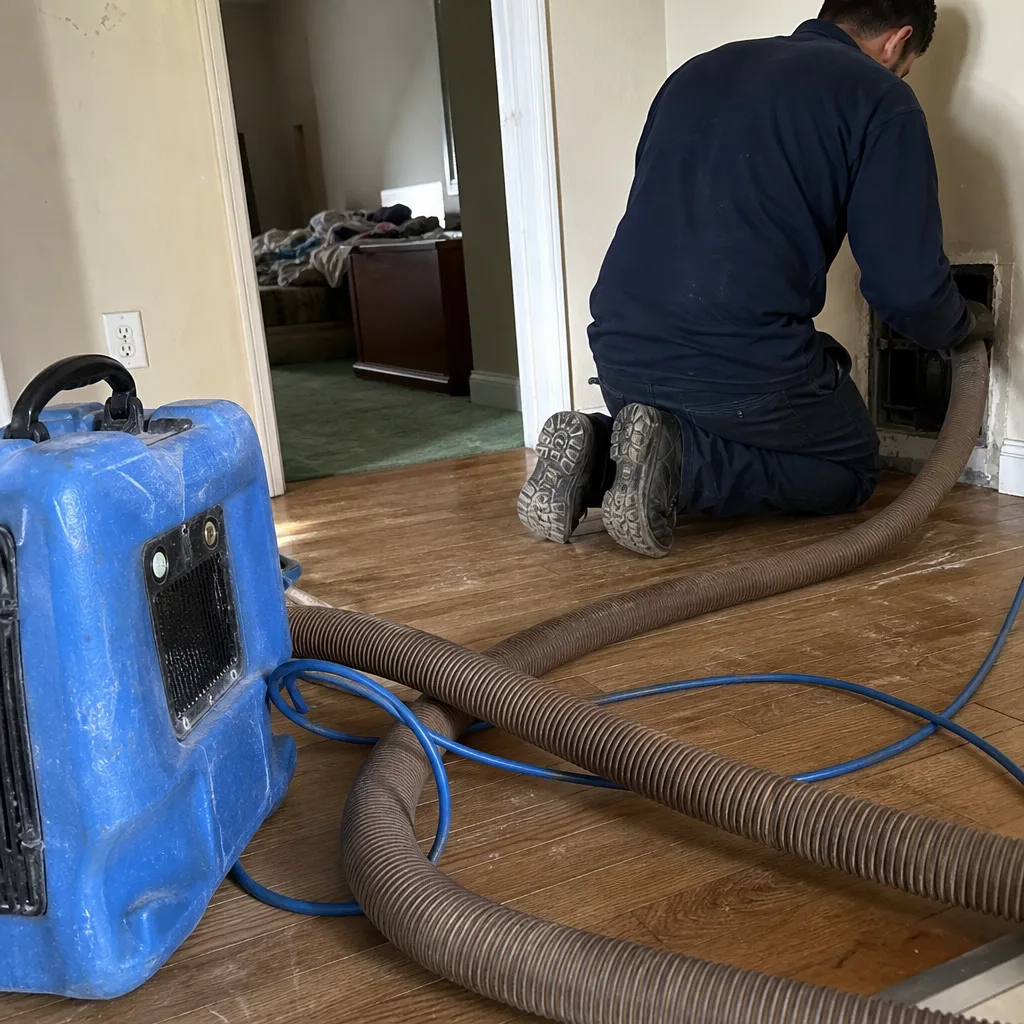 Before
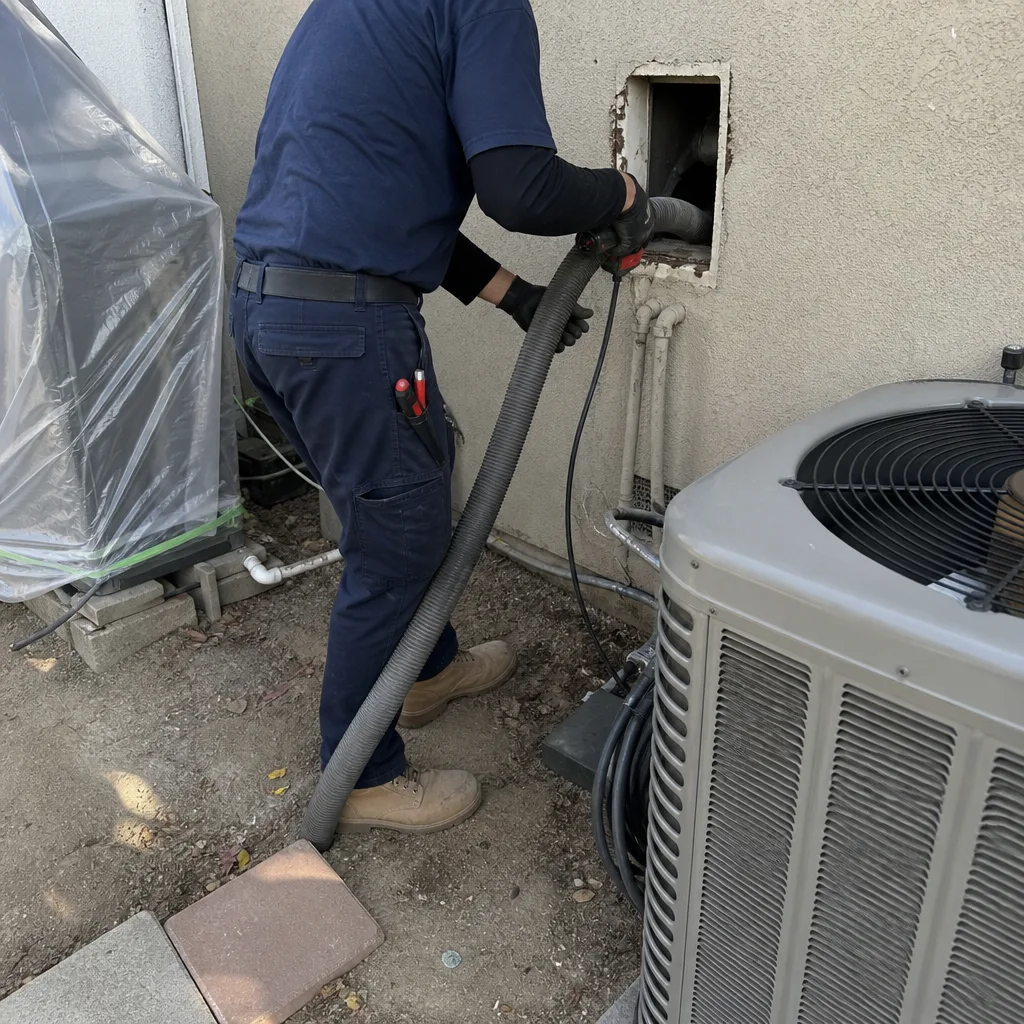 After
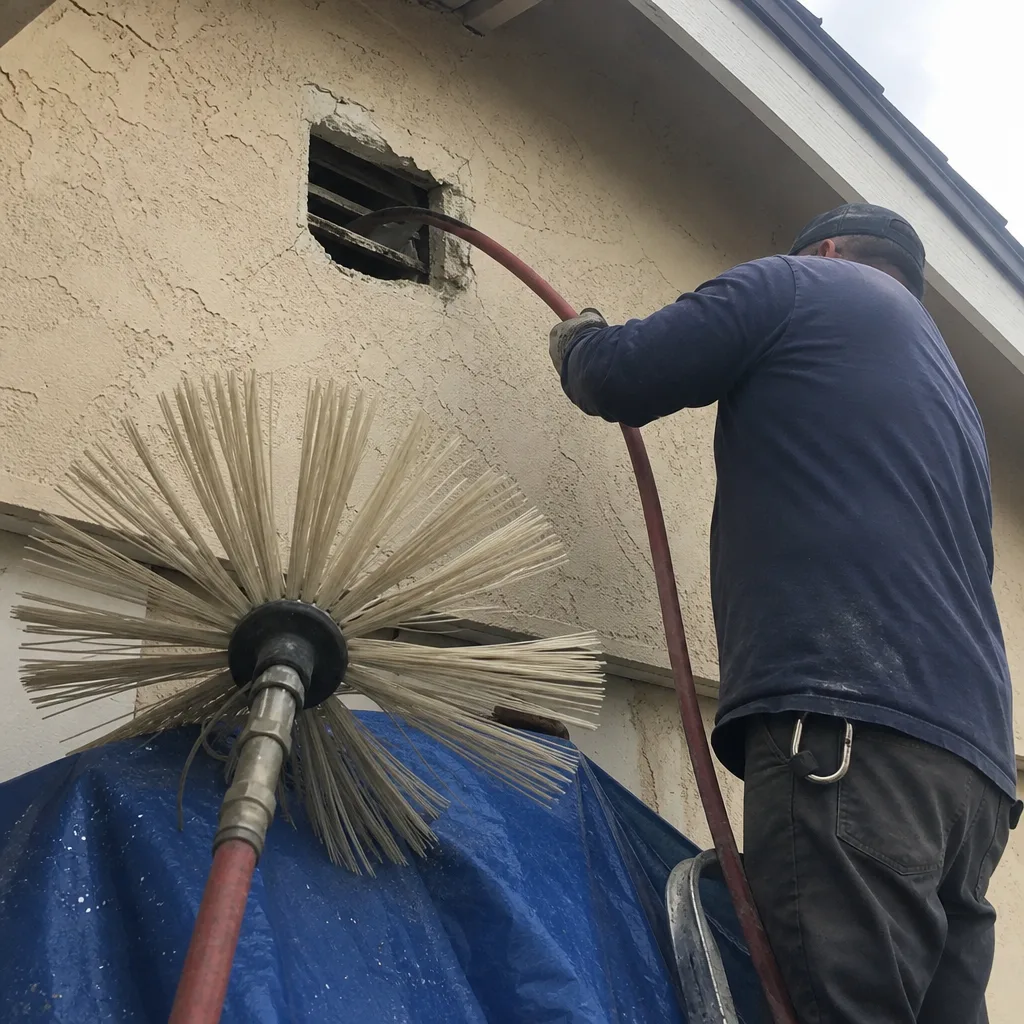 Before
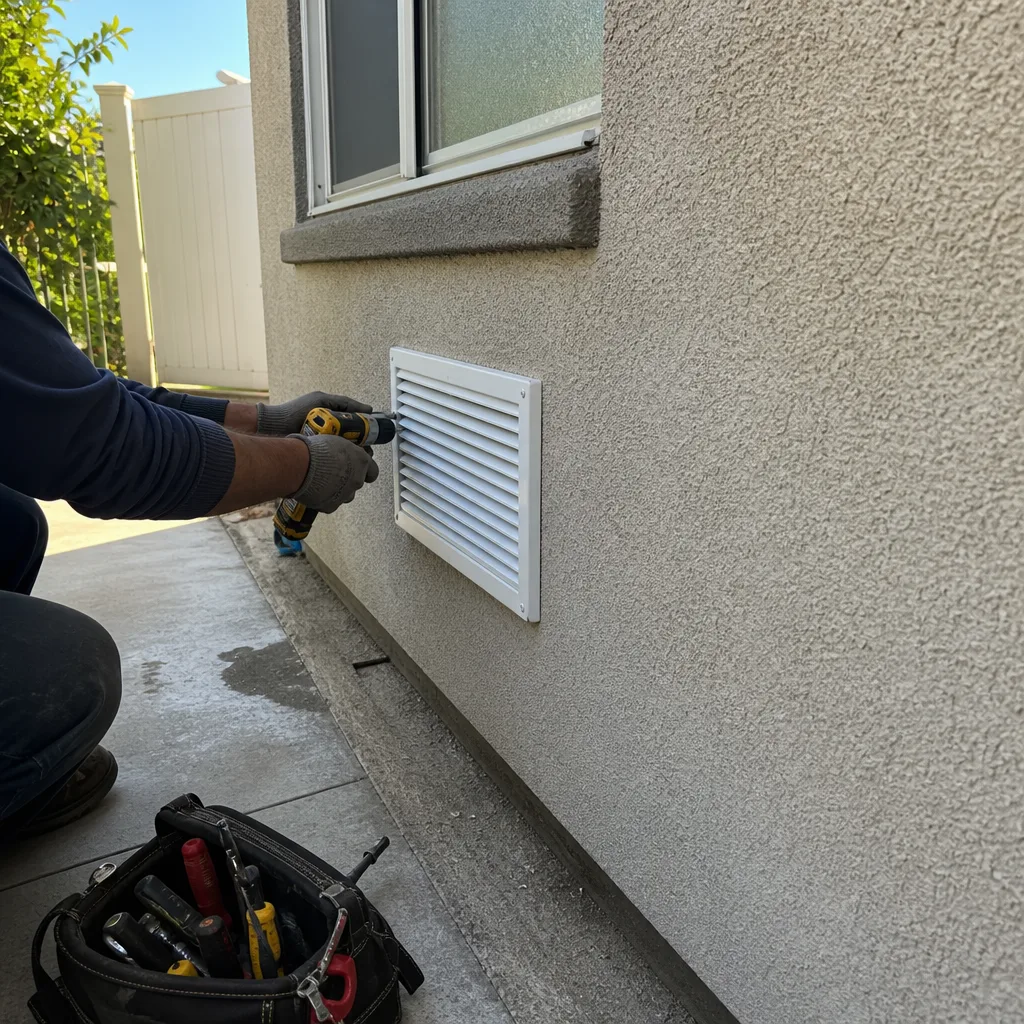 After
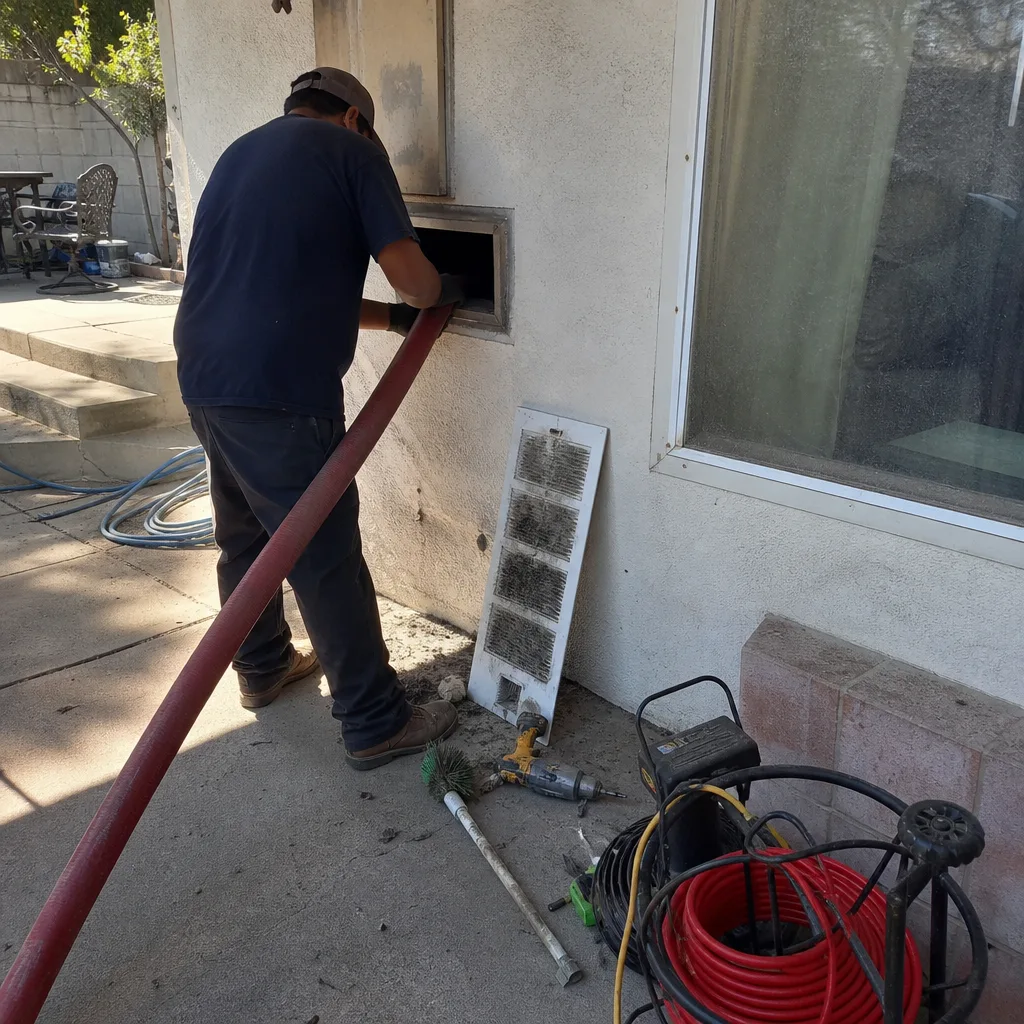 Before
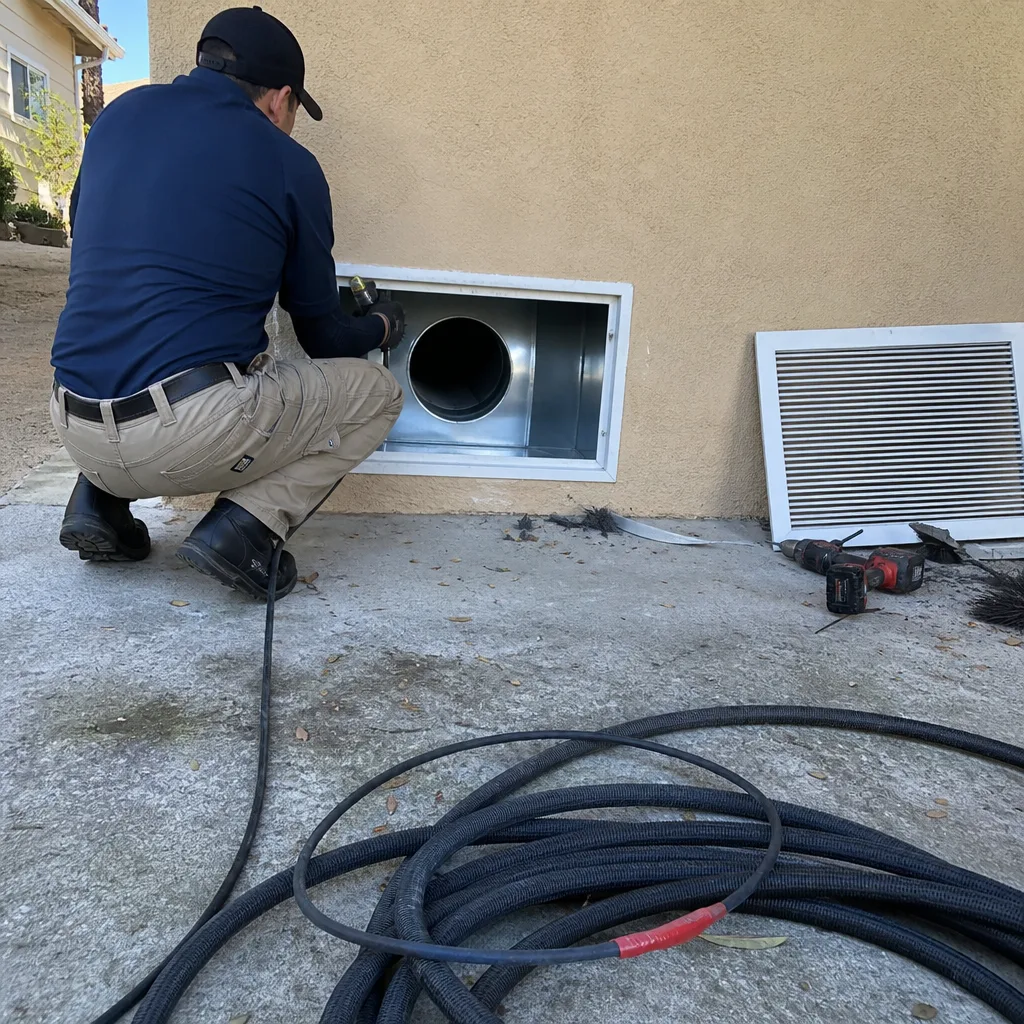 After
Frequently Asked Questions
Most Pico Rivera households should plan on professional cleaning every three to five years, with the shorter interval for homes with pets, multiple occupants, or anyone with allergies or asthma. Single occupants without pets can stretch toward five years, while allergy-sensitive households benefit from two to three year intervals.
Yes, because the filter only protects the equipment and the air downstream of the filter; dust already in the ductwork, return pathways, and around the coil remains until physically removed. Regular filter changes slow accumulation but do not eliminate it.
Whole-home air duct cleaning in Pico Rivera typically runs several hundred dollars depending on the number of vents, accessibility, and whether duct repair is needed. The written estimate sets the final price, so call (833) 734-6877 for an exact quote based on your home. Estimates are free.
Cheaper quotes usually reflect smaller equipment and narrower scope. A discount provider with a portable vacuum cannot generate the negative pressure needed to extract debris from a full duct run, and may only service the visible portions of the system. Ask what equipment will be used and whether the coil, return side, and full trunk line are included.
Not always. Many companies treat them as separate services, which means the dryer vent never gets done. Look for a provider that treats dryer vent cleaning as its own dedicated service line, not an afterthought, because lint buildup is a fire hazard independent of your HVAC ducts.
Ask for before-and-after photos of the main trunk line, check the inside of several register boots with a flashlight, and feel the airflow at the farthest register from the air handler. A professional cleaning should leave visible, verifiable evidence. Call (833) 734-6877 to schedule with a team that documents the work.
The Bottom Line
Duct maintenance in Pico Rivera is a system, not a single task. Homeowners handle filters, registers, and visual inspections on a monthly basis. Professionals handle negative-pressure cleaning, coil service, and duct repair every two to five years depending on the household. The dryer vent runs on its own schedule and cannot be skipped. Older Pico Rivera homes have specific failure points that need checking before any cleaning makes sense. And verification after the work matters as much as the work itself. Get the whole pathway right, and the air in your home finally matches the climate outside: clean, dry, and breathable.
Written by the team at Duct Cleaning Pico Rivera, serving Pico Rivera since 2011.