
Last updated November 4, 2026
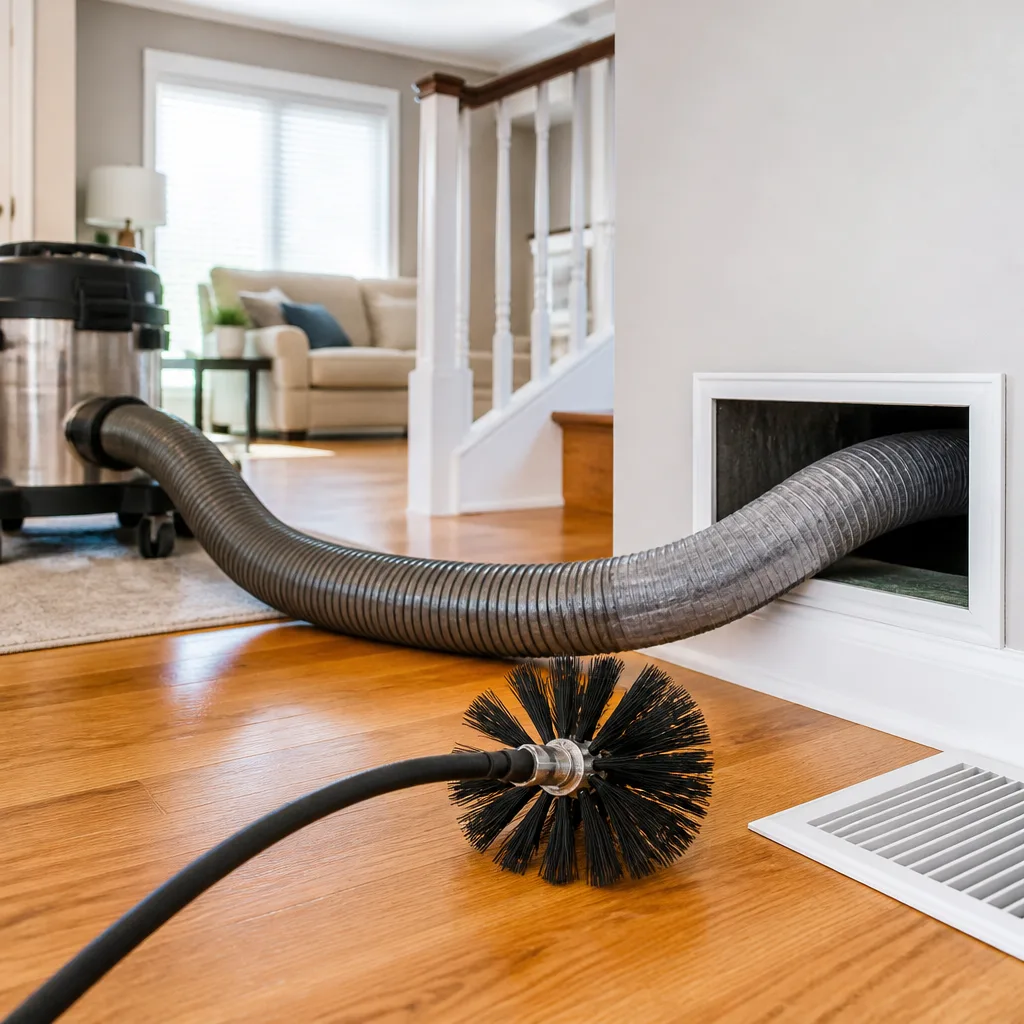 Whole-home duct cleaning
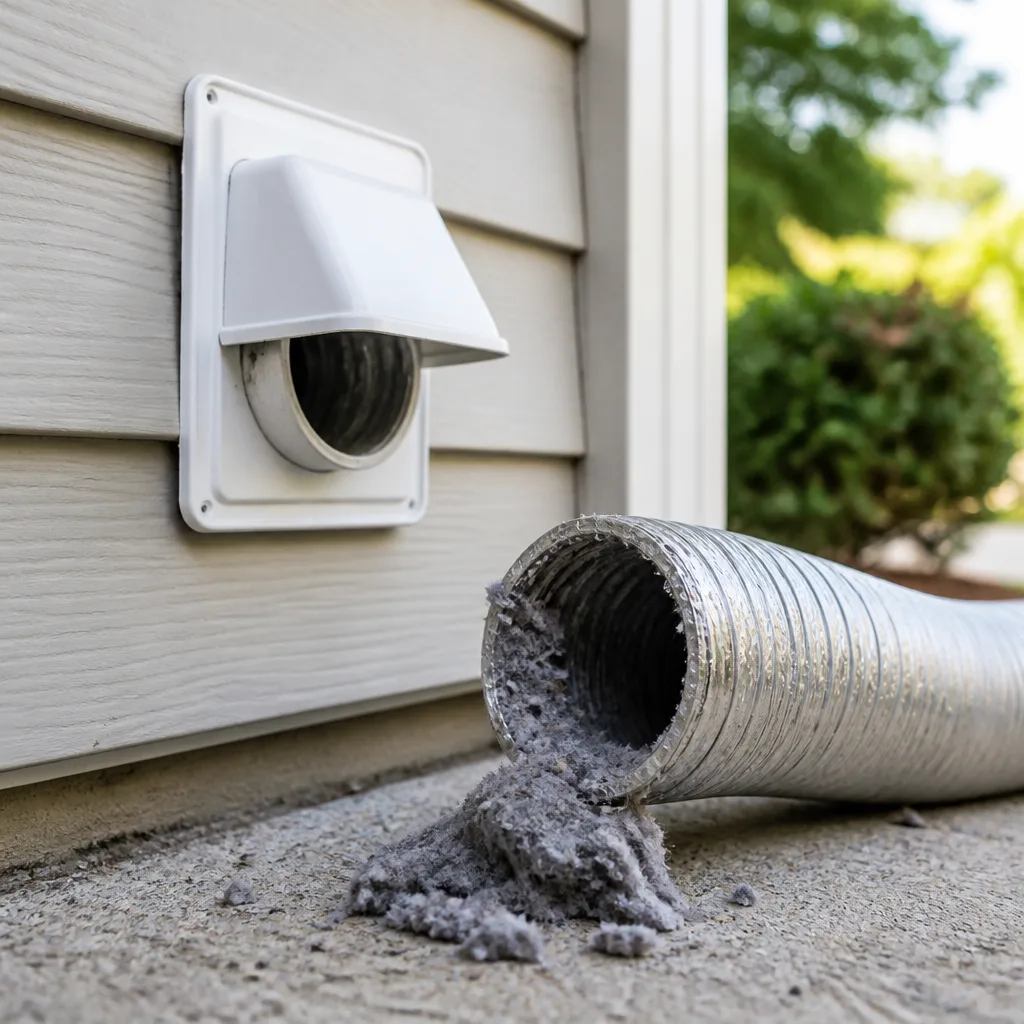 Dryer vent cleaning
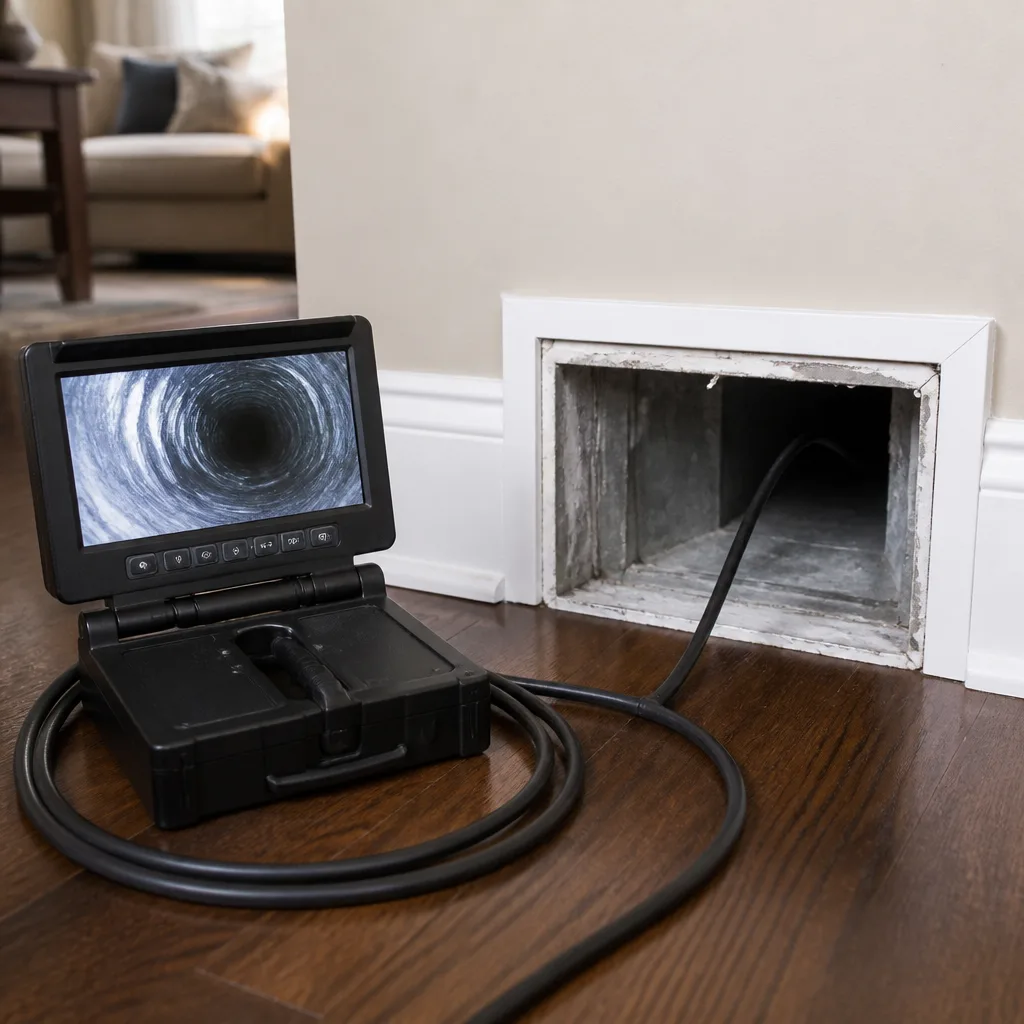 Camera inspection
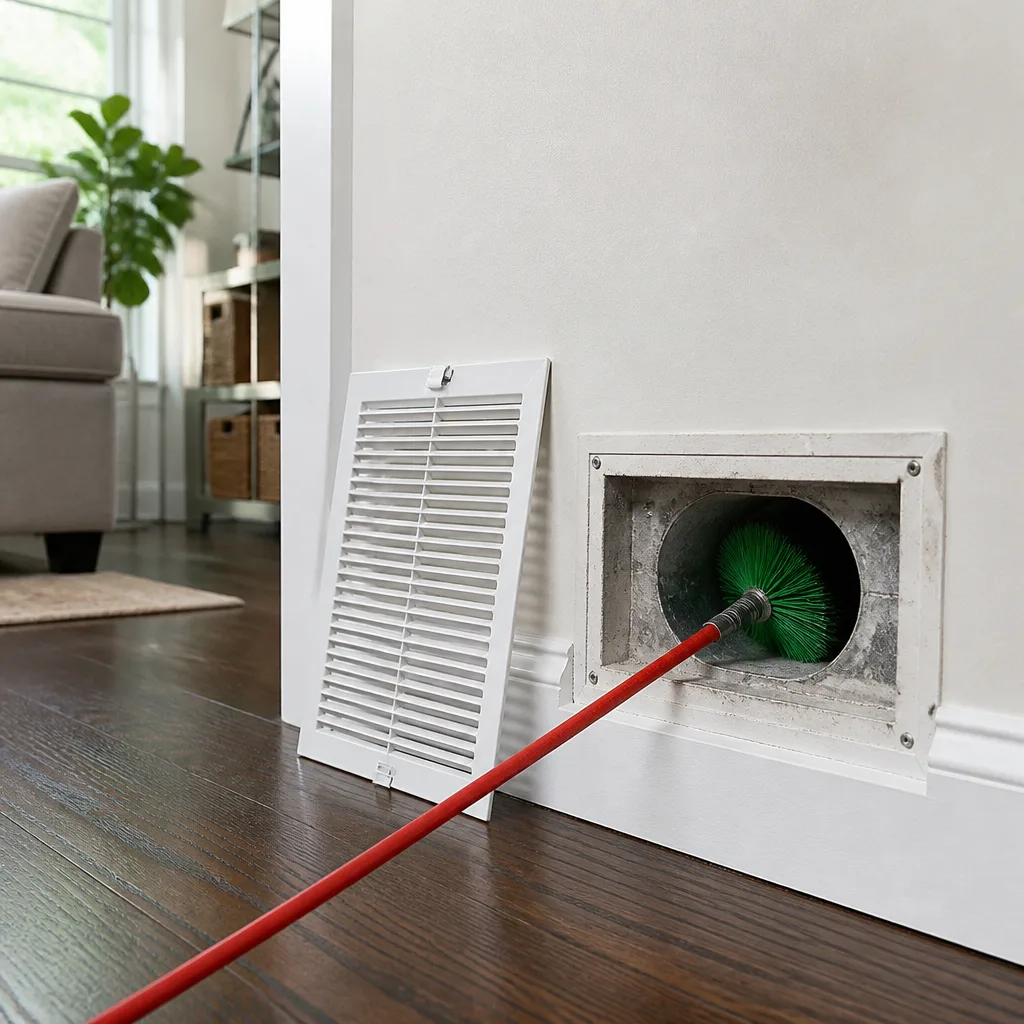 Sanitizing & deodorizing
Whole-system duct and dryer vent check with before-and-after photos - you see exactly what came out of your vents
That "$99 whole-house special" is a bait ad - the real number appears once they are in your hallway, or the "clean" is a shop-vac at the register. We photograph the inside of your ducts before and after instead.
Air Duct Cleaning Permits, Codes & Inspections in Pico Rivera, CA: What You Need to Know
Most homeowners assume that anything involving air ducts requires a building permit. That assumption is wrong, but it’s also not entirely safe. The truth sits in a narrow regulatory gap: routine cleaning is exempt, but the moment a duct is cut, patched, replaced, or given a new access point, the job shifts into mechanical permit territory. In Pico Rivera, where the housing stock spans decades of construction styles, the difference between those two categories is exactly where expensive mistakes get made. This guide walks through the actual code language, the permit triggers, the inspection requirements, and the sale-disclosure scenarios that catch people off guard.
Quick Answer
Routine air duct cleaning does not require a permit in Pico Rivera or anywhere else in Los Angeles County. However, any modification to the duct system itself – cutting into ductwork, adding an access panel, replacing a section, or changing the system’s configuration – triggers the need for a mechanical permit through LA County Building and Safety. If a cleaning reveals damage that needs repair, that repair work, not the cleaning, is what falls under permit requirements.
Styles & brands we work with
- Whole-home duct cleaning
- Dryer vent cleaning
- Camera inspection
- Sanitizing & deodorizing
Table of Contents
- What Duct Work Is Permit-Exempt
- What Triggers a Mechanical Permit
- Title 24 and Duct Leakage Standards
- Unpermitted Duct Repairs and Home Sales
- Asbestos in Pre-1980 Duct Insulation
- How to Verify Permits on Your Pico Rivera Property
- Common Misconceptions About Duct Permits
- Frequently Asked Questions
What Duct Work Is Permit-Exempt
California’s mechanical code, as adopted by Los Angeles County, does not regulate who can vacuum dust out of a duct. The cleaning itself – running a negative-air machine, agitating debris with brushes, sanitizing interior surfaces – is treated as a maintenance activity, not a construction activity. That means no permit, no inspection, and no filing with the county. The same applies to a visual inspection of the system, even if that inspection involves a camera pushed through the ductwork.
What matters is the distinction between cleaning and modifying. Cleaning removes debris from the interior surfaces of an existing, functioning system. It does not change the system’s physical dimensions, materials, or configuration. That is why a homeowner in Pico Rivera can hire an air duct cleaning specialist to run Rotobrush or Nikro equipment through the supply and return lines without triggering any filing requirement with the county.
There is a practical limit to this, though. If the cleaning process reveals a damaged section – a crushed return, a disconnected joint, a rusted-through plenum – the cleaning becomes a diagnostic step, not the final scope of work. The repair that follows is a different regulatory animal entirely. This is the exact scenario where a specialist who offers air duct repair alongside cleaning saves the homeowner from coordinating two separate contractors across two separate scopes of work.
What Triggers a Mechanical Permit
Los Angeles County Building and Safety requires a mechanical permit for any work that alters the physical structure of a duct system. The line is surprisingly specific, and it is worth understanding before any work begins. The following are the primary triggers:
- Cutting into ductwork: If a technician needs to create a new opening to access a section, that is a modification. It changes the system.
- Replacing a duct section: Swapping out a damaged run, even with identical materials, is a replacement that requires a permit.
- Adding an access panel: Installing a new panel that did not previously exist is a structural change to the system.
- Reconfiguring the layout: Rerouting a duct to solve an airflow problem is a design change, not maintenance.
- Sealing ductwork with mastic or tape: This one surprises people. Sealing is generally considered a repair, but if the sealing is part of a larger modification, it falls under the same permit as the modification.
What does not require a permit: cleaning, sanitizing, debris removal, camera inspection, and minor reattachment of a disconnected joint that does not require cutting or replacement. The distinction hinges on whether the system’s physical dimensions or configuration remain unchanged.
For Pico Rivera homeowners, the practical question is usually this: the technician found a problem, what happens next? If the problem can be fixed by reattaching an existing section without cutting or replacing it, no permit is needed. If the fix requires new material, a new opening, or a new route, the county wants a permit on file. A specialist who handles both cleaning and repair can tell you on the spot which category your job falls into, rather than leaving you to guess.
Title 24 and Duct Leakage Standards
California’s Title 24 energy code sets performance standards for duct systems, and these standards apply when duct work is modified, not just when it is newly installed. The relevant metric is duct leakage: how much conditioned air escapes through joints, seams, and connections before it reaches the register.
For a Pico Rivera home, the practical implication is this: if your duct system was installed in the 1970s or 1980s, it was never tested to current leakage standards. It leaked then, and it leaks now. When a repair is done under a permit, Los Angeles County may require the repaired section to meet current Title 24 leakage thresholds. That means the contractor cannot just swap in a new section and walk away; they need to verify the repaired system does not leak beyond the permitted percentage.
This is where the equipment a contractor uses matters. A professional-grade system from Rotobrush or Nikro can maintain negative pressure during cleaning, which helps identify leakage points visually. But leakage testing is a separate procedure, typically done with a duct blaster or pressure-testing rig. A contractor who understands Title 24 requirements will tell you whether your repair triggers testing, and what the testing involves.
The energy code angle is easy to overlook, but it has real consequences. A homeowner who replaces a duct section without a permit and without leakage testing may discover years later, during a home sale or an energy audit, that the system does not meet current code. At that point, the fix is more expensive than the original repair would have been.
Unpermitted Duct Repairs and Home Sales
Pico Rivera’s real estate market is active, and homes change hands regularly. When they do, sellers are required to disclose work that was done without required permits. This is where unpermitted duct repairs surface, often for the first time.
The scenario is common enough that anyone buying or selling a home in Pico Rivera should understand it. A homeowner had a duct repaired a few years ago. The repair was done competently, but the contractor did not pull a permit. The work is invisible now, sealed inside a wall or an attic chase. No one thinks about it until the home goes under contract.
Then the buyer’s home inspector does what home inspectors do: they look at the HVAC system, they check for evidence of recent work, and they ask the seller to produce permits. If the seller cannot, the disclosure becomes a red flag. The buyer’s lender may have questions. The buyer’s insurance may have questions. The escrow may stall while everyone figures out whether the unpermitted work is a structural liability or just a paperwork gap.
The common resolution is not pleasant for the seller. The county may require a retroactive permit, which means an inspection of work that has been sealed away for years. If the work does not meet current code – which is common for older repairs – the seller pays to bring it into compliance, or the price drops. In a market like Pico Rivera, where many homes were built in the post-war boom and have had decades of incremental repairs, this scenario plays out more often than homeowners would like to believe.
The lesson is simple: if duct work is modified, pull the permit. It costs less than the alternative. And when you work with a company that does Duct Cleaning Pico Rivera and repair under one roof, the permit question gets answered before the work starts, not after.
Asbestos in Pre-1980 Duct Insulation
Pico Rivera has a substantial stock of homes built before 1980. A meaningful number of those homes have duct insulation that contains asbestos. This changes the regulatory picture significantly, and it is something no homeowner should learn about mid-project.
Asbestos was used in duct insulation, duct tape, and duct wrap from the 1940s through the late 1970s. It was an effective insulator and fire retardant, and it was everywhere. When the EPA began restricting asbestos in the late 1970s, the material largely disappeared from residential construction, but that did not remove it from existing homes.
The regulatory threshold is this: if a contractor is going to disturb asbestos-containing material, the work falls under Cal/OSHA and South Coast Air Quality Management District rules for asbestos handling. That is a different category from a mechanical permit. It requires specific containment procedures, specific disposal protocols, and in some cases, a licensed asbestos abatement contractor.
For duct cleaning, the risk is lower than for duct modification. Cleaning does not usually disturb insulation that is intact on the exterior of ducts. But if cleaning reveals damaged insulation, or if a repair requires removing insulation to access the duct, the asbestos question becomes immediate. A specialist who works with professional-grade equipment and understands the air-quality implications will flag the potential before cutting into anything.
The brands a contractor works with signal their approach here. Companies that work with Abatement Technologies equipment tend to understand containment and air-filtration principles, because that is what the brand is built around. Guardsman products similarly live in the indoor-air-quality space. It is not a guarantee of asbestos expertise, but it indicates a level of seriousness about air quality that a discount shop-vac crew will not have.
How to Verify Permits on Your Pico Rivera Property
Los Angeles County maintains permit records through the Department of Public Works, and the county has moved much of its permitting online. A homeowner can check whether permits exist for their property, and this is worth doing before buying, selling, or starting any significant work.
Here is the step-by-step process:
- Identify the property’s APN. The Assessor’s Parcel Number is on your property tax bill or available through the LA County Assessor’s portal. Pico Rivera falls under county jurisdiction for this purpose.
- Search the LA County DPW Building and Safety portal. The county’s online permit search allows you to look up permits by address or APN. This is free and does not require an account.
- Look for mechanical permits specifically. A permit for “mechanical” or “HVAC” work is what you are checking for. Many homes in Pico Rivera will have electrical and plumbing permits on file but no mechanical permits, because duct work was rarely touched after original construction.
- If nothing appears, do not assume the work was never done. Unpermitted work is invisible in this search. That is the problem. The absence of a permit record does not prove the absence of work.
- If a permit exists but you cannot verify the scope, request the record. The county keeps permit files, and you can request copies. There may be a small fee.
This is something a homeowner can do on their own. You do not need a contractor or a lawyer to pull permit records. The harder verification – whether the work that was done matches the work that was permitted – requires a professional inspection, and that is where a knowledgeable Pico Rivera specialist earns their keep.
Common Misconceptions About Duct Permits
The gap between public understanding and actual code requirements around duct permits is wide, and it leads to real problems. Here are the misconceptions we see most often in Pico Rivera:
- “Any duct work needs a permit.” False. Routine cleaning and inspection are permit-exempt. Only modifications trigger the requirement.
- “A permit is optional if the work is small.” False. The county does not have a “minor repair” exemption for duct modifications. Cutting into a duct is cutting into a duct.
- “A handyman can pull a permit.” Generally false for mechanical work. LA County requires the appropriate contractor’s license for the permit class. A handyman without an HVAC or general contractor’s license cannot legally pull a mechanical permit.
- “Title 24 only applies to new construction.” False. Energy code requirements apply to modifications of existing systems, including duct repairs, when a permit is pulled.
- “If the home inspector doesn’t find unpermitted work, there’s no problem.” Home inspectors are not code enforcement, and they are not infallible. Unpermitted work sealed inside a wall is easy to miss, and it does not become a problem until a sale or a more invasive inspection.
- “Asbestos is only a concern in old commercial buildings.” False for Pico Rivera. Residential asbestos in pre-1980 duct insulation is common, and it changes the scope of any repair that disturbs it.
- “Permits are just paperwork and a money grab.” The inspection that comes with a permit is the homeowner’s protection against substandard work. Without it, you are trusting a contractor to self-police, and that is a bet you may not want to make.
These misconceptions are durable because they are convenient. But in Pico Rivera, where the housing stock is aging and the resale market is active, paying attention to the actual regulatory line is cheaper than learning about it during an escrow dispute.
See the difference
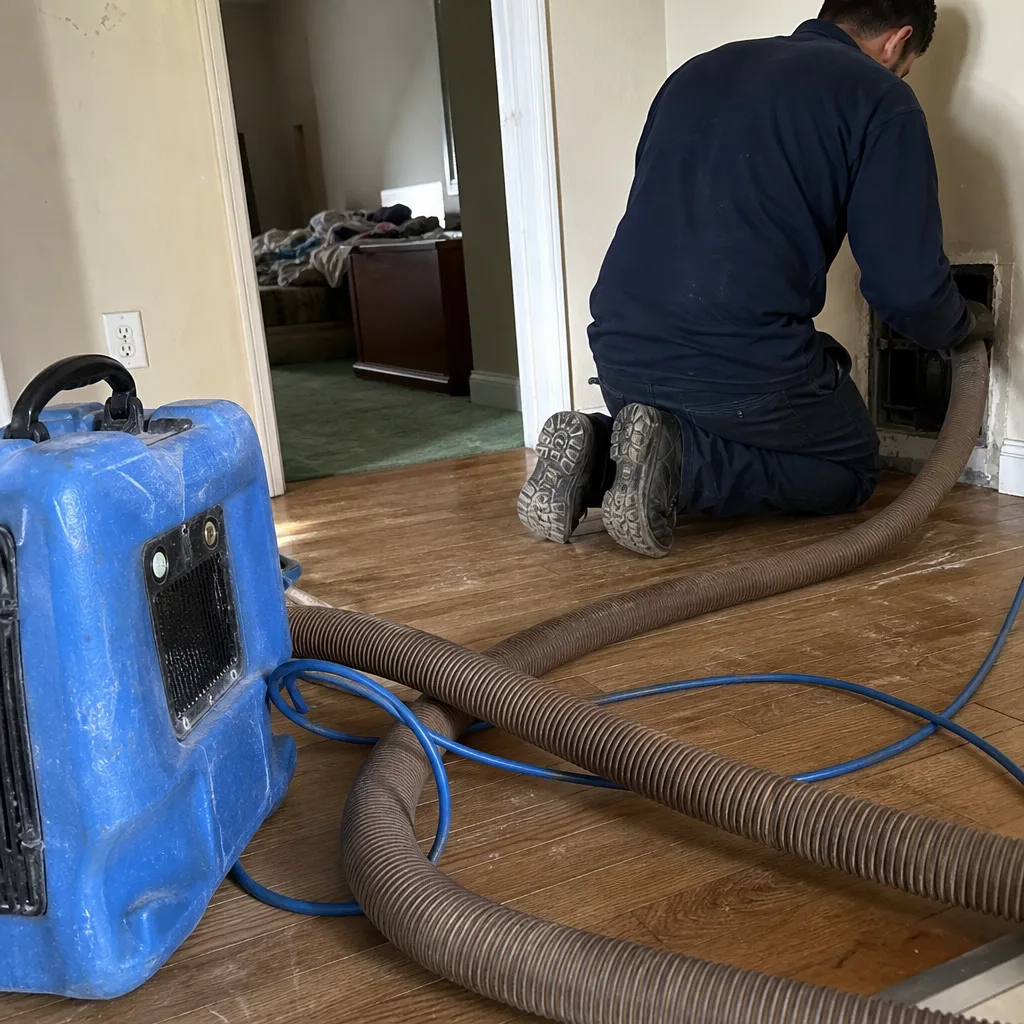 Before
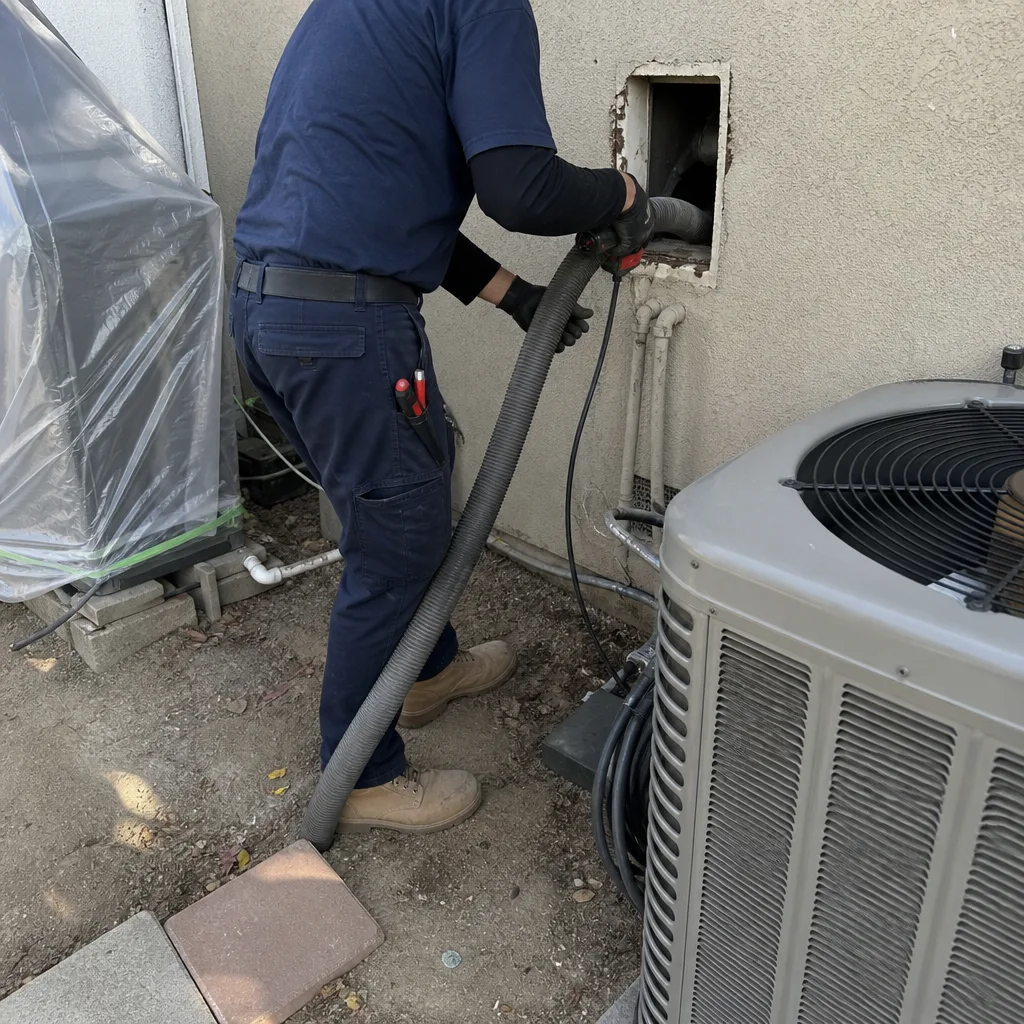 After
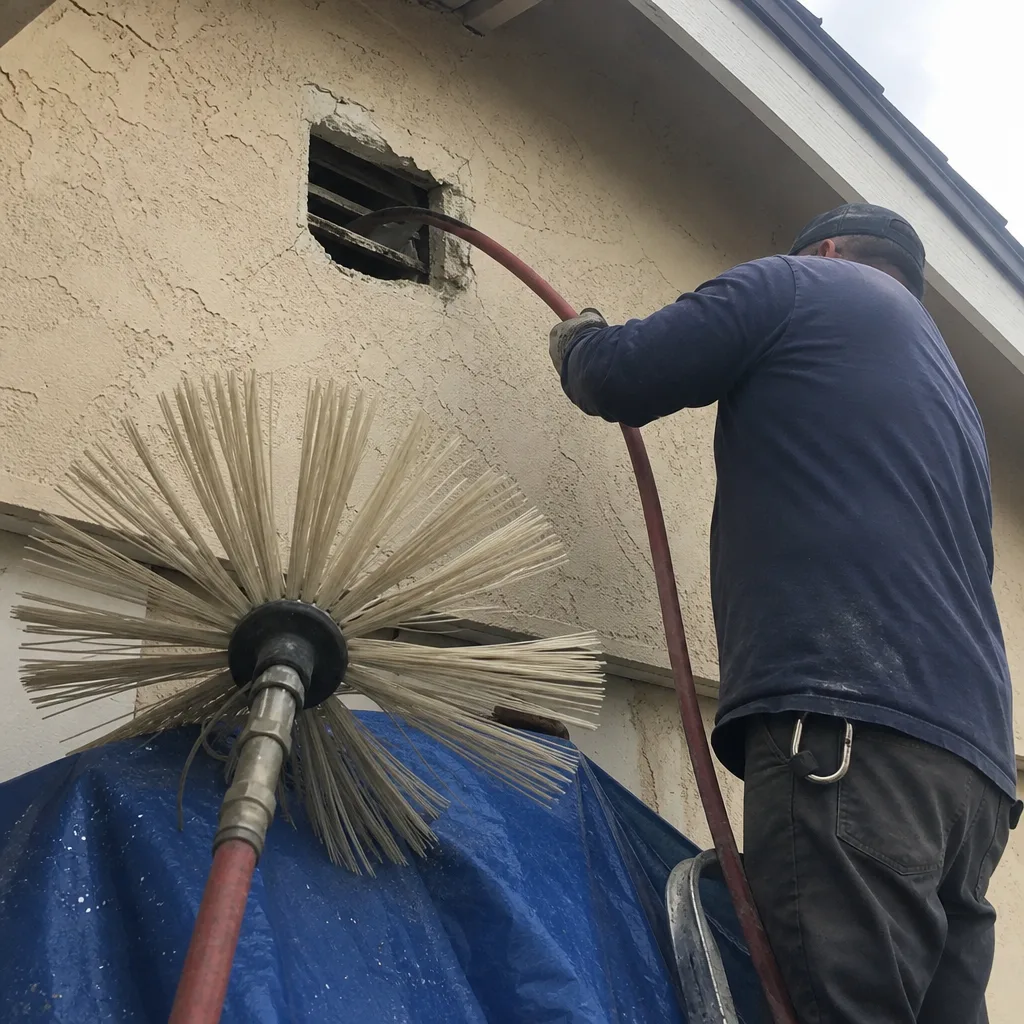 Before
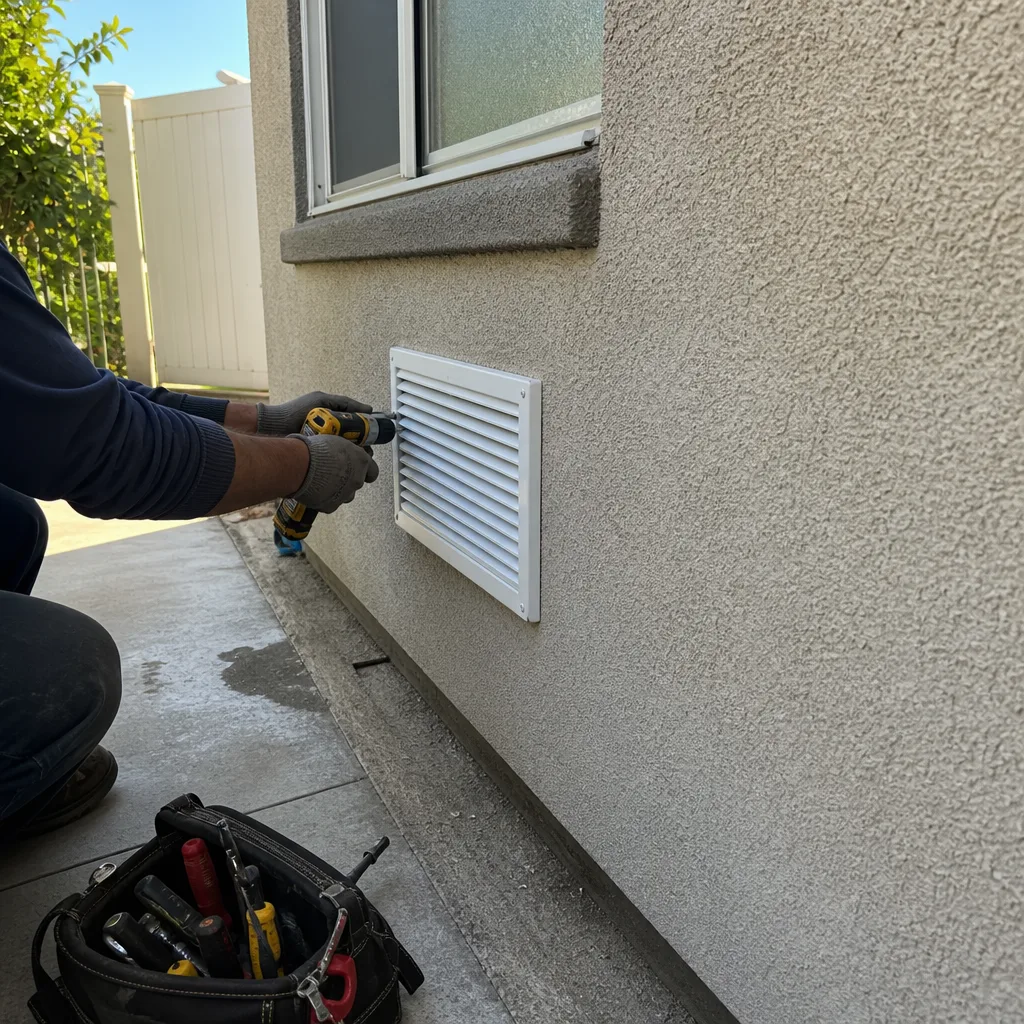 After
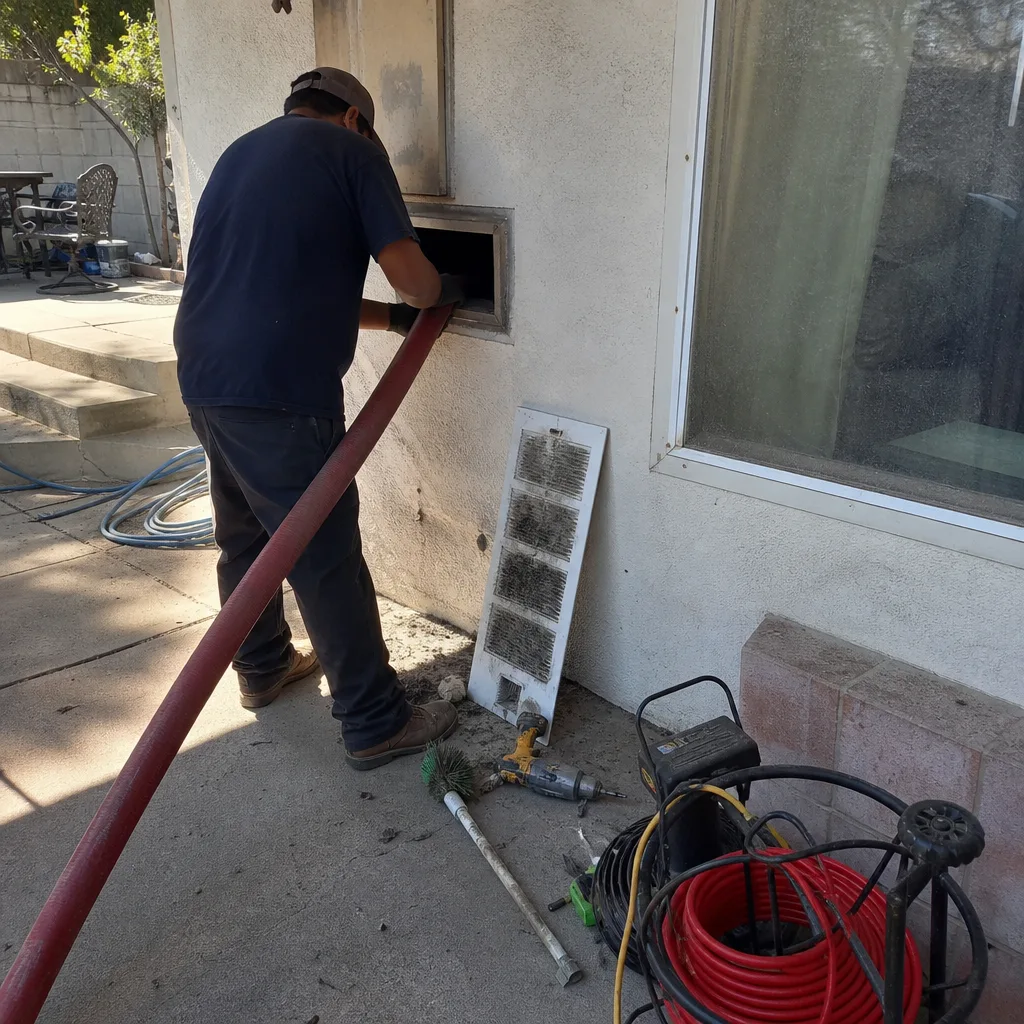 Before
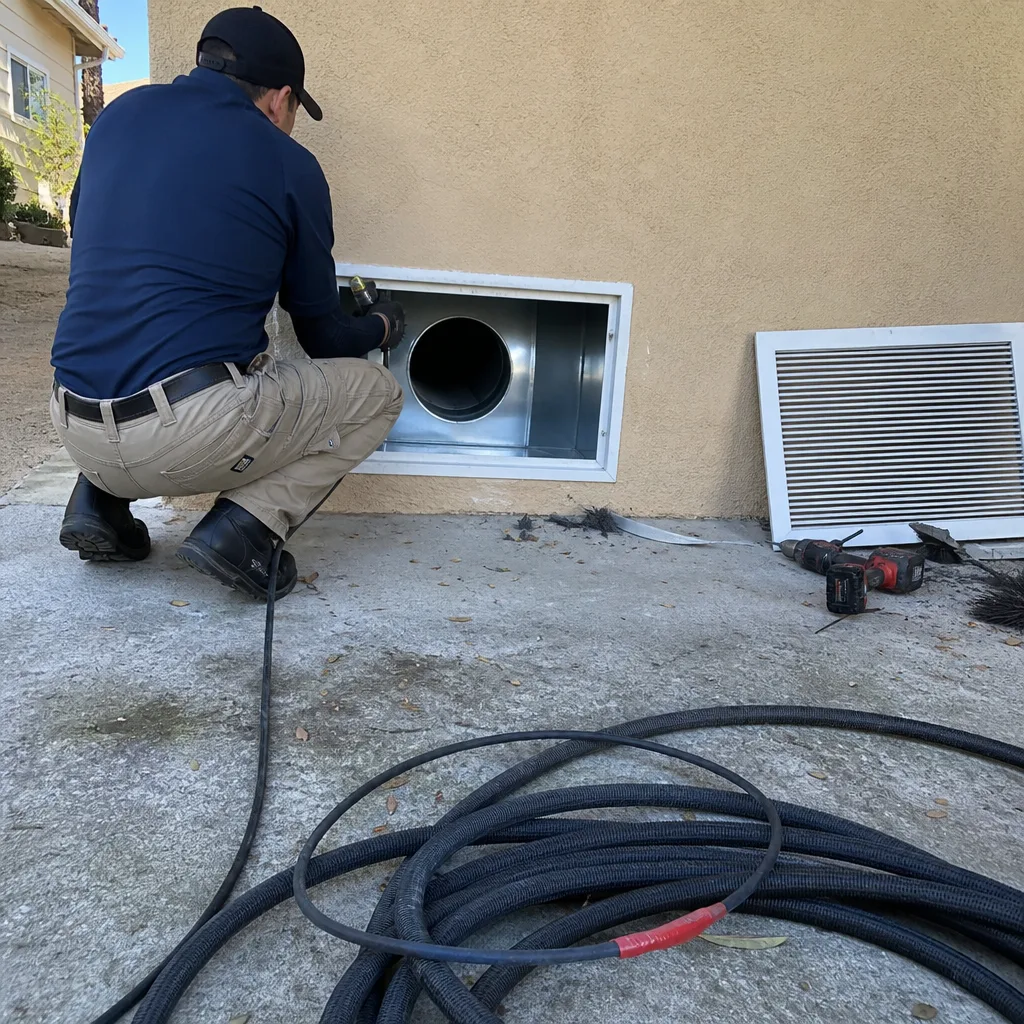 After
Why the Repair Side of Duct Work Matters More Than the Cleaning Side
Most of the regulatory complexity in duct work lives on the repair side. Cleaning is straightforward: it is maintenance, it is permit-exempt, and it is unlikely to create a compliance problem. Repair is where permits, inspections, leakage standards, and asbestos all come into play.
This is also where the scope of a contractor’s capabilities matters. A company that only cleans ducts can identify a problem but cannot fix it. That leaves the homeowner to call a second contractor, explain what the first one found, and hope the two scopes of work align. A company that does air duct repair as a core service handles both halves of the job, and the regulatory questions get answered by someone who actually knows the answer.
The same applies to dryer vents. Dryer vent cleaning is not a permit issue in most residential applications, but a damaged or improperly routed dryer vent is a fire hazard that no inspector will overlook during a home sale. The lint buildup that a cleaning addresses is a safety issue in its own right, and a specialist who treats it that way is doing more than vacuuming a tube.
What connects all three services – cleaning, repair, dryer vents – is that they live in the same physical system: the air pathways of a home. A problem in one is rarely isolated, and a contractor who sees the whole system is more likely to find the problem that actually matters.
When to Call a Professional
Some of this guide is homework you can do yourself: pulling permit records, checking your home’s construction date, asking whether the seller has permits for past HVAC work. But the diagnostic work – determining whether a duct problem is a clean-up job or a repair job, whether asbestos is present, whether the system meets Title 24 leakage standards – requires someone who does this every day.
If you are buying a home in Pico Rivera and the inspection flags duct issues, get a specialist to look before closing. If you are selling and you know repairs were done without permits, find out now, not during escrow. If your ducts have never been cleaned and your home predates 1980, have someone check for asbestos before anyone starts cutting. Duct Cleaning Pico Rivera offers free estimates in Pico Rivera – call (833) 734-6877. We answer 24/7. Fast dispatch from 7am to 7pm, Sunday through Friday.
Frequently Asked Questions
No. Routine air duct cleaning is permit-exempt in Pico Rivera and throughout Los Angeles County. The activity is classified as maintenance, not construction, and does not require any filing or inspection with the county.
Any modification to the physical structure of the duct system requires a mechanical permit. This includes cutting into ductwork, replacing a duct section, adding an access panel, reconfiguring the layout, or any other change that alters the system’s dimensions, materials, or configuration. Call (833) 734-6877 if you have questions about your specific situation. We answer 24/7.
Yes. Unpermitted duct repairs are a required disclosure during a home sale, and they can stall or derail escrow if the buyer, lender, or insurer flags the work. The resolution often involves a retroactive permit and a compliance inspection, which can cost more than the original permit would have.
You can search permit records through the LA County Department of Public Works Building and Safety portal using your address or Assessor’s Parcel Number. The search is free and does not require an account. Note that the absence of a permit record does not prove unpermitted work was never done.
Yes. When duct work is modified under a permit, the repaired system may need to meet current Title 24 duct leakage standards, even if the original system was installed before those standards existed. This can require leakage testing as part of the permit inspection.
Yes, for homes built before 1980. Asbestos was commonly used in duct insulation and duct tape through the late 1970s, and Pico Rivera has many homes from that era. If a duct repair would disturb insulation, it may fall under asbestos handling regulations and require specialized abatement. Call (833) 734-6877 for a free estimate and an honest assessment. We answer 24/7. Fast dispatch from 7am to 7pm, Sunday through Friday.
Common Mistakes to Avoid
- Assuming all duct work is permit-exempt. Cleaning is exempt. Repair is not. Confusing the two is the single most common error we see in Pico Rivera.
- Paying for a repair without asking about the permit. A contractor who says a permit “isn’t necessary” for duct replacement is either wrong or unlicensed. Ask for the permit number before work starts.
- Ignoring duct leakage after a repair. Title 24 standards apply to modified systems. A repair that does not meet leakage testing requirements can become a disclosure problem at sale.
- Buying a home without checking for existing mechanical permits. The LA County DPW portal is free. A ten-minute search before closing can save a dispute after closing.
- Cutting into pre-1980 duct insulation without testing for asbestos. If your Pico Rivera home predates 1980 and the insulation is original, test before anyone disturbs it.
- Hiring a cleaning-only company to diagnose a repair. A company that cannot repair ductwork can only tell you that a problem exists. A specialist who does both cleaning and repair can tell you what the problem is and what it will take to fix it.
- Hoping unpermitted work never gets discovered. In Pico Rivera’s active resale market, the discovery is nearly inevitable. Address it before you list, not during escrow.
The Bottom Line
Air duct cleaning in Pico Rivera is permit-exempt, and that is the easy half of the story. The hard half is everything that happens when cleaning reveals damage: mechanical permits, Title 24 leakage standards, asbestos in older insulation, and the sale-disclosure consequences of unpermitted repairs. None of this is unknowable, and none of it has to be expensive if it is handled up front. The regulatory line is clear if you know where it sits – and now you do. Call (833) 734-6877 for a free estimate. We answer 24/7. Fast dispatch from 7am to 7pm, Sunday through Friday.
Written by the team at Duct Cleaning Pico Rivera, serving Pico Rivera since 2011.