
Last updated November 4, 2026
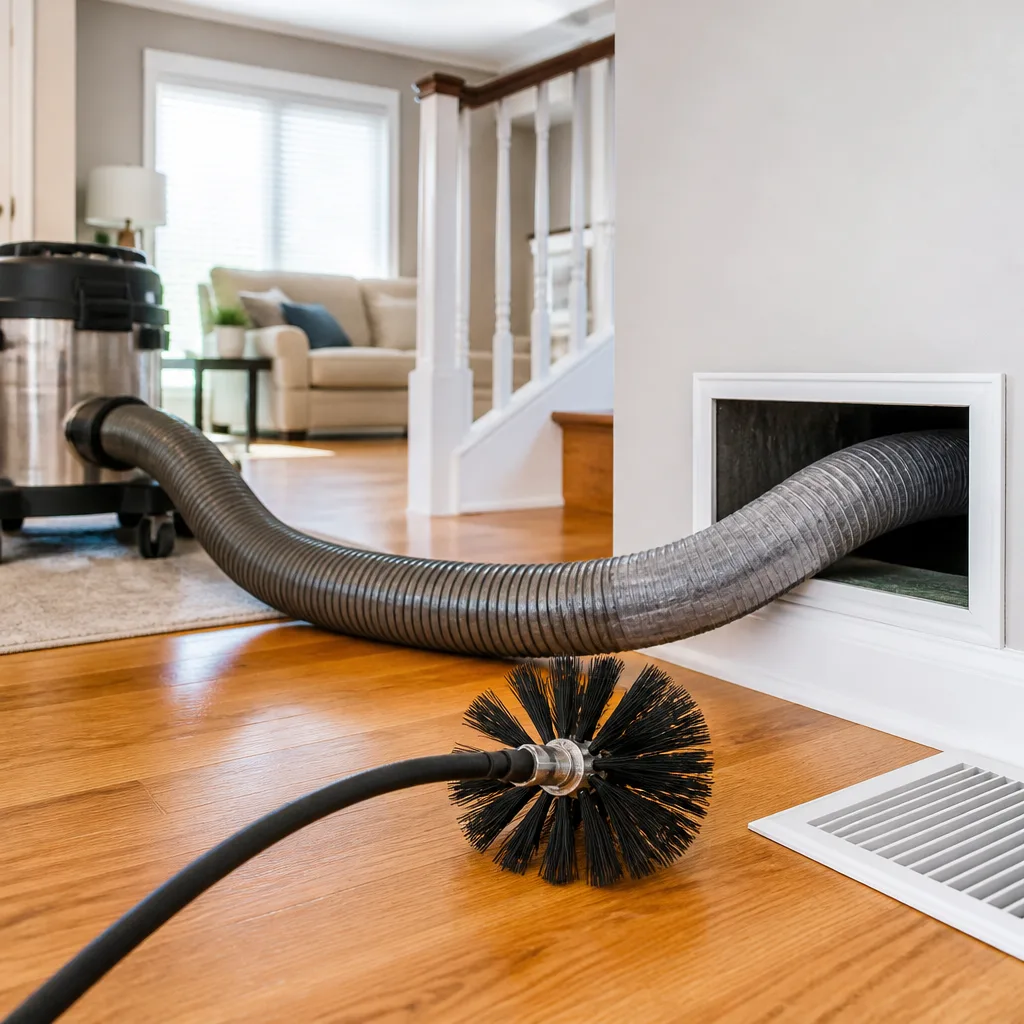 Whole-home duct cleaning
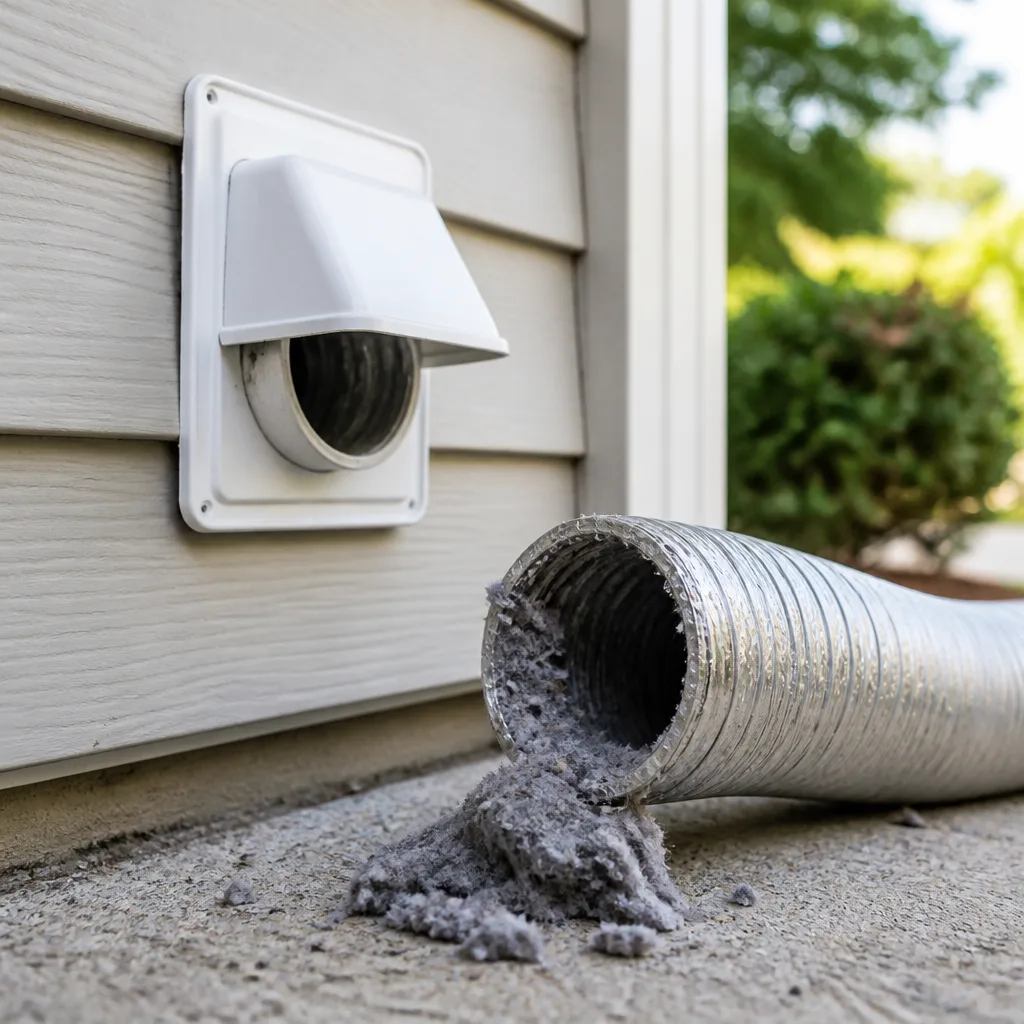 Dryer vent cleaning
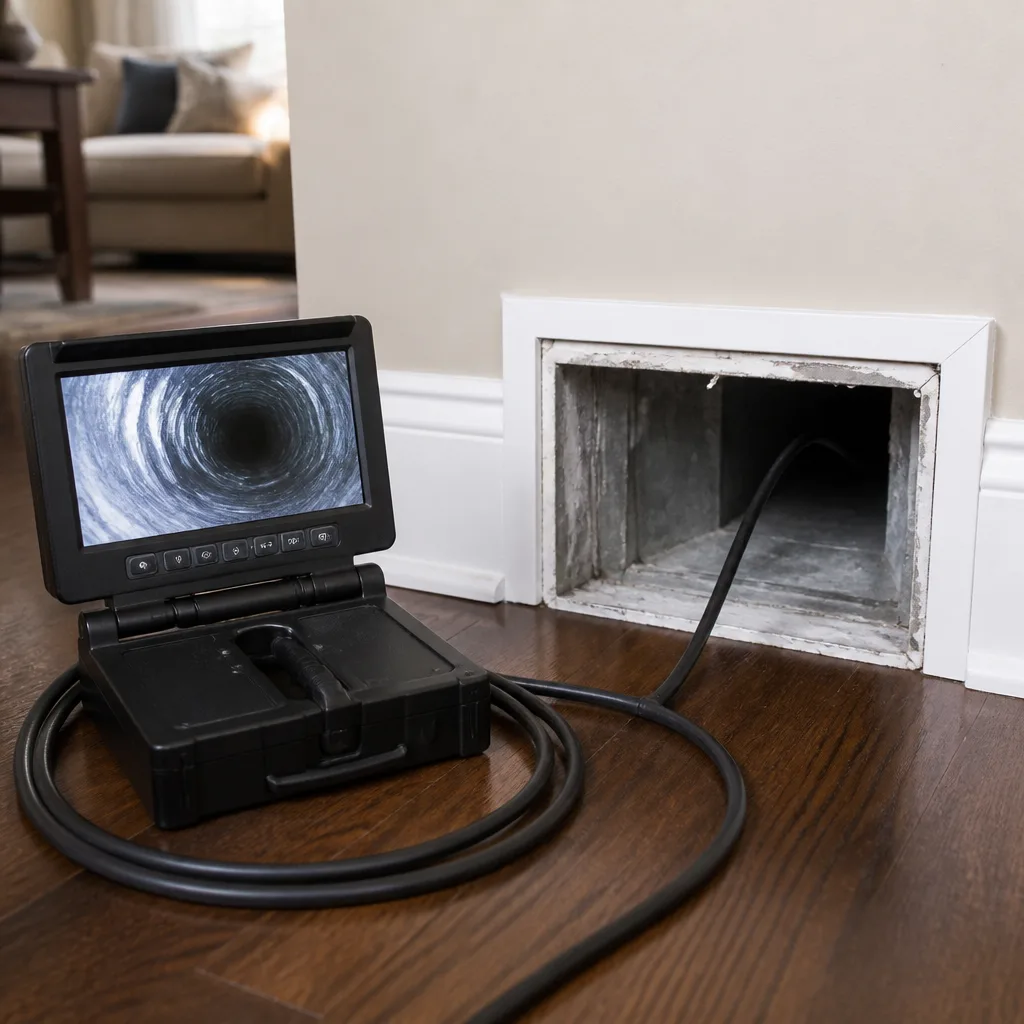 Camera inspection
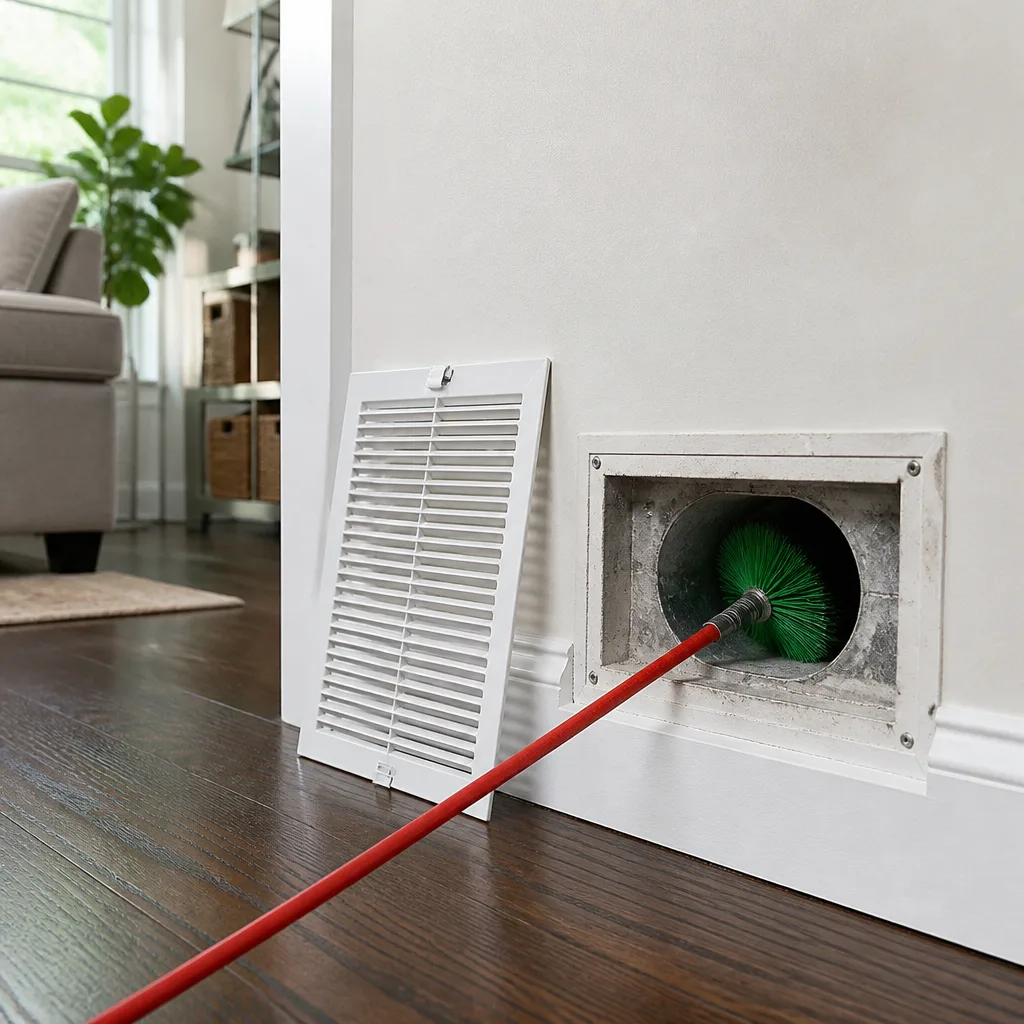 Sanitizing & deodorizing
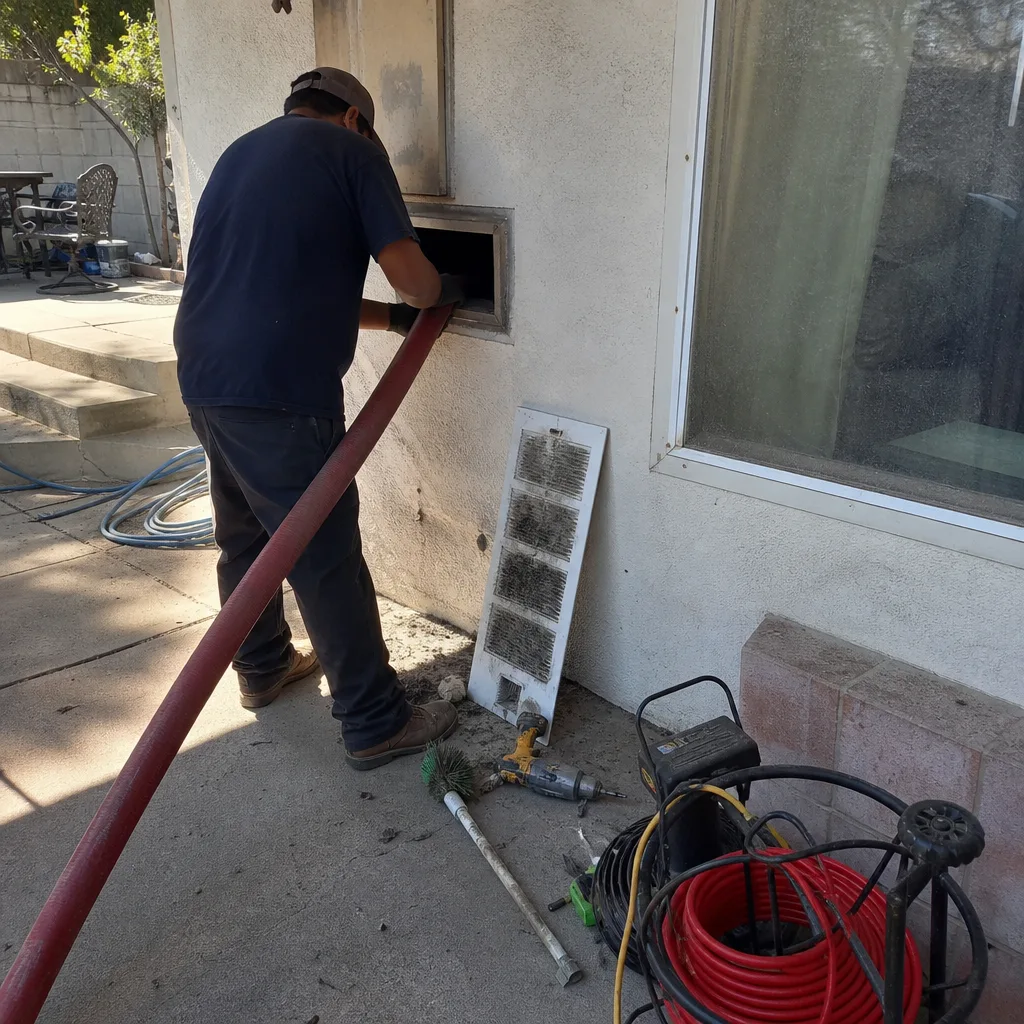
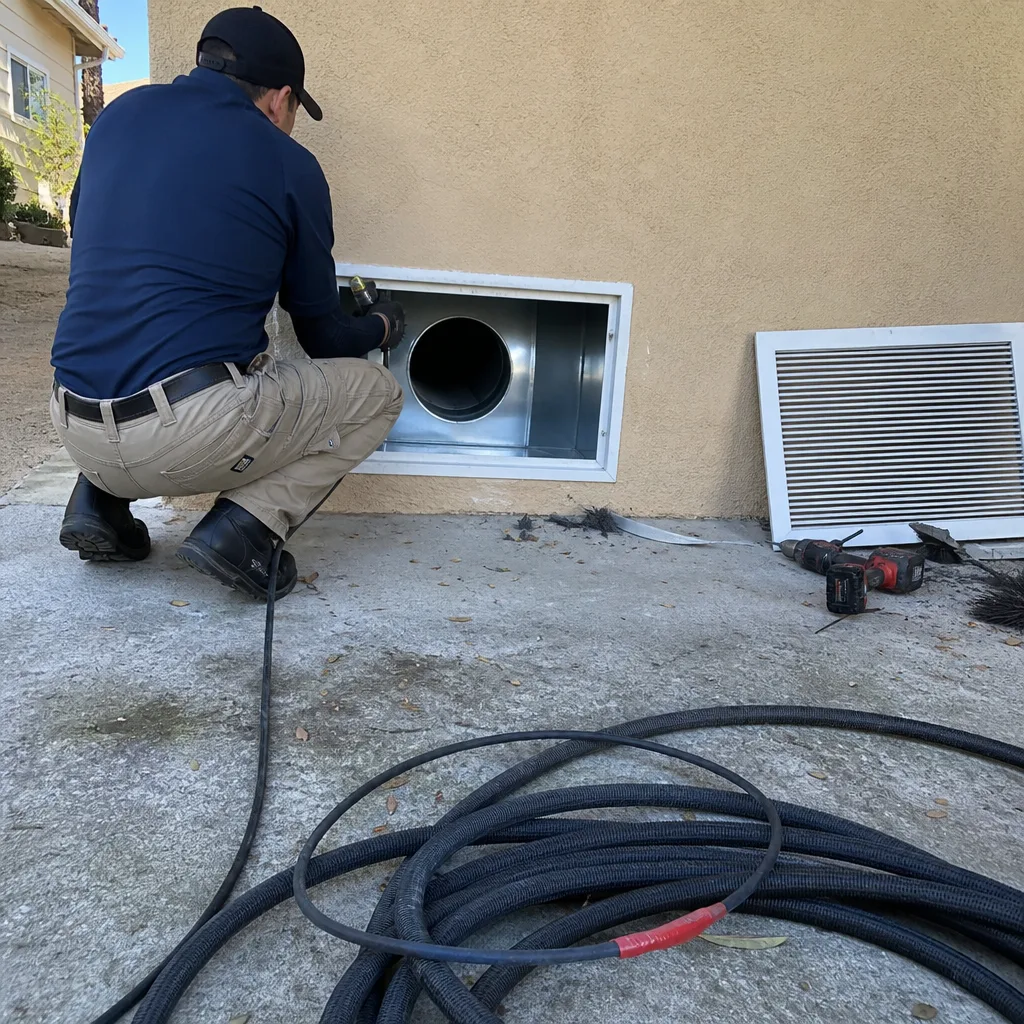
Whole-system duct and dryer vent check with before-and-after photos - you see exactly what came out of your vents
That "$99 whole-house special" is a bait ad - the real number appears once they are in your hallway, or the "clean" is a shop-vac at the register. We photograph the inside of your ducts before and after instead.
Air Duct Cleaning Troubleshooting in Pico Rivera: Common Problems and How to Fix Them
If one room in your house is always hotter or dustier than the rest, the problem almost certainly isn’t your thermostat. It’s upstream in the ductwork. After fifteen years of working inside homes across Pico Rivera, we can tell you that three specific culprits account for the overwhelming majority of residential duct complaints: significant debris buildup, disconnected or collapsed duct sections, and pressure imbalances caused by aging flex duct. This guide teaches you to read your system’s signals the way a technician does, so you know whether you’re looking at a simple cleaning, a targeted repair, or something in between.
Styles & brands we work with
- Whole-home duct cleaning
- Dryer vent cleaning
- Camera inspection
- Sanitizing & deodorizing
Quick Answer
Most duct complaints in Pico Rivera stem from one of three conditions: heavy debris accumulation inside the duct walls, a disconnected or collapsed section of flex duct, or a pressure imbalance from undersized or kinked runs. The fix depends on which signal your system is sending. Uneven airflow between rooms usually points to a disconnect or collapse, while recurring dust and a musty odor typically indicate debris or a biofilm condition on the coil. Matching the symptom to the cause is the difference between a cleaning that actually solves the problem and one that only temporarily masks it.
Table of Contents
- Reading Your System’s Signals: What Each Symptom Actually Means
- Testing Airflow at Registers: Distinguishing Dirt from Disconnection
- Dirty Sock Syndrome: The Biofilm Problem Vacuuming Can’t Fix
- Musty Odor in Ducts vs. the Air Handler Coil
- Pressure Imbalance in Older Pico Rivera Homes with Flex Duct
- Why DIY Register Cleaning Can Make the Problem Worse
- Common Mistakes to Avoid
- When to Call a Professional
- Frequently Asked Questions
- The Bottom Line
Reading Your System’s Signals: What Each Symptom Actually Means
Your ductwork speaks in patterns. The hard part for most homeowners is that a single air conditioning system serves an entire house, which means a problem in one section of duct often shows up as a confusing collection of symptoms spread across multiple rooms. Learning to connect the dots is the first real troubleshooting step.
Start by separating your observations into three categories: airflow, dust, and odor. Each category points toward a different part of the system. Weak airflow in one room but normal airflow everywhere else suggests a localized restriction, like a disconnected or crushed section of duct. Heavy dust accumulation on surfaces near supply registers points to a breach in the return side, where unconditioned air from an attic or crawlspace is being pulled into the system. A persistent musty or sour smell that gets stronger when the blower runs suggests moisture is mixing with organic debris somewhere in the air pathway.
These three categories rarely overlap in the way homeowners expect. We’ve walked into Pico Rivera homes where the homeowner was convinced the air conditioner unit itself was failing, when the actual problem was a return duct that had separated in the attic and was pulling in hot, dusty air. The unit was fine. The ductwork was not.
Before you call anyone, write down what you’re noticing and where. Note which rooms run warm, which registers have weak airflow, when the dust appears, and whether the odor is constant or only present when the system runs. A clear symptom list is the fastest path to an accurate diagnosis, and it’s exactly the information a technician needs on the first visit.
Testing Airflow at Registers: Distinguishing Dirt from Disconnection
This is the single most useful test you can perform without opening a wall or climbing into an attic. It takes five minutes and it immediately narrows the field between a cleaning issue and a structural duct repair.
Walk through the house and hold your hand about six inches in front of each supply register while the system runs. Compare the force of the air moving from register to register. A healthy system will push roughly equal airflow to each room, allowing for some variation based on distance from the blower. What you’re looking for is a dramatic difference: one register that’s barely breathing while another one ten feet away is blowing hard.
A slightly weak register on the far side of the house is normal friction loss. A dead register is a red flag. If one vent has almost no air movement while the rest of the system runs normally, you’re likely looking at a disconnected flex duct, a collapsed section, or a damper that’s closed or broken. These are repair issues, not cleaning issues. No amount of vacuuming will fix a duct that has physically separated from its register boot.
Here’s the numbered test we use on service calls:
- Set the thermostat fan to “On” so the blower runs continuously.
- Walk to each supply register in the house, one at a time.
- Hold your hand flat, palm facing the register, about six inches away.
- Rate each register on a simple scale: strong, moderate, weak, or nothing.
- Return to any register rated weak or nothing and listen carefully. A soft flapping sound inside the wall or ceiling often indicates a disconnected duct end swinging loose.
- Check the corresponding room’s return or transfer grille. A room with weak supply air AND a blocked or undersized return will always underperform regardless of duct condition.
Most Pico Rivera homes built before 2000 still run on the original flex duct installations. Flex duct has a serviceable lifespan, and once the inner liner tears or the outer vapor barrier fails, sections sag, kink, and separate. If your airflow test points to a structural problem, the right fix is a targeted repair, not a cleaning. That’s why Duct Cleaning Pico Rivera performs air duct repair as a core service alongside air duct cleaning. Identifying the difference on the first visit saves you from paying for a cleaning that was never going to solve the airflow problem.
Dirty Sock Syndrome: The Biofilm Problem Vacuuming Can’t Fix
Dirty sock syndrome is the informal name for a very specific smell that comes from your vents when the system first kicks on. It smells like a sweaty gym bag or a damp sneaker, and it fades as the system runs. Homeowners often describe it as “that musty smell right when the AC starts.” What’s actually happening on the surface is simple: bacteria and mold colonies are growing on the evaporator coil inside the air handler, feeding on organic dust that’s accumulated there.
The name is misleading. This is not a sock problem and it’s not really a dust problem. It’s a biofilm condition. A biofilm is a thin layer of microbial growth that anchors itself to a surface. When the coil is cold and wet, the biofilm absorbs moisture. When the system shuts off and the coil warms up, byproducts of that microbial activity release into the air stream as the musty odor. The smell recurs on every cooling cycle because the biofilm remains on the coil.
Vacuuming alone will not remove a biofilm. You can clean every inch of accessible duct and still smell dirty socks the next afternoon. Removing biofilm requires an antimicrobial treatment applied directly to the coil surface, combined with a physical cleaning process that removes the organic layer the biofilm feeds on. In our experience, this is the number one reason homeowners call us back after a previous cleaning failed to solve the smell. The ducts were wiped down, but the coil never was.
One more thing worth noting: dirty sock syndrome is more common in Pico Rivera’s warm season, when the cooling cycle runs often enough to keep the coil consistently wet. Homes that run the AC from April through October are the ones most likely to notice it. If the smell appears only when the system switches from heat to cool, or is strongest in the first ten minutes of operation, the coil is the first place to check.
Musty Odor in Ducts vs. the Air Handler Coil
Not every musty smell is dirty sock syndrome. A persistent musty odor that’s present even when the system is off points to a different source: the ductwork itself. Learning to distinguish between these two odor sources will save you from paying for the wrong service.
The coil sits inside the air handler, usually in a closet, garage, or attic. Odor coming from the coil is strongest right at the air handler and is most noticeable during the first few minutes of operation. It cycles with the system. The odor from ductwork is different. When debris, dust, and sometimes pest droppings accumulate inside ducts, the smell is more constant and often stronger at the supply registers than at the equipment itself. If you notice the smell wafting from a register even when the blower has been off for hours, you’re likely dealing with duct contamination, not a coil issue.
Here’s a simple diagnostic table:
- Odor is strongest when the system first starts, fades quickly after: biofilm on the evaporator coil; treat the coil and air handler.
- Odor is constant, regardless of whether the system is running: contamination in the ductwork; clean the ducts and inspect for moisture or pest entry points.
- Odor is strongest in one specific room or register: localized contamination or moisture in that duct run; inspect that section of ductwork.
- Odor appears only when the cooling runs, never with heat: coil condensation issue or drain pan problem inside the air handler.
- Odor worsens with humidity or after rain: return duct pulling from a damp attic or crawlspace; inspect the return path for openings.
The fix differs completely depending on the source. A coil issue gets an antimicrobial coil cleaning and attention to the drain pan. A duct issue gets a thorough cleaning of the duct system, plus repairs to any breaches that let moisture in. The two services use different processes and different equipment. A specialist who performs both can diagnose the difference on the first visit instead of guessing.
Pressure Imbalance in Older Pico Rivera Homes with Flex Duct
Pressure imbalance is the most overlooked problem in older homes, and Pico Rivera has plenty of housing stock from the 1960s and 1970s with original flex duct installations that are long past their intended service life. The symptom pattern is specific and it’s worth recognizing.
Pressure imbalance shows up as: doors that drift closed or slam shut when the system runs, a whistling sound at certain registers, rooms that feel dramatically warmer or cooler than the rest of the house, and air that seems to rush out of a few vents while others barely move. These are all signs that the supply side of the system is pushing more air than the return side can pull back, or that collapsed and kinked sections of flex duct are choking off portions of the supply run.
Older flex duct fails in predictable ways. The inner liner, which is a thin plastic tube reinforced with wire, eventually tears. The outer insulation jacket, typically a foil or plastic sleeve, cracks and separates. When that happens, the duct loses its shape, sags between supports, and kinks at the connection points. Every kink is a pressure drop. Every sag is a place where air slows and dust settles. The system compensates by pushing harder, which raises pressure at the still-open registers and creates that whistling, door-slamming effect.
There’s a simple test for this. Turn the system on and walk the house looking at the door between the hall and the main living area. If that door moves noticeably when the system kicks on, the house is out of balance. The fix involves inspecting the flex duct runs for kinks and collapses, checking damper positions, and potentially replacing the most degraded sections. A proper air duct cleaning will remove the debris, but only a repair addresses the underlying airflow loss.
This is one of the reasons we run both cleaning and repair as separate, core services. A company that only cleans has to walk away from the structural problem after vacuuming, leaving the same pressure imbalance in place. A company that can repair ductwork on the same visit leaves the system actually functioning.
Why DIY Register Cleaning Can Make the Problem Worse
The instinct is understandable. You pull the register cover off, see a layer of gray fuzz just inside the opening, grab the vacuum, and start cleaning. It feels productive. In a significant number of cases, it’s counterproductive, and here’s why.
The visible debris at the register is a small portion of what’s actually inside the duct. Most residential duct systems contain a layer of dust, pet dander, and construction debris that has settled along the bottom of the trunk line and branch runs over years of operation. When you push a vacuum hose or a cleaning brush into the register opening, you disrupt that settled layer. The suction you’re applying from a household vacuum is a fraction of the airflow the system itself generates. What happens is simple: loose debris that was sitting quietly gets stirred up and carried deeper into the trunk line, or blown across the room when the system next starts.
There are two common scenarios where this backfires. First, if you have a disconnected section of duct somewhere in the run, the debris you loosen will be pulled right toward that gap and out into an attic or wall cavity. Second, if you push a stiff brush too far into a flex duct, you can tear the inner liner. That tear becomes the starting point for a future collapse. A residential vacuum also lacks the negative-pressure power needed to pull debris through an entire duct system. What it removes from the visible register opening is a token amount.
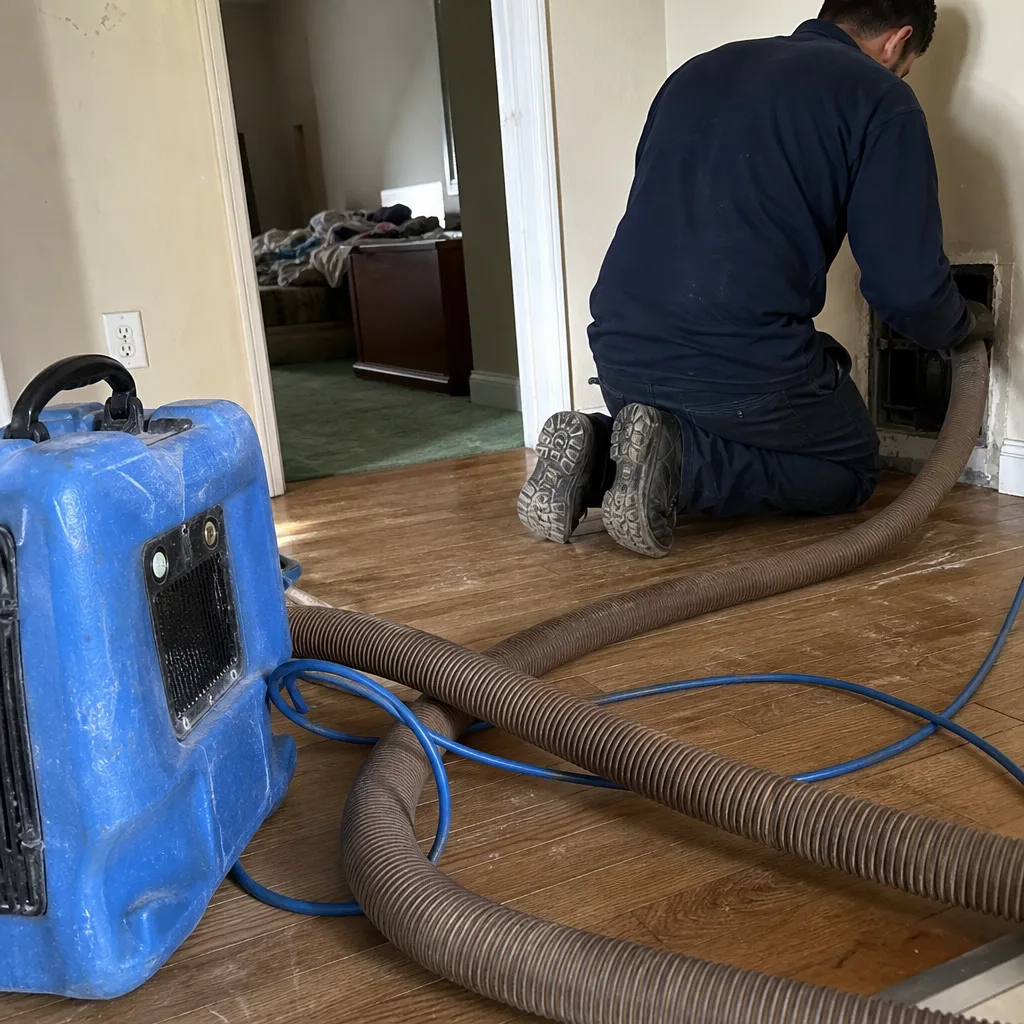
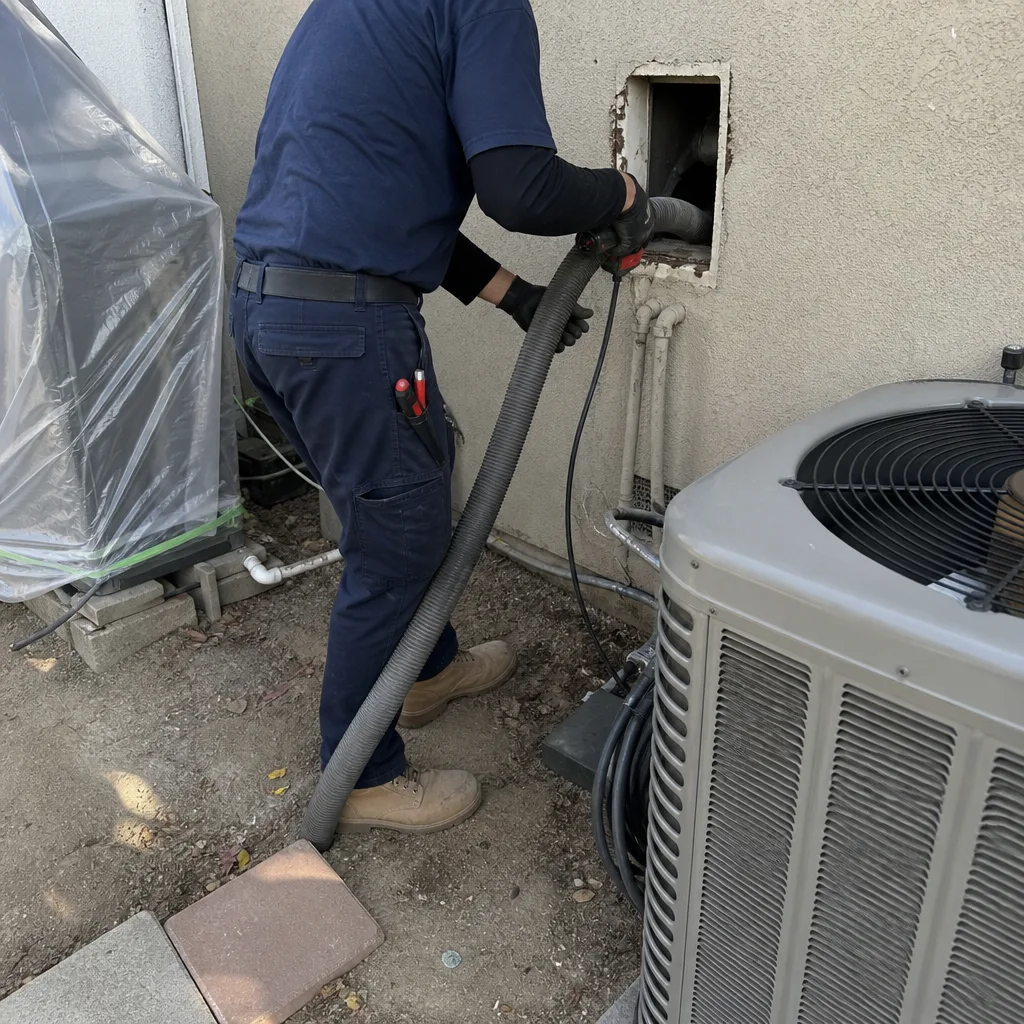
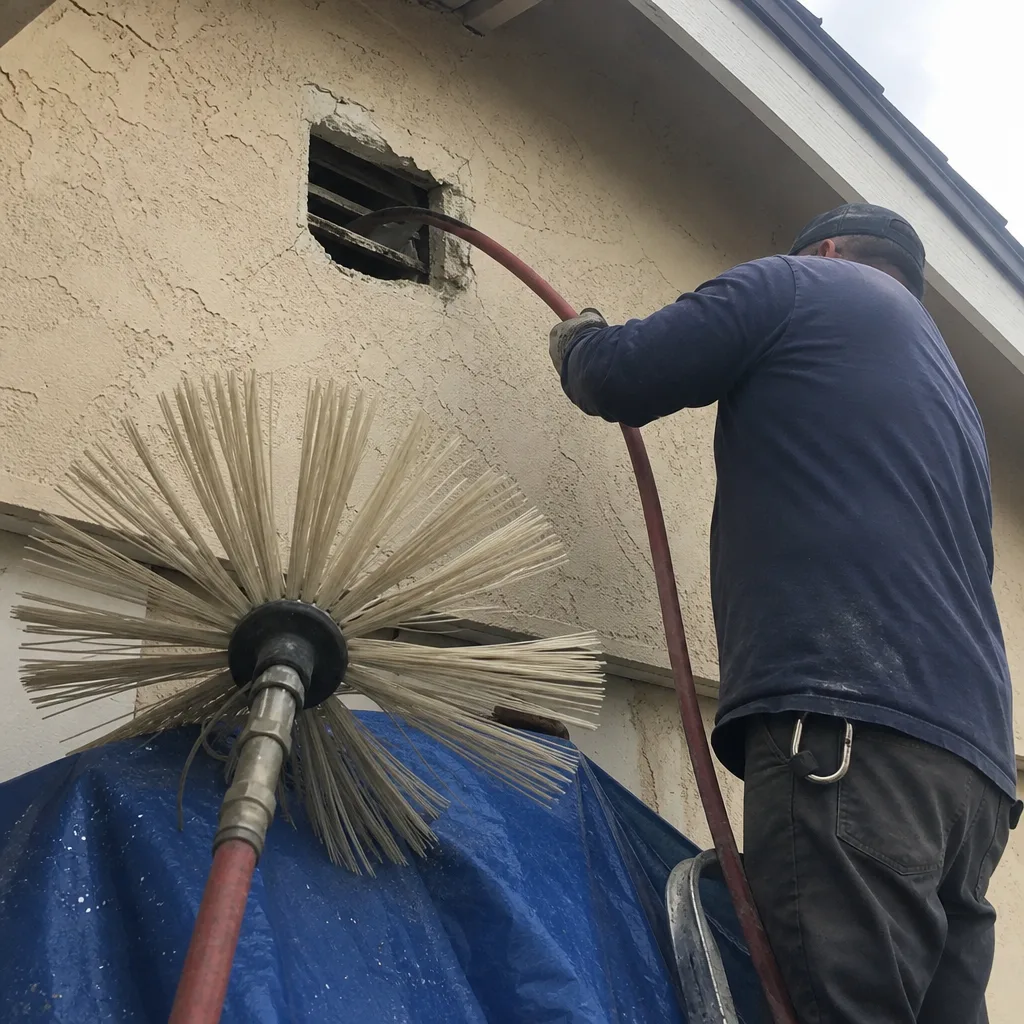
Professional cleaning works differently. The equipment we use is built for this specific job. Rotobrush and Nikro systems are negative-air machines that connect to the main trunk and use agitation tools designed to dislodge debris inside duct walls without damaging flex liners. These are not shop vacs. When you see our equipment on a job, you’re seeing the same class of machinery a commercial HVAC contractor uses for hospital and school duct systems. The difference in what gets extracted versus what a household vacuum leaves behind is substantial, and the difference in wall damage risk is the whole point.
Common Mistakes to Avoid
- Assuming the system only needs cleaning when the problem is structural. A disconnected flex duct, collapsed return run, or broken damper will not improve after a cleaning. In Pico Rivera’s older homes, structural issues are common enough that airflow testing should happen before anyone runs a cleaning machine. If the airflow problem remains after the cleaning, you’ve paid for the wrong service.
- Treating musty odor with air fresheners or duct sprays. These products mask the smell and introduce chemicals into the air pathway. The underlying moisture or contamination is still there. When the spray wears off, the odor returns, and you’ve spent money on a cover-up instead of a fix.
- Running the fan constantly to “air out” the ducts. All this does is redistribute contaminated air throughout the house. If you have a dirty duct system, constant fan operation means constant exposure to whatever is inside the ducts. Fix the source, not the symptom.
- Cleaning only the registers you can see. A register face is a cosmetic piece. The duct behind it is where the contamination lives. Wiping register covers and leaving the trunk line untouched is like washing the outside of a windshield while the inside is covered in fog.
- Replacing the HVAC unit while the ducts are still compromised. A new blower and coil do nothing for a duct system that’s disconnected, collapsed, or full of debris. You’ll see marginal improvement at best, and the new equipment will be working against the same restrictions the old one was. In many cases the equipment was never the primary problem.
- Ignoring the return side entirely. Homeowners focus on the supply registers they can see in floors and ceilings. The return side is where outside air enters the system, and a leak there means attic air or crawlspace air is being pulled directly into your living space and pushed through the house. Return-side inspection is at least half of a proper duct assessment.
- Waiting until the smell or dust becomes unbearable. Duct problems compound. A small kink becomes a full collapse. A minor return leak pulls more debris over time. The earlier a condition is identified, the smaller the repair and the lower the cost.
When to Call a Professional
Some conditions are simply not visible from inside the living space. If you’ve run the airflow test and identified a dead or barely-venting register, if the dirty sock smell persists after a recent cleaning, or if doors are slamming when the system starts, you need a professional look at the duct system itself, which means someone needs to go into the attic or crawlspace where the ducts actually live.
That’s where Duct Cleaning Pico Rivera comes in. We serve homes throughout Pico Rivera with professional-grade Rotobrush and Nikro systems, and our scope covers cleaning, repair, and dryer vent cleaning under one roof. We work with air-quality brands like Honeywell and Aprilaire to address filtration concerns alongside the ductwork itself. If you’re unsure whether you’re looking at a coil issue or a duct issue, call (833) 734-6877 and we’ll diagnose it. Estimates are free.
Frequently Asked Questions
Air duct cleaning in Pico Rivera typically ranges from $350 to $700 for a full single-system home, depending on the number of ducts, the layout, and the level of contamination. The final price is set by a written estimate before any work begins. Call (833) 734-6877 for a free estimate based on your specific system.
A room that stays consistently warmer usually indicates an airflow restriction in that specific duct run, often a disconnected or collapsed flex duct section, a closed damper, or an undersized return path. The first step is to feel the airflow at the register. If it’s noticeably weaker than other rooms, the problem is likely structural, not a cleaning issue.
Dirty sock syndrome is a musty odor that appears when your AC first starts, caused by microbial biofilm growth on the evaporator coil inside the air handler. Removing it requires an antimicrobial coil treatment combined with physical cleaning of the coil surface. Vacuuming the ducts alone will not eliminate the odor because the source is the coil, not the duct walls.
Most Pico Rivera homes with pets, children, or respiratory sensitivities benefit from a duct cleaning every 3 to 5 years. Homes with ongoing renovations, recent construction, or known pest issues may need it sooner. If you’re noticing visible dust buildup on furniture shortly after dusting, that’s a signal to have the ducts inspected rather than waiting for a calendar date.
Very low quotes typically come from companies using consumer-grade equipment, often a standard shop vac connected to a brush, which removes surface debris but leaves the settled layer in the trunk line. Professional systems like Rotobrush and Nikro are contractor-grade negative-air machines that cost significantly more to operate and maintain. The difference in what’s actually removed is directly visible.
A reputable company will show you before-and-after photos of the inside of your duct system, including the main trunk line, not just the register openings. Ask for photos before work begins and after completion. If a company refuses or can’t provide them, that’s a red flag. Our team documents every job with before-and-after images from the camera system we run through the ducts during the process.
If you see visible mold growth inside your ducts or on register covers, the most important step is to identify the moisture source before treating the mold itself. Without addressing the condition that caused the growth, mold will return. We can assess the duct system and direct you to the appropriate next steps. Call (833) 734-6877 and we’ll walk you through what we’re seeing.
Duct systems act as a distribution network for whatever is inside them, including dust, pet dander, and pollen tracked in from outside. In Pico Rivera’s dry climate, dust accumulates quickly, and when the system runs, that particulate is pushed through the living space in a continuous loop. For allergy and respiratory sufferers, cleaning the duct system is one component of a broader indoor air quality plan, which is why we work with filtration products from brands like Honeywell and Aprilaire that target airborne allergens at the source.
The Bottom Line
Air duct problems are rarely what they seem on the surface. Weak airflow, persistent dust, and musty odors are signals, and each one points to a specific underlying condition that can be identified before anyone starts cleaning. A dead register means a disconnection, not dirt. A dirty sock smell means a biofilm on the coil, not loose debris. Slamming doors and whistling vents mean a pressure imbalance in aging flex duct. Understanding these signals is the difference between a service that masks the symptom and one that resolves the cause. If you’re in Pico Rivera and ready to get the ductwork assessed properly, call (833) 734-6877 for a free estimate. We answer 24/7. Fast dispatch from 7am to 7pm, Sunday through Friday.
Written by the team at Duct Cleaning Pico Rivera, serving Pico Rivera since 2011.
See the difference
 Before
 After
 Before
 After
 Before
 After