
Last updated November 4, 2026
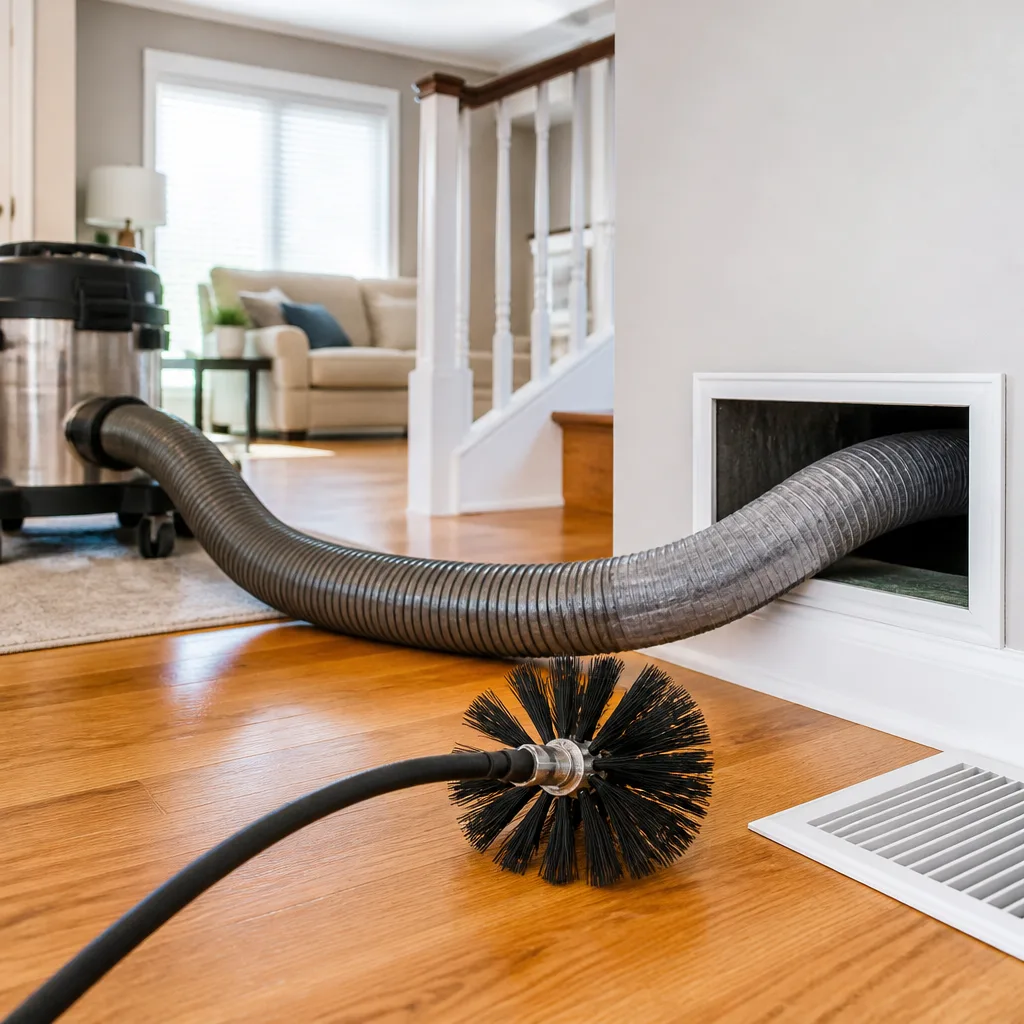 Whole-home duct cleaning
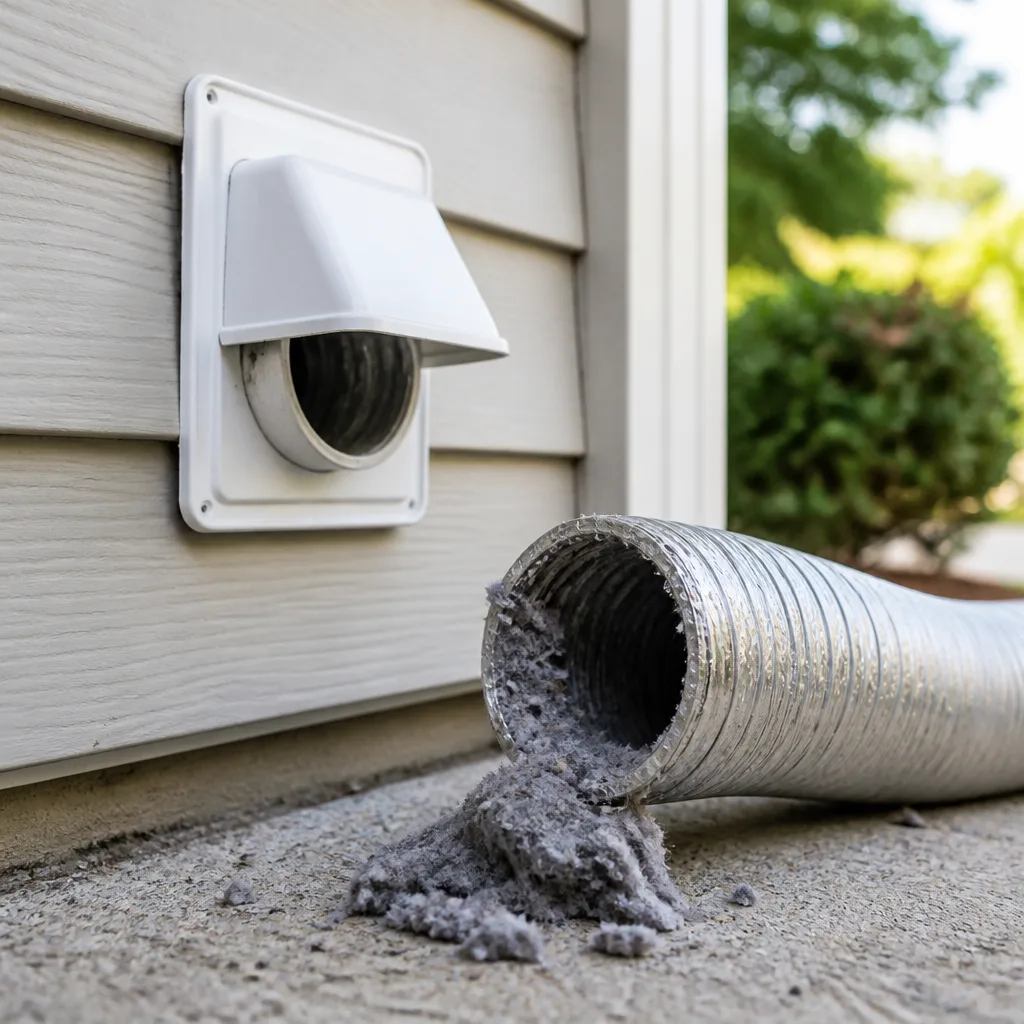 Dryer vent cleaning
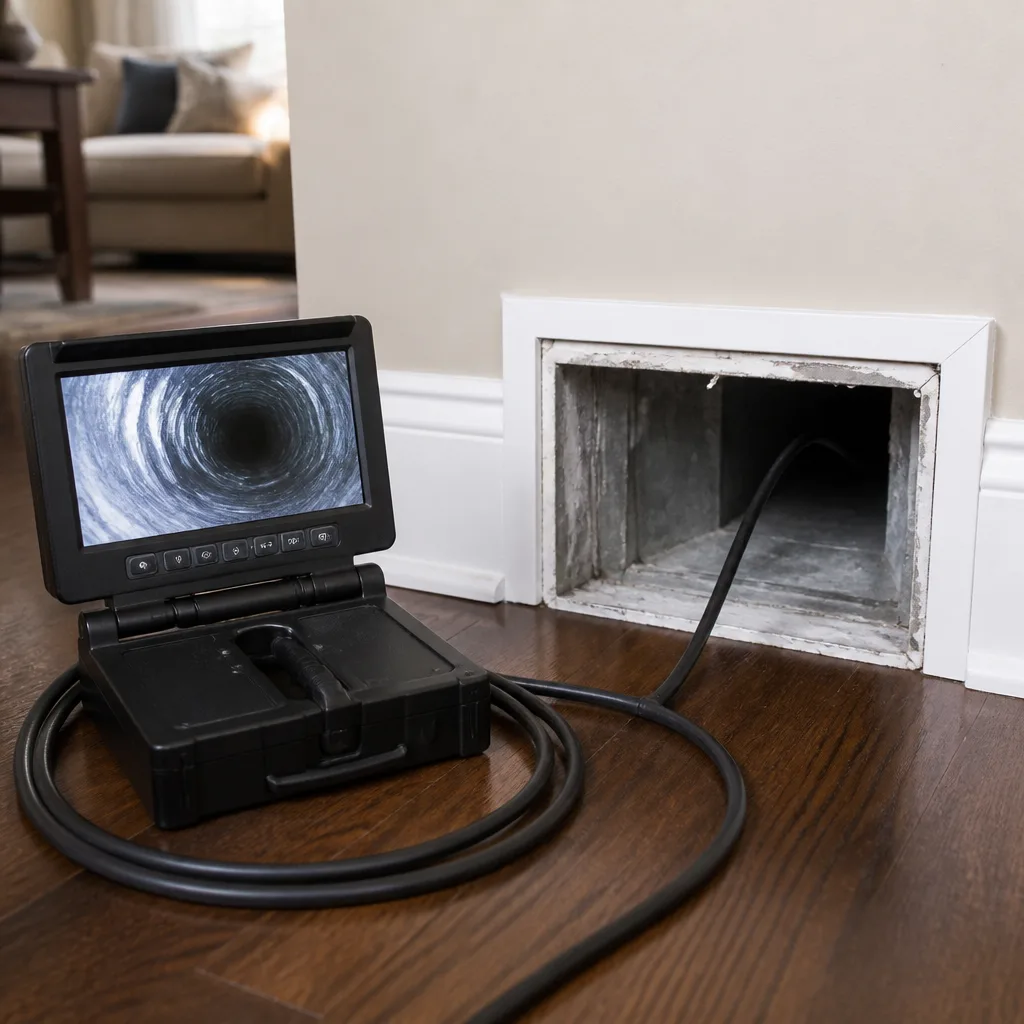 Camera inspection
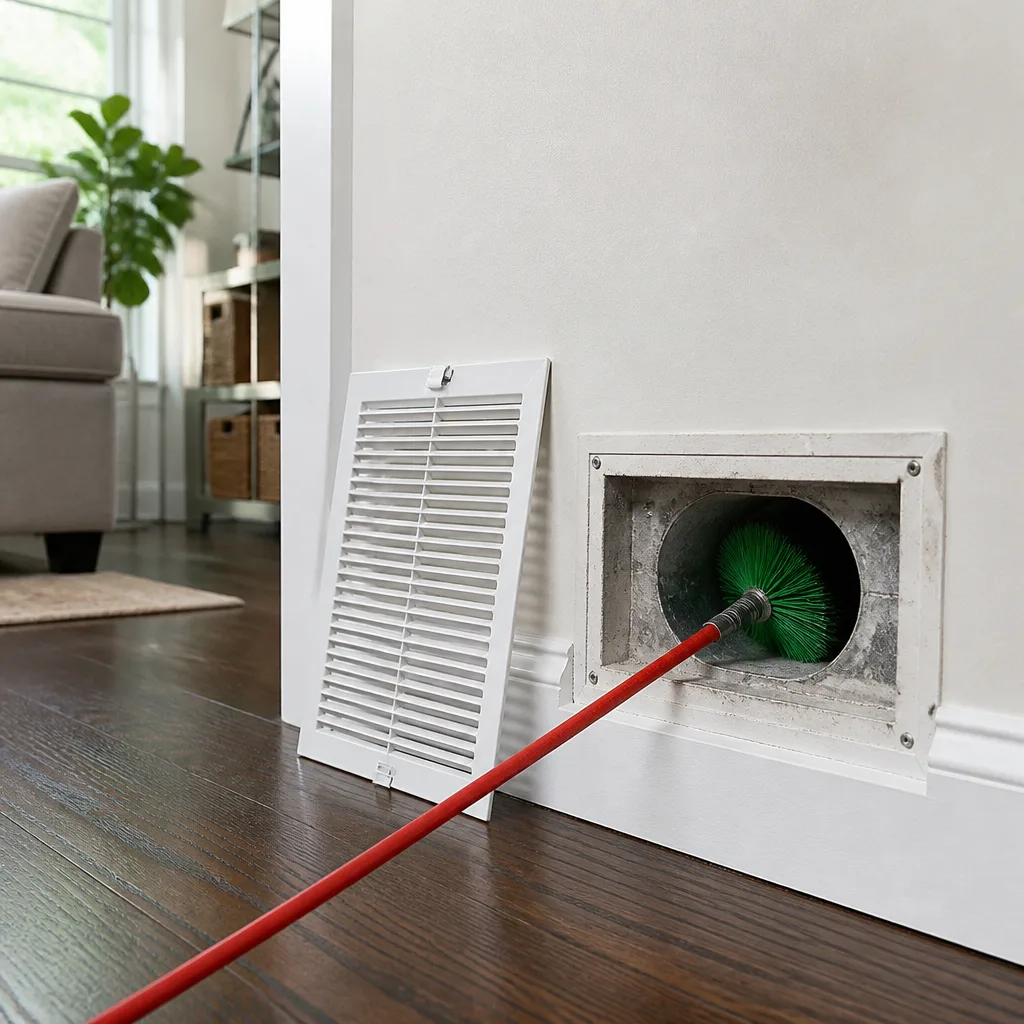 Sanitizing & deodorizing
Whole-system duct and dryer vent check with before-and-after photos - you see exactly what came out of your vents
That "$99 whole-house special" is a bait ad - the real number appears once they are in your hallway, or the "clean" is a shop-vac at the register. We photograph the inside of your ducts before and after instead.
Air Duct Cleaning Maintenance Schedule: What to Do and When
Most homeowners in Pico Rivera have heard the rule of thumb: clean your air ducts every three to five years. That number gets repeated so often it has hardened into gospel. But a single interval for every home ignores what actually drives duct contamination, which is what your household does inside and what the air outside is carrying. A house with two shedding dogs near the 605 freeway corridor needs a different schedule than a pet-free condo with a new filtration system. This guide gives you a maintenance calendar based on the variables that matter for your specific home, not a generic average.
Quick Answer
Most Pico Rivera homes need professional air duct cleaning every two to four years, but that interval shifts based on four factors: pets, smokers in the home, recent renovation work, and diagnosed allergies or asthma. Homes near the 605 freeway or with multiple pets often need cleaning every 18 to 24 months rather than the commonly quoted three-to-five-year window. Monthly filter checks and annual register inspections belong on a separate, more frequent schedule than professional cleaning.
Styles & brands we work with
- Whole-home duct cleaning
- Dryer vent cleaning
- Camera inspection
- Sanitizing & deodorizing
Table of Contents
- Why Fixed Cleaning Intervals Fail Most Homes
- The Four Factors That Determine Your Real Schedule
- How the 605 Freeway Corridor Affects Duct Contamination
- Monthly vs. Annual vs. Professional: Three Separate Schedules
- The Post-Renovation Window: Why 60 Days Matters
- The Five-Minute Register Inspection Method
- Common Mistakes to Avoid
- When to Call a Professional
Why Fixed Cleaning Intervals Fail Most Homes
The often-cited “clean as needed” guidance was written before Southern California’s wildfire smoke seasons became a near-annual event. Smoke particulate from regional fires settles into duct systems the same way it settles onto patio furniture and window sills, except ducts are enclosed and rarely inspected. A home that would have gone four years between cleanings under older assumptions can now need service in 18 months if wildfire smoke was drawn through the HVAC system for weeks at a time. The EPA’s guidance remains useful as a baseline, but it was not written for a region where smoke season overlaps with high-wind dust events.
The deeper problem with fixed intervals is that they treat all ducts as identical. Rigid metal ductwork accumulates debris differently than flexible insulated duct. A return-air path that pulls from a hallway near the kitchen picks up cooking aerosols that a bedroom return does not. Homes with upgraded filtration from brands like Honeywell or Aprilaire will capture more fine particulate before it enters the ductwork, while homes running basic fiberglass filters let more pass through. Two identical houses on the same Pico Rivera block can have meaningfully different duct conditions after two years, which is why any honest maintenance schedule starts with a home assessment rather than a calendar.
What a fixed interval also misses is the distinction between cleaning and repair. If a section of ductwork has separated at a joint or a return duct is pulling from an unconditioned attic space, cleaning the interior surfaces will not solve the problem. The home will recontaminate within months because the pathway itself is compromised. That is why we treat air duct repair as a core service alongside cleaning. In our experience, a meaningful percentage of homes scheduled for a first cleaning also have a duct integrity issue that no amount of brushing will address.
The Four Factors That Determine Your Real Schedule
Rather than a single interval, use these four household variables to estimate how often your ducts need professional attention. Each factor either increases or decreases the rate at which debris, allergens, and microbial material accumulate inside the system.
1. Pets, and More Precisely, Pet Dander Load
Homes with one short-haired dog and tile floors will accumulate dander more slowly than a home with two long-haired cats and wall-to-wall carpet. Dander is light enough to remain airborne for long periods, which means the HVAC return pulls it in continuously while the system runs. Pet hair itself is heavier and often catches at the return grille, but dander penetrates into the duct interior. If you have multiple pets or a pet with a heavy undercoat, move your professional cleaning interval closer to two years. If you also have a household member with pet allergies, that interval matters more because the allergen remains in circulation even when the pet is outside.
2. Smoking or Vaping Indoors
Tobacco smoke deposits a sticky film on duct surfaces that then traps other particulate. The film builds up over time and does not respond to standard filter changes. A home with one indoor smoker should treat the duct system as needing cleaning on a two-year cycle at minimum. Vaping leaves a thinner residue but still adds moisture and chemical compounds to the air path. If smoking has occurred indoors for years, the first professional cleaning should be scheduled sooner rather than later. We have seen systems in Pico Rivera rental units with years of accumulated smoke film, and no number of opened windows undoes that.
3. Recent Renovation or Remodeling Work
Drywall dust, sawdust, and flooring particles get pulled into the return air system during any renovation where walls are opened or floors are sanded. Even with plastic sheeting and negative air pressure, fine construction dust finds its way into ductwork. If you have completed any work involving drywall, tile cutting, or floor sanding in the past two years, schedule a professional cleaning within 60 days of the final work, which we cover in more detail below. A renovation effectively resets your interval to zero on the day the work finishes.
4. Allergy or Asthma Diagnoses in the Household
A physician-diagnosed respiratory condition changes the maintenance calculation. What a healthy household can tolerate as normal background dust becomes a daily quality-of-life issue for someone with allergic rhinitis or asthma. Homes with a diagnosed allergy or asthma patient should lean toward the shorter end of every interval and pair professional cleaning with upgraded filtration products. Brands like Aprilaire and Honeywell make media filters and whole-home filtration systems that work alongside professional air duct cleaning to reduce the airborne allergen load between visits.
How the 605 Freeway Corridor Affects Duct Contamination
Pico Rivera sits directly adjacent to the 605 freeway corridor, and that proximity has a measurable effect on indoor particulate levels. Vehicle exhaust, tire dust, brake dust, and road-surface particulate become airborne near high-traffic roadways. Some of that material enters homes through open windows, doors, and the natural air exchange every house experiences. The HVAC system then pulls that air through the return ducts and filters it, but not all particulate is captured. Fine particles under 2.5 microns pass through standard fiberglass filters and settle onto duct surfaces, fan blades, and coil fins.
Homes within a quarter mile of the freeway, which includes much of Pico Rivera, should assume a higher baseline of particulate accumulation than homes set further back from major roadways. This does not mean the home is unsafe, only that the maintenance schedule needs to reflect real operating conditions. A reasonable adjustment is to move the professional cleaning interval forward by 12 to 18 months compared to a home in a quieter, tree-lined neighborhood without freeway adjacency. If you also run the system frequently during summer heat, which most Pico Rivera homes do, the increased airflow means more particulate passes through the system per month.
The freeway effect also interacts with filter selection. A high-MERV filter or a media filter cabinet from a manufacturer like Honeywell can capture more of the fine freeway particulate before it reaches the duct interior. But a high-MERV filter also increases static pressure, which is why professional guidance on filter choice matters. We do not recommend the highest-MERV filter available as a default. The right filter balances capture efficiency with the system’s ability to move air without straining the blower.
Monthly vs. Annual vs. Professional: Three Separate Schedules
One of the most common mistakes we see is homeowners conflating filter changes with duct cleaning. These are different tasks on different schedules, and doing one does not substitute for the other. A clean filter captures particulate before it enters the duct system, but it does nothing for the material already deposited on duct surfaces from years before.
Monthly Tasks (Under 10 Minutes)
- Check and replace or clean the HVAC filter. During heavy-use months in Pico Rivera, a standard one-inch filter may need replacement every 30 days. If it looks dark or clogged, change it regardless of calendar day.
- Vacuum visible return grilles. Pet hair and household dust collect on the return-air grille. A quick pass with a vacuum attachment keeps the inlet clear and reduces what enters the duct.
- Check supply registers for visible dust accumulation. If you see gray or black dust streaking on the register fins, that is duct interior material being pushed into the room. It is an early indicator the ducts are loading up.
Annual Tasks (Under 30 Minutes)
- Perform the five-minute register inspection described below. This gives you a baseline you can compare year over year.
- Schedule a professional dryer vent cleaning if you have not had one in the past 12 months. Lint accumulation inside the dryer vent is a fire hazard that operates on a separate schedule from your HVAC ducts.
- Reassess your filter strategy. If the home now has a new pet, a new smoker, or a new allergy diagnosis, that changes what filter makes sense and how often the duct system needs attention.
Professional Cleaning (Every 18 Months to 4 Years Based on Your Factors)
Professional air duct cleaning is the interval where the four factors above do the work. A home with no pets, no smokers, no recent renovation, and no freeway adjacency can go toward the four-year end. A home with two dogs, a smoker, and bedrooms within sight of the 605 should plan on 18 to 24 months. The point is that the interval is a decision, not a default.
The Post-Renovation Window: Why 60 Days Matters
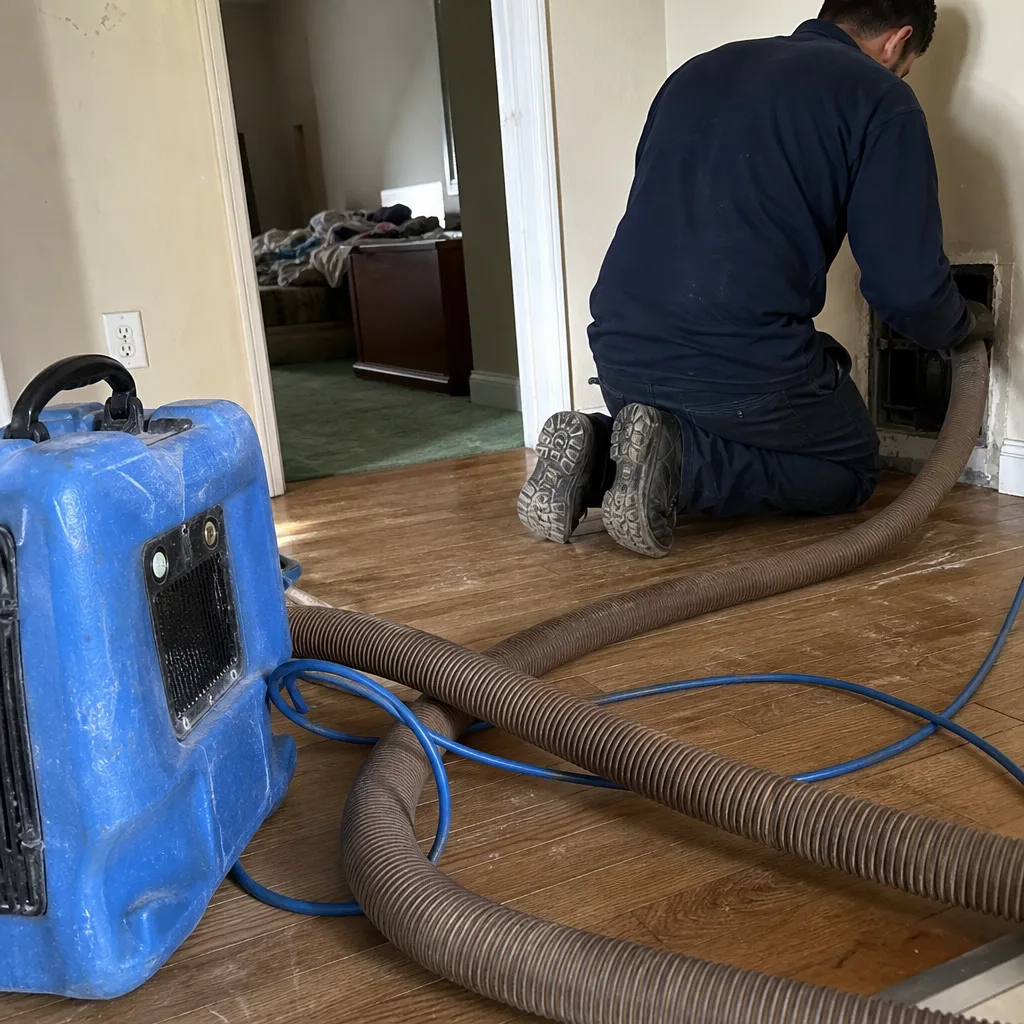
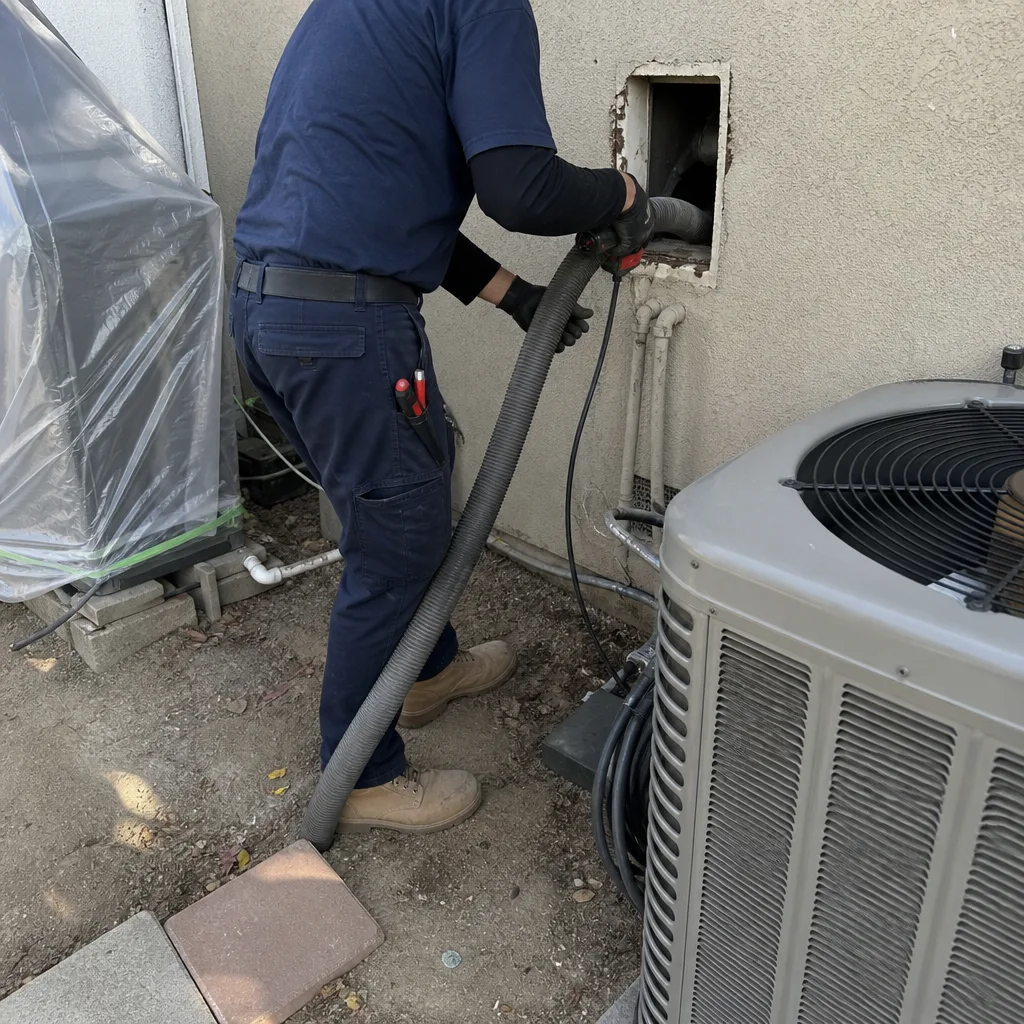
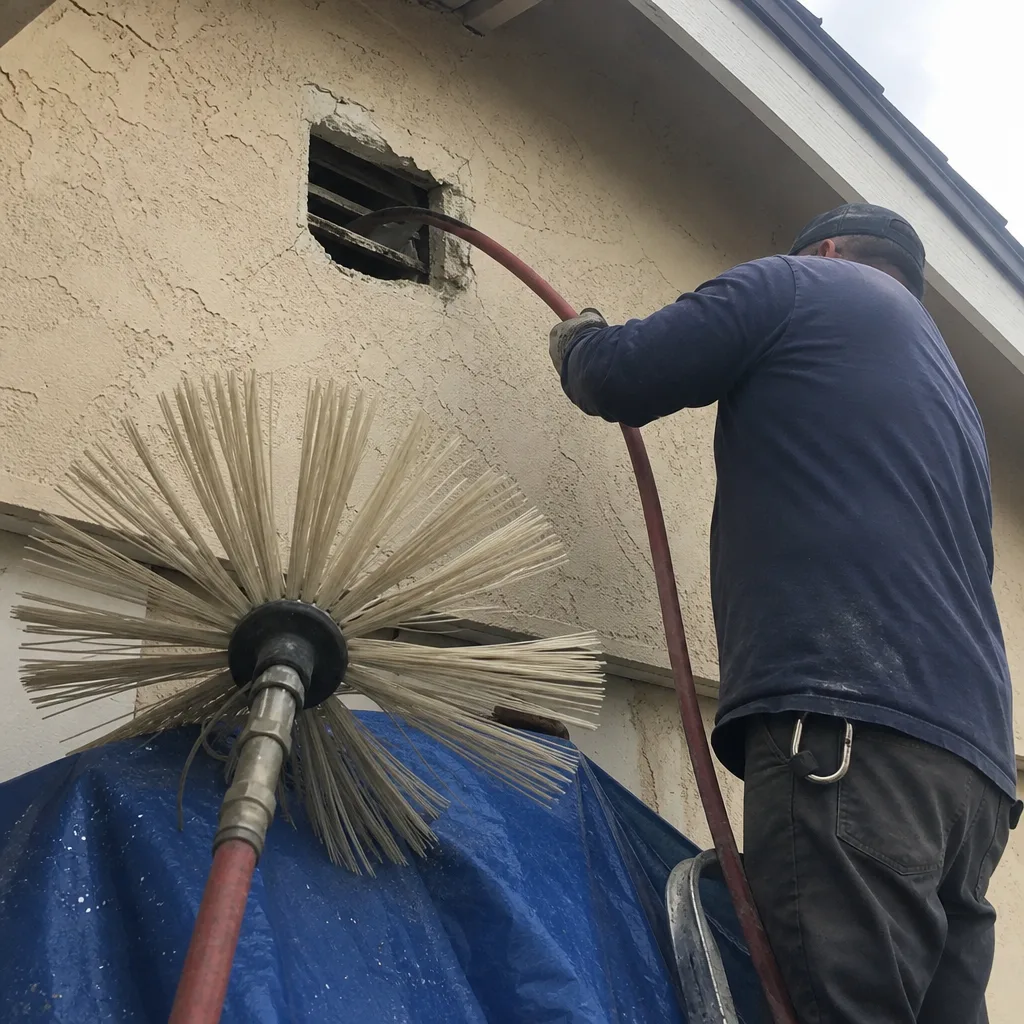
The highest-return moment for professional duct cleaning is the period immediately following a renovation, specifically within 60 days of final drywall work. Here is why the timing matters. Drywall dust is extremely fine, typically under 10 microns, and it becomes airborne during sanding and remains suspendable for weeks. During that window, it is still loose and mobile inside the duct system. A professional cleaning using contractor-grade equipment from systems like Rotobrush or Nikro can remove it efficiently before it combines with normal household humidity and oils to form a caked layer that is harder to dislodge.
Wait longer than 60 days, and two things happen. First, the dust settles and compacts, especially on horizontal duct runs where gravity works against you. Second, any moisture exposure, even normal indoor humidity, starts binding the dust into a paste-like film. At that point, removal requires more aggressive mechanical agitation. The cleaning still works, but the job is harder and the result may not be as thorough as it would have been in the early window.
If you are planning a kitchen remodel, bathroom renovation, or whole-home flooring replacement in Pico Rivera, schedule duct cleaning for the week after the contractor finishes. That sequencing means the dust from the project gets removed before you start living in the renovated space full-time. It also gives you a clean baseline for the next interval. We have walked into post-renovation homes where the owners had already moved furniture back in and were living with renovation dust circulating through the system because no one told them the ducts should be cleaned as a final step.
The Five-Minute Register Inspection Method
Between professional visits, you can track duct condition with a simple inspection that takes under five minutes and requires no tools beyond a flashlight and your phone camera. Do this annually, ideally in the same month each year so your comparisons are consistent.
- Turn off the HVAC system. This prevents air movement while you inspect and keeps dust from blowing into your face.
- Remove one supply register in a high-use room, such as a living room or primary bedroom. Unscrew or lift out the register depending on the style.
- Shine a flashlight into the duct opening and take a photo with your phone. Aim the light down the duct run, both directions if possible.
- Look for three things. First, visible gray or brown dust coating the duct walls thicker than a light film. Second, any debris like pet hair, construction material, or food particles. Third, visible mold growth or moisture staining, which looks like dark spotting or streaking on the metal.
- Compare the photo year over year. If the dust layer is visibly thicker than last year’s photo, your interval needs to shorten. If it looks the same, your current schedule is working.
This method is not a replacement for professional inspection, but it gives you hard evidence of what is happening inside the duct rather than a guess. It also helps you avoid being talked into unnecessary cleaning. If a salesperson claims your ducts are severely contaminated, you can compare their claim against photos you have taken yourself.
Common Mistakes to Avoid
- Treating filter replacement as a substitute for duct cleaning. A filter stops what is entering the system. It does nothing for the years of material already deposited inside. Changing the filter monthly does not reset the professional cleaning clock.
- Assuming a new home means clean ducts. New construction leaves construction debris in duct systems at a surprisingly high rate. Drywall dust, sawdust, and even fast-food wrappers from construction crews end up inside duct runs before the first owner moves in. A new-to-you Pico Rivera home should get a duct inspection regardless of its age.
- Waiting for visible dust on registers before scheduling. By the time dust is streaking the supply registers, the duct interior has been heavily loaded for months or years. The register streaking is a late-stage indicator, not an early warning.
- Accepting the cheapest bid without asking what equipment is used. A low-price duct cleaning performed with consumer-grade equipment may agitate debris without fully extracting it, which can leave the home dustier than before. Ask whether the contractor uses professional systems like Rotobrush or Nikro rather than a shop-vac setup.
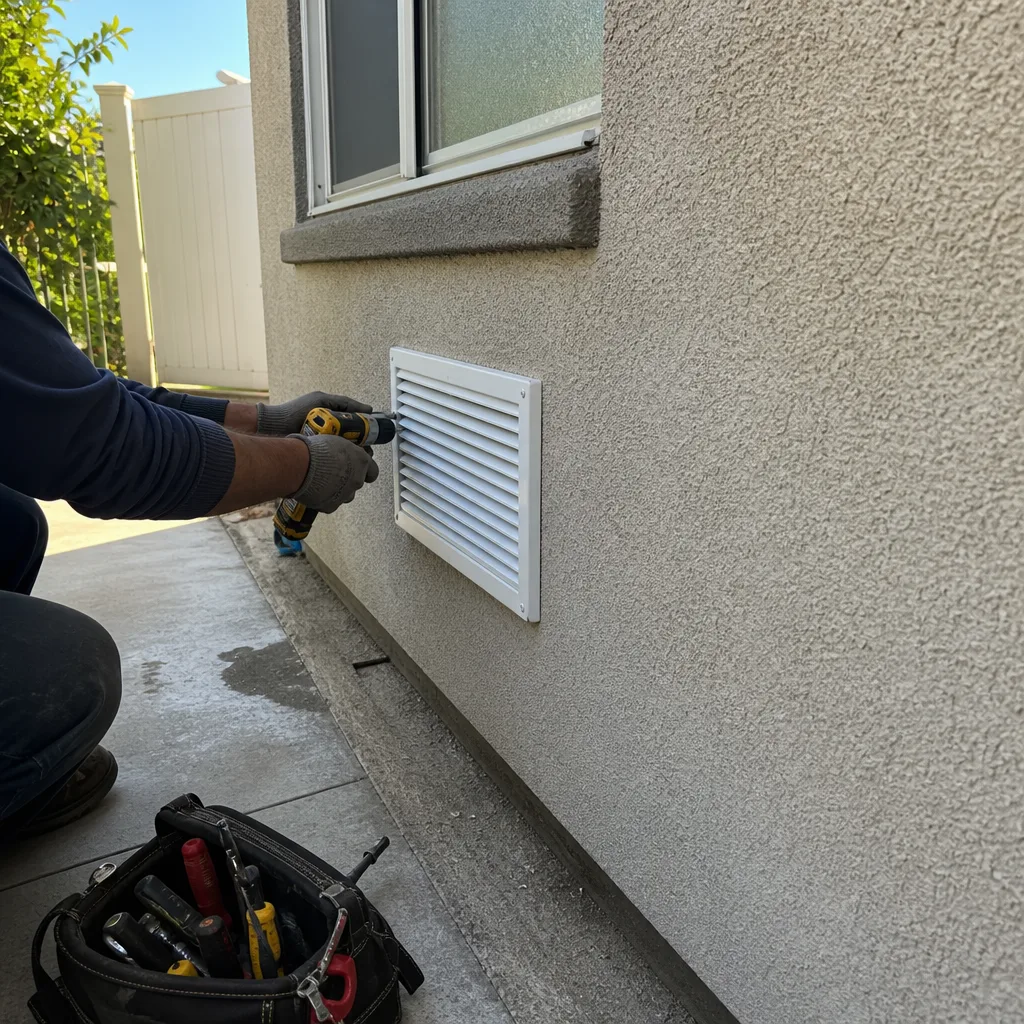
- Cleaning ducts while the return pathway is pulling from an unconditioned space. If a return duct has separated in an attic, the system will pull fiberglass insulation and hot attic air into the home. Cleaning the duct surfaces does not solve the leak. The repair has to happen first or alongside.
- Skipping dryer vent cleaning on the schedule. The dryer vent is part of the home’s air pathway and operates on its own safety-driven schedule. A blocked dryer vent is a leading cause of residential fires, and no HVAC filter change addresses it.
- Using the highest-MERV filter without checking system compatibility. A filter that is too restrictive for the blower reduces airflow, increases energy use, and can shorten equipment life. Filter selection should be based on the specific system, not the highest number on the package.
When to Call a Professional
Schedule a professional assessment if any of these conditions apply to your Pico Rivera home: visible mold growth inside any duct or on any register, a persistent musty odor when the system runs, dust returning to surfaces within days of cleaning, a renovation completed in the past two months, a new allergy or asthma diagnosis, or no cleaning in the past four years with any of the risk factors above present. If you see duct sections that are disconnected, crushed, or sagging, that is a repair issue that cleaning alone will not fix. Duct Cleaning Pico Rivera offers free estimates in Pico Rivera. Call (833) 734-6877. We answer 24/7. Fast dispatch from 7am to 7pm, Sunday through Friday.
See the difference
 Before
 After
 Before
 After
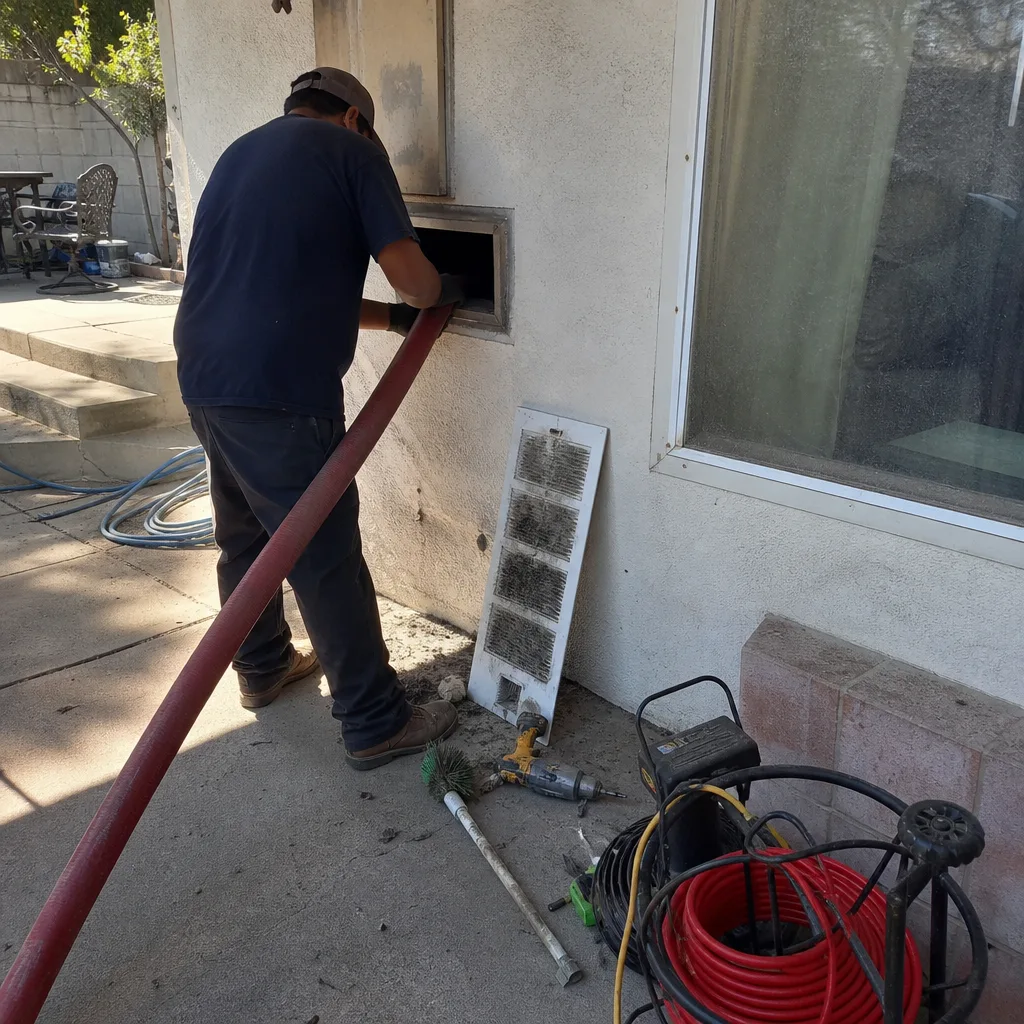 Before
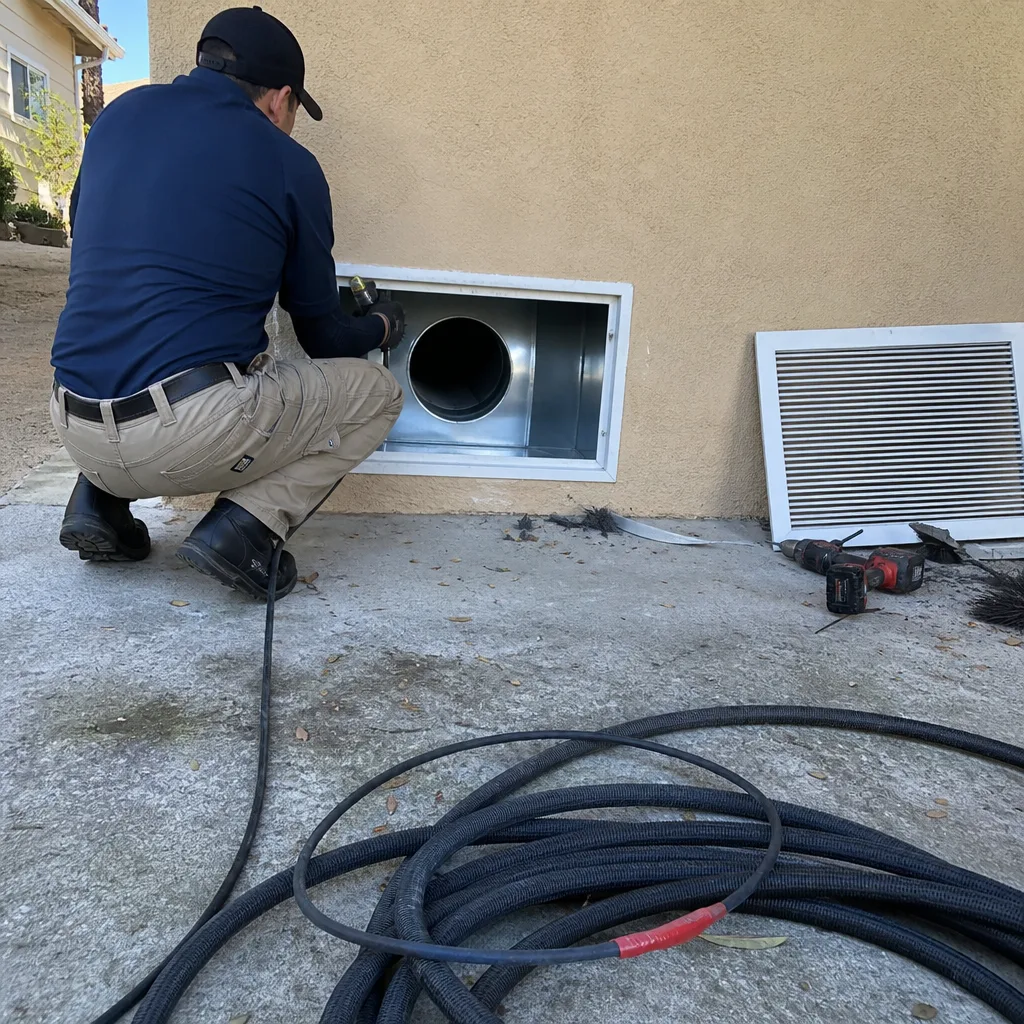 After
Frequently Asked Questions
Most Pico Rivera homes should schedule professional air duct cleaning every two to four years, with the shorter interval applying to homes near the 605 freeway, homes with pets or smokers, and homes where someone has allergies or asthma. A home with none of those factors can go toward four years. Call (833) 734-6877 for an exact recommendation based on your home, and estimates are free.
Yes, and the effect is measurable. Fine particulate from vehicle exhaust, tire wear, and brake dust becomes airborne near high-traffic corridors and enters homes through natural air exchange. Some of that material settles in duct systems, which means homes near the 605 in Pico Rivera accumulate particulate faster than homes set back from major roadways. A reasonable adjustment is to shorten the professional cleaning interval by 12 to 18 months compared to quieter neighborhoods.
The difference usually comes down to equipment and scope. A discount quote often means consumer-grade shop-vac equipment, limited agitation of the duct surfaces, and no inspection of duct integrity. Professional systems like Rotobrush and Nikro use powered agitation combined with high-volume extraction to dislodge and remove debris that a basic vacuum cannot reach. The cheaper quote may also exclude dryer vent cleaning or duct repair that the job actually needs. Get the scope in writing before comparing prices.
Ask for before-and-after photos of the duct interior from the same camera angle, which any professional using the right equipment can provide. A legitimate cleaning will show visibly cleaner duct surfaces in the after photos. You can also check supply registers for dust streaking in the weeks after the job, which should not reappear quickly if the system was properly cleaned and the return path is intact. Call (833) 734-6877 to ask what documentation our team provides before work begins.
Dryer vent cleaning should happen at least once per year in most homes, and more often if you do multiple loads per week or the dryer vent run is long. Lint accumulation inside the vent restricts airflow and creates a fire risk that operates independently of your HVAC duct schedule. The annual dryer vent cleaning belongs on the calendar even in years when the HVAC ducts do not need service.
You can maintain the system by changing filters monthly and vacuuming return grilles, but the duct interior itself requires professional equipment to reach. The runs are too long and too narrow for household tools to agitate and extract debris properly. A partial cleaning that loosens debris without removing it can make the air quality worse, not better. The equipment that does this job properly is contractor-grade, the same class of systems from Rotobrush and Nikro that commercial HVAC contractors use.
Schedule professional air duct cleaning within 60 days of the final drywall work. Drywall dust is fine enough to remain suspended and travel through the return system, and it is easier to remove before it settles and bonds to duct surfaces. Waiting longer than 60 days makes the job harder and the result less thorough. If the renovation is still underway in your Pico Rivera home, book the duct cleaning now for the week after the contractor finishes.
The Bottom Line
Air duct cleaning in Pico Rivera is not a calendar event, it is a decision based on what your house is actually pulling through the return air. Pets, smokers, renovation work, freeway proximity, and respiratory conditions all shift the real interval. Monthly filter checks and annual register inspections are home maintenance tasks that complement but never replace professional cleaning. The post-renovation 60-day window is the highest-value cleaning most homeowners will ever schedule, and it is the one most often missed. When the time comes, book with a specialist who uses professional-grade equipment, can repair ductwork as well as clean it, and treats dryer vent safety as part of the same air pathway. If your home is due, call (833) 734-6877 for a free estimate. We answer 24/7. Fast dispatch from 7am to 7pm, Sunday through Friday.
Written by the team at Duct Cleaning Pico Rivera, serving Pico Rivera since 2011.